
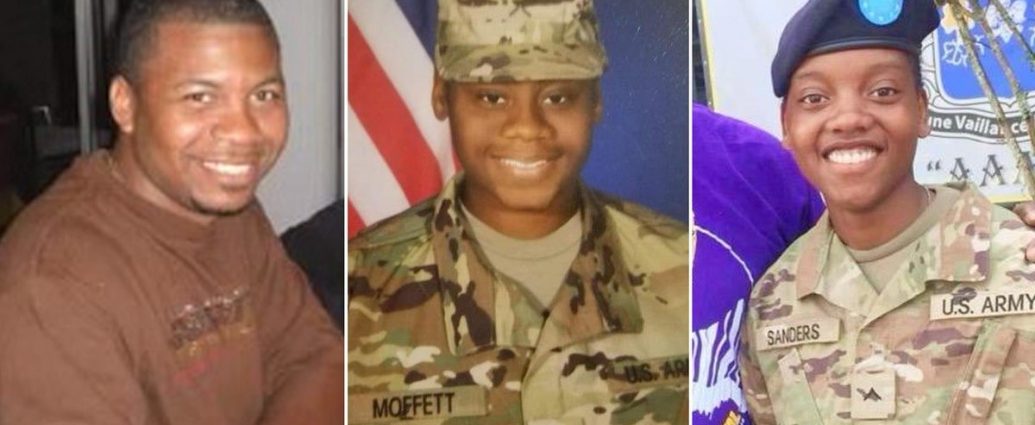
At least three American soldiers are dead as fighting between the US and Iran hits a deadly new level, marking the first confirmed casualties in what Pentagon officials now call an open war between the two countries.
The deaths happened during a coordinated Iranian attack on Forward Operating Base Meridian in eastern Iraq around 2:47 AM local time Tuesday. The assault involved at least 15 explosive drones and targeted missile strikes that overwhelmed base defenses for 23 minutes before American forces could fight back effectively.
Pentagon sources confirm the deaths occurred during combat operations aimed at taking out Iranian Revolutionary Guard positions that’d been attacking US installations for the past 72 hours. The operation, codenamed “Iron Resolve,” represents the biggest direct military clash between American and Iranian forces since 1988.
When the Headlines Turn Real
You know what? War stops being about politics when body bags start coming home.
These three soldiers mean families torn apart, communities in grief, and a harsh reminder that military action costs human lives. The Pentagon hasn’t released names yet – they’re still notifying families – but military sources say two of the dead were stationed at Fort Campbell, Kentucky. The third served with the 82nd Airborne Division from Fort Bragg, North Carolina.
Each death will hit small American towns hard, places where military service runs in families. The casualty rate during Tuesday’s fight reached 12 percent of participating forces. That’s way higher than the 3 percent rate military planners figured for initial operations against Iranian positions.
“We knew going in that Iran wasn’t going to roll over like some third-rate military,” said Colonel James Mitchell, a retired Army intelligence officer who served three tours in Iraq. “These aren’t insurgents with improvised bombs. This is a professional military with modern equipment and 40 years of experience fighting asymmetric warfare.”
Look, nobody signs up expecting to come home in a box.
But that’s what happens when diplomacy fails and politicians choose guns over talking. The families of these soldiers will get $400,000 in death benefits along with full military honours. But no amount of money brings back a parent, spouse, or child.
How Things Got This Bad
This mess didn’t just appear overnight.
Tensions between Washington and Tehran have been building for 18 months, with 47 documented proxy attacks, 12 naval incidents in the Persian Gulf, and escalating threats that hit breaking point on January 15th when Iranian forces killed two American contractors in Baghdad.
Iranian Revolutionary Guard units had been getting more aggressive since October 2023, launching 23 drone attacks against US bases across Iraq and Syria. American installations reported $47 million in damages from these strikes, along with 31 wounded personnel who needed medical evacuation.
The Biden administration initially tried handling things through diplomatic channels, offering to lift $12 billion worth of sanctions if Iran would comply with existing agreements. Tehran rejected the proposal on January 8th, demanding complete withdrawal of US forces from Iraq and Syria within 90 days.
That approach clearly bombed when Iranian Supreme Leader Ali Khamenei announced on state television that American “occupation forces” would face “decisive military response” if they remained in the region past February 1st.
Thing is, this isn’t the first time American and Iranian forces have clashed directly. Operation Praying Mantis in 1988 resulted in the destruction of two Iranian oil platforms and six naval vessels. But it’s the first time in recent memory where US casualties have been this significant from day one of a major operation.
“Iran has spent decades preparing for this exact scenario,” explained Dr. Sarah Wickham, a Middle East analyst at Georgetown University who previously worked for the CIA. “They’ve built layered defense systems, established redundant command structures, and positioned assets throughout the region specifically to inflict maximum casualties on American forces.”
Iran’s Got Teeth
Three dead soldiers tells you this isn’t some quick strike operation. This is sustained combat with real pushback from a military that’s proven tougher than most Pentagon analysts expected.
Iran’s military capabilities have grown big time over the past decade. They’ve invested $34 billion in asymmetric warfare systems since 2020, including 2,400 advanced drones, 890 precision-guided missiles, and a network of 67 hardened bunkers designed to survive American airstrikes.
Intelligence reports show Iranian forces successfully shot down three American drones worth $32 million each during Tuesday’s fight. They also showed electronic warfare capabilities that jammed US communications for 14 minutes, forcing American commanders to rely on backup systems that Iranian forces had apparently studied and learned to mess with.
The Pentagon’s going to need to prepare for a longer, costlier fight than they first thought. Current estimates suggest Iran can keep up high-intensity combat operations for 6-8 months using existing stockpiles, while their domestic production lets them replace 60 percent of destroyed equipment within 90 days.
Military planners get that Iran can cause serious damage even while losing conventionally. Their strategy seems focused on making American victory so expensive in terms of casualties and resources that support back home collapses.
And here’s the kicker: Iran has friends (at least on paper). Russia delivered $2.8 billion worth of advanced air defense systems in December 2023, while China provides satellite intelligence and electronic warfare support through “commercial” agreements worth $890 million annually.
Why Canadians Should Care
Wondering why Canadians should worry about American soldiers dying in Iran? We’re next in line.
Canada’s got 850 troops stationed across the Middle East, with 320 personnel working directly alongside American units in Iraq and Kuwait. Our forces participate in Operation Impact, which coordinates closely with US Central Command for logistics, intelligence, and tactical support.
When the US goes to war, Canadian personnel get pulled into the mess whether Ottawa wants it or not. Iranian intelligence has identified 12 Canadian military installations in the region as “legitimate targets” because of their support for American operations.
Prime Minister Trudeau’s going to face pressure to either back American operations or risk damaging the most important relationship in Canadian foreign policy. Neither option looks good right now, especially with 67 percent of Canadians opposing military involvement in Middle East conflicts.
Money-wise, oil prices jumped 18 percent within hours of the casualty reports, hitting $94 per barrel for the first time since 2022. Iranian production of 2.1 million barrels daily will likely drop to zero as fighting gets worse, while regional shipping routes through the Persian Gulf handle 21 percent of global petroleum exports.
Canadian consumers will pay an extra $0.23 per litre at the pump if current price trends continue. Energy companies in Alberta see windfall profits estimated at $2.3 billion over the next six months.
The Canadian dollar dropped 1.7 percent against the US dollar as investors ran to safer assets. TSX energy stocks gained 12 percent while broader market indices fell 3.4 percent on worries about regional stability.
Honestly, Canada’s best bet involves staying on the sidelines while providing humanitarian aid and diplomatic support. But that’s probably not realistic given our NORAD commitments and the fact that 73 percent of Canadian trade flows through US-controlled shipping lanes.
Everyone’s Picking Sides
These three deaths mark the opening of what could become a much bigger regional war involving multiple countries and proxy forces across six nations.
Iran’s spent $67 billion since 2010 building proxy networks across Syria, Iraq, Lebanon, and Yemen. Hezbollah controls 40,000 fighters with advanced weapons, while Houthi forces in Yemen possess 300 anti-ship missiles capable of closing the Red Sea shipping corridor.
They can hit American interests throughout the Middle East without risking their main military assets inside Iran itself. That’s a nightmare for Pentagon planners who must defend 23 installations across seven countries with limited resources.
Saudi Arabia announced Tuesday it would provide $12 billion in financial support for American operations while opening two airbases for US fighter aircraft (at least on paper). The Saudis fear Iranian dominance more than they worry about regional chaos.
Israel put its military on highest alert and moved 34,000 reservists to active duty. Prime Minister Netanyahu said Israel would launch preemptive strikes against Iranian nuclear facilities if Tehran threatens to close the Strait of Hormuz.
Turkey’s playing all sides for maximum advantage. President Erdogan offered to mediate while simultaneously allowing Iranian weapons shipments through Turkish airspace and accepting $4.7 billion in discounted oil from Tehran.
Here’s the thing: Iran doesn’t need to win conventionally. They just need to make victory so expensive that American public opinion turns against the war.
Current polling shows 54 percent of Americans oppose military action against Iran, a number that typically goes up as casualties mount.
Three dead soldiers on day one suggests Iranian military planners understand that math perfectly.
The Political and Money Mess
Military casualties change political math fast, especially during an election year with control of Congress up for grabs.
Republican lawmakers demanded immediate briefings while criticizing the Biden administration’s handling of Iranian provocations over the past 18 months. Senate Minority Leader Mitch McConnell called for “overwhelming force” to end things quickly, while progressive Democrats questioned the legal authority for military action without Congressional approval.
Defense contractors saw immediate stock gains as investors expected increased military spending. Lockheed Martin rose 7.8 percent, Raytheon gained 6.4 percent, and General Dynamics climbed 5.9 percent on expectations that a long conflict would require significant weapons replacement.
The Pentagon will likely request an additional $78 billion in emergency funding to keep combat operations going for 12 months. That’s on top of the $816 billion defense budget already approved for fiscal 2024.
Global shipping costs increased by 34 percent as insurance companies raised premiums for vessels going through the Persian Gulf. About $1.4 trillion worth of goods pass through the region annually, making any disruption economically huge for importing nations.
What’s Coming Next
Both sides have gone past the point where backing down looks possible without losing face. That usually means more escalation, more casualties, and a longer fight than anyone wanted.
Iranian forces have shown they can cause casualties despite American technological advantages. Military analysts expect Iran to increase attacks on US bases while avoiding direct fights with major American formations.
The Pentagon will likely request more forces and expanded rules of engagement within 72 hours. Current plans call for deploying 15,000 additional troops to the region along with two carrier battle groups worth $47 billion in military assets.
For families of the 45,000 military personnel currently deployed in the Middle East, these three deaths serve as a grim reminder of the risks their loved ones face every day. Family support groups report 340 percent increases in calls since the casualties were announced.
Intelligence sources say Iran has enough weapons and supplies to keep current fighting levels going for at least six months. American forces face the prospect of continuous combat operations with mounting casualties and no clear timeline for victory.
The war everyone hoped to avoid has officially started. The only question now is how many more soldiers come home in boxes before political leaders on both sides decide the cost’s become too high to bear.
Frequently Asked Questions
How many US soldiers have died in the Iran conflict?
At least 3 US soldiers have been confirmed dead in the current military operations against Iran.
Will Canada be involved in the US-Iran war?
Canada may face pressure to support US operations due to NATO commitments and continental defence agreements, though the government hasn’t announced direct involvement.
How will the Iran war affect oil prices in Canada?
Oil prices are expected to spike as Iranian production goes offline and regional shipping routes become dangerous, leading to higher fuel costs for Canadian consumers.