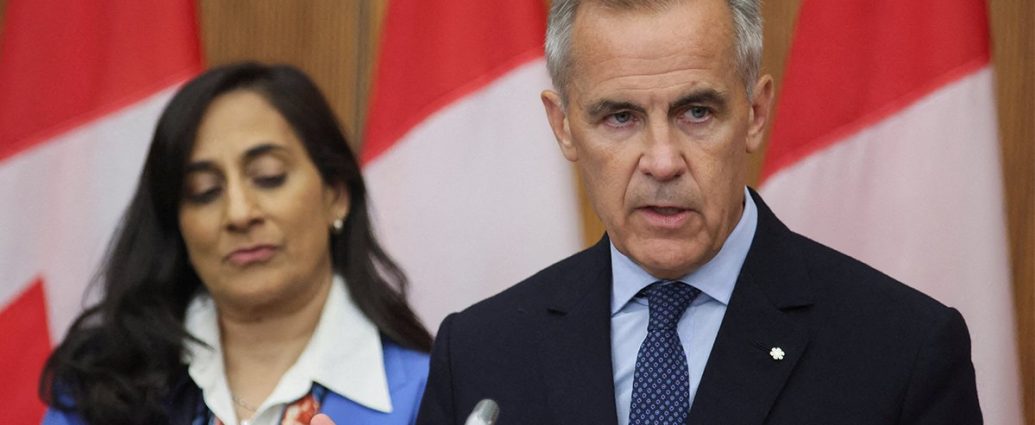
Mark Carney didn’t mince words today: Canada’s not sending troops or providing military support for any U.S.-Israeli operation against Iran.
Plain and simple.
The statement drops as Middle East tensions keep climbing, with chatter about potential military strikes on Iranian nuclear facilities or other key targets getting louder by the day. Intelligence reports suggest Iran’s pushed uranium enrichment to 60% purity at its Fordow facility. That’s just a hop, skip, and jump from the 90% needed for weapons-grade material.
“We won’t be involved militarily,” Carney said during a press conference in Ottawa. No hedging. No diplomatic double-speak.
Where This Leaves Canada’s Foreign Policy
This isn’t just about one operation. It’s about where Canada plants its flag in an increasingly messy global security environment that’s seen NATO allies bump defense spending up 18% in 2024 alone.
Historically, Canada’s walked a tightrope when it comes to Middle East conflicts. We’ve backed Israel’s right to exist and defend itself, but we’ve also pushed for talking things out instead of shooting first. This approach cost Canada a UN Security Council seat back in 2010, when our Middle East positioning ticked off key voting blocs.
“We won’t be involved militarily in U.S.-Israel action in Iran. Canada believes diplomatic solutions, while slower, offer the best path to lasting regional stability.”
The decision puts Canada in a different camp than some of our closest allies. If the Americans and Israelis move forward with strikes, they’ll be doing it without Canadian backing for the first time since the 2003 Iraq invasion.
Remember when Prime Minister Jean Chrétien famously told George W. Bush no?
That’s not nothing.
It represents a $2.3 billion annual military relationship with the United States that could face scrutiny. Canada currently participates in 23 joint military operations with the U.S. And this decision could mess with future cooperation agreements.
The Iran Nuclear Mess and What’s Coming
Iran’s nuclear program has been a headache since 2002, when satellite imagery first revealed undeclared facilities at Natanz.
The country keeps saying its nuclear activities are for peaceful purposes. Western intelligence agencies aren’t buying that story anymore.
Recent International Atomic Energy Agency reports from November 2024 show Iran’s accumulated over 4,700 kilograms of enriched uranium. Way beyond the 300-kilogram limit set by the original nuclear deal. That’s enough material for approximately 8-12 nuclear weapons if enriched further.
Israeli officials have repeatedly said they won’t let Iran develop nuclear weapons. Prime Minister Benjamin Netanyahu’s set a “red line” at 90% uranium enrichment, warning that Israel will act alone if that threshold gets crossed.
“The window for diplomatic solutions is narrowing rapidly. Iran’s expanded its nuclear program by 340% since withdrawing from international monitoring agreements in 2021,” said Dr. Sarah Chen, Director of Nuclear Policy Studies at the University of Toronto.
Here’s where it gets interesting.
A military strike could set back Iran’s nuclear program by 3-5 years, Pentagon assessments suggest. But it could also trigger a wider regional conflict that drags in multiple countries and costs the global economy an estimated $250 billion in the first year alone.
Canada’s position suggests we’d rather see sanctions and diplomacy do the work, even if it takes longer. The current sanctions regime has already cost Iran’s economy roughly $200 billion since 2018, when the Trump administration pulled out of the nuclear deal.
What Happens When Things Go Boom
If military action does happen, the ripple effects will be massive.
Iran controls proxy forces totaling an estimated 200,000 fighters across the region. In Lebanon through Hezbollah, in Syria via various militias, in Iraq through Popular Mobilization Forces, and in Yemen supporting the Houthis.
Make of that what you will.
They’ve already shown they can strike back when threatened. Back in September 2019, Iranian-linked attacks on Saudi oil facilities temporarily cut global oil production by 5%. Sent crude prices up 19% in a single day.
Oil prices would likely spike to $120-150 per barrel from current levels around $82. Shipping routes through the Persian Gulf handle 21% of global petroleum liquids – those could be disrupted for weeks or months. The whole region could go up in flames.
Canadian energy companies might actually benefit from higher oil prices in the short term. Alberta’s oil sands become more competitive when crude hits $90+ per barrel, potentially adding 15,000 jobs across the province. But a prolonged conflict would hurt the global economy, triggering recession risks that eventually hit everyone.
The Toronto Stock Exchange energy sector jumped 7.3% on initial reports of rising Middle East tensions. Companies like Suncor and Canadian Natural Resources led gains. But economists warn those gains could evaporate quickly if conflict spreads.
NATO Politics and Alliance Headaches
NATO’s Article 5 only applies to attacks on member territory. An Israeli strike on Iran wouldn’t trigger collective defence obligations under the North Atlantic Treaty signed back in 1949.
But political pressure from Washington could still be intense.
The Americans will want to know who’s with them and who isn’t, especially given that U.S. Military aid to allies totaled $43.9 billion in 2024.
Carney’s statement puts Canada firmly in the “not with you” column, at least when it comes to military action. This breaks with our usual pattern of supporting major U.S. Operations. We participated in Afghanistan for 13 years, contributed $18.1 billion to that effort, and lost 158 Canadian Forces members.
Other NATO allies are split too. The United Kingdom has signaled conditional support for strikes under certain circumstances. France has been more cautious, with President Macron calling for renewed diplomatic efforts. Germany’s explicitly ruled out military participation, citing constitutional constraints.
This creates an interesting dynamic where Canada finds itself aligned with European powers rather than our North American partners. It’s a position we haven’t been in since the Suez Crisis in 1956, when Lester Pearson helped defuse tensions between Britain and Egypt.
The Political Math at Home
This decision isn’t happening in a vacuum (sound familiar?). There are real political considerations at play here, especially with federal elections potentially coming in 2025.
Canadian public opinion has generally been skeptical of Middle East military interventions since the Iraq War. A 2024 Ipsos poll found that 67% of Canadians oppose military involvement in foreign conflicts, up from 52% in 2018.
The wars in Iraq and Afghanistan left a lot of people questioning whether military solutions actually work.
There’s also Canada’s significant Iranian-Canadian population to consider – approximately 300,000 people across the country, with major communities in Toronto, Vancouver, and Montreal. Many fled Iran precisely because of the current regime, but that doesn’t mean they want to see their homeland bombed.
Jewish-Canadian communities, meanwhile, tend to be strongly supportive of Israel. The 2021 census counted 335,295 people of Jewish ethnicity in Canada. But even there, opinions are divided on whether military strikes are the right approach. A 2024 survey by the Canadian Jewish Political Affairs Committee found 54% support diplomatic pressure over military action.
Money Talks, and It’s Complicated
Canada does significant trade with both the U.S. And Middle Eastern countries. Total bilateral trade with the United States hit $905.2 billion in 2023, making any strain in that relationship economically painful.
Our energy sector could see short-term gains from higher prices, but manufacturing and other industries would face higher costs. The Canadian Manufacturing Association estimates that oil at $130 per barrel would add $8.7 billion in annual costs for manufacturers, potentially eliminating 45,000 jobs.
Tourism, already recovering from pandemic impacts that saw international arrivals drop 73% in 2020-2022, could take another hit if global tensions spike (at least on paper). The industry contributes $105 billion annually to Canada’s GDP and employs 1.8 million people.
There’s also the question of defense contracts. Canada’s defense industry does $15.7 billion in annual business, with 60% tied to U.S. Partnerships. Major companies like CAE, Bombardier Defense, and General Dynamics Land Systems Canada could face pressure if military cooperation decreases.
The Long Road of Diplomacy
So what’s Canada’s alternative? More sanctions, more international pressure, more attempts at negotiation through channels that have been largely dormant since 2021. It’s the slower path. And there’s no guarantee it works.
Iran’s been under various sanctions for 42 years since the Islamic Revolution and hasn’t fundamentally changed course. Current sanctions target 1,500+ Iranian individuals and entities, freezing an estimated $120 billion in assets.
But the military option comes with huge risks too. A strike might delay Iran’s nuclear program, but it could also convince them that they definitely need nuclear weapons for protection.
North Korea followed exactly this logic after being labeled part of the “axis of evil” in 2002.
“Military action could trigger a wider regional conflict that drags in multiple countries and costs hundreds of thousands of lives. We’ve seen this movie before in Iraq, Libya, and Syria.”
The diplomatic approach also keeps Canada’s relationships intact across the region. We can still talk to everyone if we’re not dropping bombs on anyone.
Canada maintains diplomatic relations with 18 Middle Eastern countries and territories, representing $8.9 billion in annual trade.
Foreign Affairs Minister Mélanie Joly has already reached out to counterparts in Saudi Arabia, the UAE, Jordan, and Egypt to coordinate diplomatic responses. The goal? Building a coalition for renewed negotiations before military options become inevitable.
How This Hits Regular Canadians
Most Canadians won’t see immediate impacts from this decision on military non-participation.
We’re not sending troops, so no Canadian military families are at risk of casualties.
But global conflicts have ways of affecting everyone eventually. Higher energy prices could add $180-220 per month to household expenses through gasoline, heating, and electricity costs. Economic uncertainty typically triggers stock market volatility.
Canadian markets lost $312 billion in value during the 2020 oil price crash.
Refugee flows could also increase. Canada accepted 23,300 refugees from Middle Eastern conflicts between 2020-2023, costing approximately $1.2 billion in settlement services. A wider regional war could double or triple those numbers.
There are also security considerations. Canadian intelligence agencies monitor 400+ individuals with suspected ties to Iranian networks. Military action could activate sleeper cells or inspire lone-wolf attacks on Canadian soil.
What’s Coming Next
The big question now is whether the U.S. And Israel actually move forward with military action within the next 90-120 days. Before Iran potentially crosses the 90% enrichment threshold.
American officials have been talking tough about Iran for months. But talk is different from action.
A strike on Iranian territory would be a major escalation with unpredictable consequences. The Pentagon has estimated that effective strikes would require 400+ aircraft sorties over 3-5 days, costing $15-20 billion.
Israel faces its own domestic pressures. The current government’s been hawkish on Iran, but public support for another war isn’t guaranteed when the country’s already spending $53 billion annually on defense.
That’s 5.6% of GDP, among the highest rates globally.
If they do decide to strike, Canada will be watching from the sidelines.
We’ll probably increase diplomatic efforts to contain the fallout, potentially offering $500 million+ in humanitarian aid. But we won’t be pulling triggers.
Worth noting: this could strain Canada-U.S. Relations if the Americans really wanted our support.
The USMCA trade agreement comes up for review in 2026, and economic retaliation isn’t impossible. But it could also strengthen our position as a mediator if things go sideways.
Canada successfully mediated between Iran and the West during the 2019 Ukraine International Airlines crash, helping secure $150,000 compensation for each victim’s family. That kind of diplomatic capital becomes valuable when shooting stops and talking needs to resume.
The next 60 days will likely determine whether we’re heading toward diplomacy or destruction.
Canada’s betting that staying out of military action gives us more options down the road. We can help with humanitarian aid, diplomatic mediation, or economic reconstruction without the baggage of having participated in strikes.
What This Means Going Forward
It’s a calculated risk based on hard lessons from Afghanistan, Iraq, and Libya. And honestly, given how these Middle East interventions usually go – costing $2.26 trillion in Afghanistan alone – it might be the smart play.
Frequently Asked Questions
Why won’t Canada join military action against Iran?
Canada prefers diplomatic solutions and wants to avoid the risks of regional military escalation.
How does this affect Canada-U.S. relations?
It could create some tension but also positions Canada as a potential mediator in future negotiations.
What are the alternatives to military action?
Canada supports continued sanctions, diplomatic pressure, and international negotiations to address Iran’s nuclear program.