
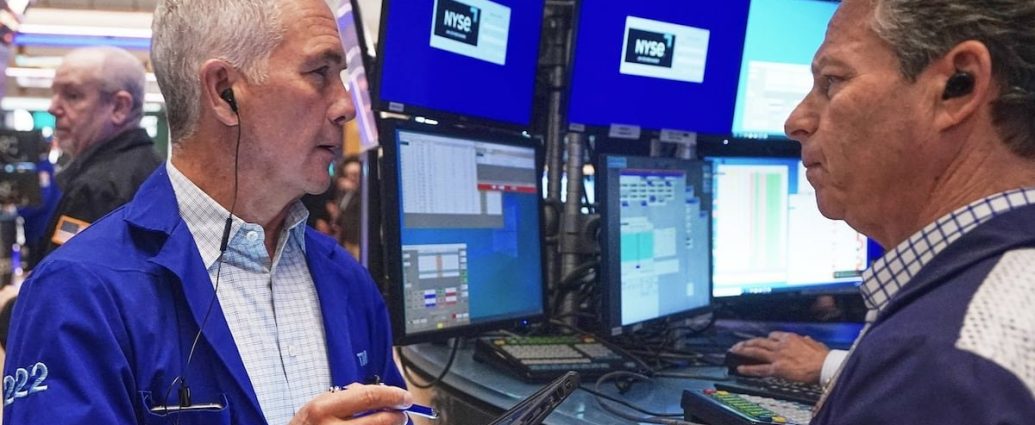
U.S. Stocks are getting absolutely crushed today as Wall Street finally faces something they can’t ignore: artificial intelligence isn’t just changing how companies operate anymore. It’s literally deciding which ones get to exist.
The S&P 500 tumbled 0.7% while the Dow Jones got hammered for 727 points by midday Friday, sitting at 1.5% losses around 12:38 p.m. Eastern. The Nasdaq wasn’t spared either, falling 0.9%.
We’re looking at what might be only the second losing month in the past 10 for major indexes. That’s a pretty stunning turnaround for markets that have been on fire.
But here’s the thing – the numbers aren’t even the real story.
What’s actually happening underneath? You’ve got this perfect storm brewing: AI disruption fears, inflation data that nobody saw coming, and geopolitical mess that’s making investors completely rethink how they look at risk in 2025.
Block Just Showed Everyone What’s Coming
Jack Dorsey dropped a bomb that sent shockwaves through the entire tech world (not a typo). The Block CEO just announced he’s cutting nearly half his workforce. Half. Let that sink in for a minute.
We’re talking about more than 4,000 jobs disappearing from a company that employs over 10,000 people. This isn’t some gentle restructuring or seasonal adjustment. It’s a complete reimagining of what a company needs to function.
The cuts are hitting everywhere across Block’s empire – Cash App, Square, all their financial technology services that employ thousands of people right here in the United States. Nobody’s safe.
Intelligence tools have changed what it means to build and run a company. We’re already seeing it internally. A significantly smaller team, using the tools we’re building, can do more and do it better.
Here’s what makes this really wild: Dorsey’s saying 2025 was actually a great year for Block. They’re sending more cash back to shareholders through bigger stock buyback programs, which tells you the company’s finances are solid. So this massacre isn’t happening because they’re broke or struggling.
It’s happening because AI just made humans obsolete at a scale we’ve never seen before.
Block’s stock? It jumped 14.4% on the news.
That added roughly $2.8 billion to the company’s value in one trading session. Investors absolutely love efficiency, even when it means thousands of people lose their jobs. The market’s sending a crystal-clear message: embrace AI-driven workforce cuts, and we’ll reward you. The human cost doesn’t matter.
And the timing couldn’t be more telling. Block dropped this announcement right after reporting quarterly earnings that beat analyst expectations, with revenue growth partly driven by AI-enhanced fraud detection and automated customer service.
They’re making more money than ever while employing fewer people than ever.
Software Companies Are Fighting for Their Lives
The AI panic is spreading like wildfire across the technology sector. Software companies are getting hit the hardest as investors start to realize something terrifying: these businesses might not exist in two years.
Salesforce dropped 2.5% today, giving back most of yesterday’s 4% gains. This happened despite the company beating profit expectations by a huge margin. Think about that for a second – strong earnings don’t mean anything anymore when your entire business model might be toast.
A major software industry ETF crashed 2% today, bringing its year-to-date loss to a brutal 23.4%. That’s billions in lost market value across hundreds of software companies, from giants like Oracle and Microsoft down to smaller specialty firms that most people have never heard of.
This selloff isn’t random market noise.
Wild.
Institutional investors are systematically hunting down companies that AI could replace, creating this whole new category of investment risk that nobody really knows how to price. Today it’s software.
Last few weeks, we’ve seen similar pressure hit legal services companies, trucking logistics firms, financial advisory services.
Private-equity firms with heavy software exposure are getting destroyed alongside their portfolio companies. Apollo Global Management plummeted 8.7%, losing about $1.2 billion in market value. Ares Management sank 7.8%, marking one of the steepest single-day drops in the entire S&P 500. These firms are facing this double threat: their software investments might fail completely, and the companies they’ve lent money to might not survive long enough to pay them back.
What This Means Going Forward
The damage extends way beyond public markets too. Venture capital firms are reporting that software startups can’t raise funding unless they can prove they’ve got clear AI integration or show they’re somehow immune to AI disruption. Series A funding for traditional software companies dropped 34% in Q4 2024. That’s preliminary data, but the trend is unmistakable.
Even AI Winners Can’t Escape This Mess
Here’s where things get really weird (at least on paper). Companies that are making massive profits from the AI boom are still getting crushed in this selloff.
Nvidia dropped 2.6% despite reporting quarterly earnings that absolutely crushed analyst estimates and forecasting 15% revenue growth for this quarter. The chip giant became the biggest single drag on the entire U.S.
Stock market, erasing roughly $89 billion in market value in just one day.
This happened less than 24 hours after Nvidia posted its worst loss since spring 2024, when supply chain worries briefly spooked chip stocks.
The disconnect between Nvidia’s actual performance and its stock price shows just how deep the anxiety runs about AI investment sustainability. Sure, Nvidia reported record data centre revenue of $47.5 billion last quarter.
But investors are starting to ask tough questions about whether this AI infrastructure buildout can keep going at the current pace.
Other chip companies are sinking right alongside Nvidia. AMD fell 3.2%, Intel dropped 2.8%, and smaller AI chip startups saw even steeper declines. The question that’s keeping investors up at night isn’t whether these stocks got too expensive during the AI hype cycle.
It’s whether the massive corporate spending on AI infrastructure can actually generate returns that justify the investment.
Amazon’s committed over $75 billion to AI infrastructure through 2027. Alphabet pledged $45 billion in AI investments last year alone. Microsoft’s AI spending topped $35 billion in 2024. But can these tech giants actually make their money back through higher productivity and profits? Early returns are all over the place – some companies are reporting real AI-driven efficiency gains while others can’t show measurable returns on investment.
I don’t think we’re early to this realization. I think most companies are late. Within the next year, I believe the majority of companies will reach the same conclusion and make similar structural changes.
What This Means Going Forward
Dorsey’s warning hits different because of his track record. As Twitter’s co-founder, he watched firsthand how quickly tech disruption can completely reshape entire industries. His prediction that most companies will implement similar workforce cuts within 12 months suggests we’re just seeing the beginning of AI-driven layoffs.
Oil’s Having a Moment Thanks to Iran Drama
While tech stocks are getting demolished, energy markets are surging on escalating geopolitical tensions. Benchmark U.S. Crude jumped 2.2% to $66.66 per barrel, while Brent crude rose 2.2% to $72.43. These gains mark oil’s strongest single-day performance in three weeks.
What’s driving this? Mounting U.S.-Iran tensions over Iran’s nuclear program expansion. Intelligence reports suggest Iran has ramped up uranium enrichment activities at its Natanz facility, potentially cutting down the timeline to weapons-grade material. The U.S. Military has already positioned a carrier strike group and additional aircraft in the Middle East as a deterrent.
Energy traders are pricing in supply disruption risks that could push oil prices above $80 per barrel if this situation escalates any further. Iran controls the Strait of Hormuz, and roughly 20% of global oil supplies transit through there daily.
Any military conflict could choke off these flows and create severe supply shortages.
The oil price surge is creating inflationary pressure at exactly the wrong time for central banks trying to manage economic growth. Higher energy costs typically flow through to consumer prices within 4-6 weeks, which could really complicate Federal Reserve policy decisions.
Inflation Just Threw Everyone a Curveball
As if AI disruption and war fears weren’t enough to worry about, inflation data just dropped a bombshell that rattled already nervous markets. The Producer Price Index, which measures wholesale inflation, surged 2.9% year-over-year in December. Economists were expecting 1.6%.
The miss was so dramatic that it immediately shifted expectations for Federal Reserve policy.
Markets had been betting on potential interest rate cuts by mid-2025, but this inflation spike makes those moves much less likely. The 10-year Treasury yield spiked to 4.02% right after the data release before settling at 3.97%.
Core PPI, which strips out volatile food and energy prices, rose 2.5% annually. That’s also above the 2.1% forecast. The broad-based price increases suggest inflationary pressures aren’t just limited to specific sectors – they’re spreading throughout the entire economy.
Service sector prices jumped 3.1% year-over-year, covering everything from healthcare to financial services. This is particularly worrying because service inflation tends to stick around longer than goods inflation and it’s much harder for central banks to control through monetary policy.
What makes this inflation surprise even more confusing is that labour markets remain tight despite all these tech layoffs. While companies like Block are cutting thousands of jobs, unemployment is still near historic lows at 3.7%. This disconnect suggests AI-driven job losses are being offset by hiring in other sectors, but it also means wage pressures could keep inflation elevated.
What This Means for Canadians
Canadian markets usually follow U.S. Trends, especially when it comes to technology stocks. That means the AI disruption fears hitting Wall Street will probably spread north of the border pretty quickly. The TSX technology sector has already shown signs of weakness, with software companies like Constellation Software and CGI Group facing pressure despite having strong fundamentals.
Canadian pension funds have a lot of skin in this game. The Canada Pension Plan Investment Board and Ontario Teachers’ Pension Plan hold significant stakes in U.S. Technology companies.
CPP Investments alone has over $47 billion invested in U.S. Tech stocks, which means today’s losses directly impact retirement security for millions of Canadians.
The oil price rally provides some relief for Canadian energy stocks. Companies like Canadian Natural Resources and Suncor Energy are seeing modest gains. But energy’s 15% weight in the TSX isn’t enough to offset broader technology weakness that’s affecting multiple sectors.
Canadian workers in technology and professional services face similar AI disruption risks as their American counterparts. Statistics Canada data shows roughly 1.2 million Canadians work in roles that AI automation could potentially affect, including software development, financial analysis, and customer service.
The Bank of Canada is keeping a close eye on U.S. Inflation trends, since higher American prices typically flow across the border through trade relationships. If U.S. Inflation stays elevated, it could complicate the BoC’s plans to continue cutting interest rates to support economic growth.
Canadian technology companies are starting to follow Block’s lead in embracing AI-driven efficiency. Shopify announced plans to integrate more AI tools into its platform, while BlackBerry continues pivoting toward AI-enhanced cybersecurity. The big question is whether Canadian firms can adapt quickly enough to avoid the workforce disruption that’s hitting American companies.
Some Stocks Are Actually Winning Today
Not everything’s a disaster in today’s trading session. Netflix provided a rare bright spot, jumping 12% after announcing it walked away from its bid to acquire Warner Bros.
Discovery’s studio and streaming assets. The decision surprised many analysts who expected Netflix to pursue vertical integration aggressively, but it shows confidence in the streaming giant’s content strategy.
Netflix stepping back from the Warner Bros.
Deal puts Skydance Media in position to complete its takeover of Paramount Global, creating a new Hollywood powerhouse. Paramount Skydance shares rocketed 22.1%, adding over $3.2 billion in market value. The merger could create significant cost synergies and strengthen Paramount’s ability to compete with streaming rivals.
Warner Bros.
Discovery fell 2% on news that its most likely acquirer had stepped away, but the decline was pretty modest compared to broader market losses. Some analysts think Warner Bros. Could become a takeover target for private equity firms looking to capitalize on traditional media valuations.
Defense contractors also posted gains amid rising geopolitical tensions. Lockheed Martin rose 1.8%, while Raytheon Technologies gained 2.1%. These companies benefit from increased military spending during periods of international instability.
The New Reality Nobody Asked For
Today’s market action represents way more than your typical volatility. It signals a fundamental shift in how investors evaluate companies and entire industries. The old metrics of revenue growth and profit margins matter less when AI can eliminate entire business models overnight.
Companies now face this stark choice: embrace AI transformation with all its human costs, or risk becoming obsolete. Block’s decision to cut 4,000 jobs while maintaining strong financial performance shows which path most corporations will probably choose.
The speed of this transformation is accelerating at a pace that’s honestly pretty scary. What took decades during previous technological revolutions is happening in months with AI. Companies that hesitate or try to protect their existing workforce levels might find themselves at a fatal competitive disadvantage.
For investors, this new reality requires completely different risk assessment frameworks. Traditional value investing approaches that focus on stable cash flows and predictable business models probably won’t work anymore in a world where AI can disrupt any industry.
The broader economic implications are staggering. If Dorsey’s prediction proves correct and most companies implement similar workforce reductions within a year, unemployment could surge despite strong economic growth. That would create unprecedented policy challenges for governments worldwide.
Today’s market selloff might be just the beginning of a longer adjustment period as investors, workers, and policymakers try to figure out how to deal with AI’s transformative impact. The companies and countries that adapt fastest will likely emerge as winners, while those that resist change risk being left behind in an increasingly automated economy.
Look, nobody really knows how this plays out. But one thing’s becoming clear: the old rules don’t apply anymore, and we’re all trying to figure out what the new ones are going to be.
Frequently Asked Questions
Why are U.S. stocks falling so sharply?
Markets are reacting to fears that AI will disrupt entire industries, combined with worse-than-expected inflation data and rising oil prices due to U.S.-Iran tensions.
How many jobs is Block cutting?
Block is eliminating more than 4,000 jobs from its workforce of over 10,000 people, citing AI efficiency improvements.
What impact could this have on Canadian markets?
Canadian markets typically follow U.S. trends, so TSX-listed tech and software companies could face similar pressure, though rising oil prices might help Canadian energy stocks.