
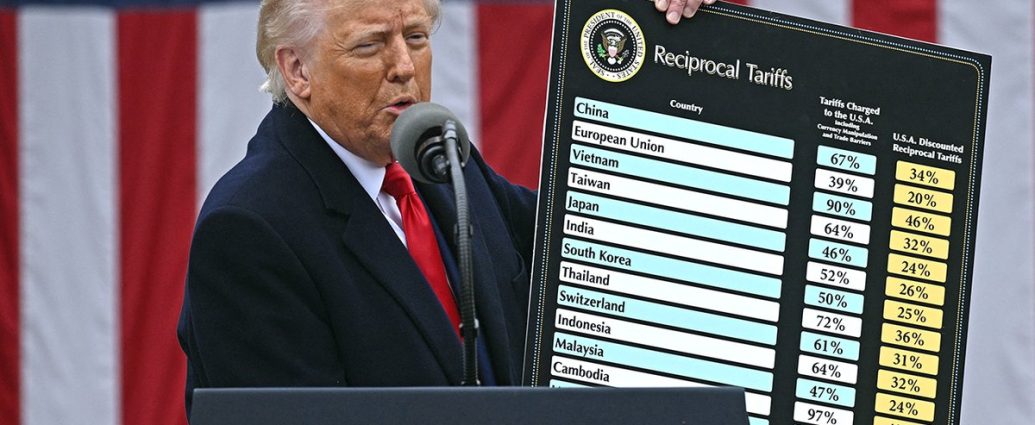
Doug Ford’s political playbook hasn’t changed much in the past year. Trump tariffs are still front and centre in Queen’s Park, and honestly, it’s not hard to see why.
Ontario’s economy took a beating when the trade barriers went up. Manufacturing jobs disappeared. Auto plants cut shifts. The ripple effects hit everything from steel production to agriculture exports.
Ford built his response around one simple message: fight back hard, lobby harder, and make sure everyone knows it’s not Ontario’s fault.
The Numbers Paint a Stark Picture
Here’s where it gets interesting. Ontario lost roughly 47,000 manufacturing jobs in the first eight months after the tariffs kicked in. That’s not a small blip.
Auto sector employment dropped 12% year-over-year, translating to approximately 18,400 lost positions across southwestern Ontario. Steel production fell 18%, costing the province an estimated $2.3 billion in lost output. Even the lumber industry saw exports to the U.S.
Collapse by nearly 30%, affecting roughly 12,000 workers in northern communities.
The financial damage extended beyond job losses.
Ontario’s merchandise exports to the United States dropped from $168.7 billion in 2017 to $149.2 billion by the end of 2019, representing a $19.5 billion hit to the provincial economy. Manufacturing GDP contracted by 3.8% over the same period, the worst performance since the 2008 financial crisis.
Ford’s team has been throwing these statistics around like confetti at every press conference. The strategy is pretty clear: remind voters who’s really to blame for their economic pain.
But the opposition parties aren’t buying the narrative that Ford’s doing everything he can (yes, really). Andrea Horwath, the NDP leader, didn’t mince words during Question Period last week.
We’ve seen a lot of finger-pointing and not enough action to diversify our economy away from dependence on volatile trade relationships. This government has had two years to build resilience, and instead we get more photo ops and press releases.
That criticism stings because it hits at Ford’s biggest vulnerability: the gap between his tough-talking rhetoric and measurable economic results.
The Political Calculation Behind the Strategy
Look, Ford’s not stupid. He knows economic anxiety translates to votes, and his government has spent $847 million on various economic response programs since the tariffs took effect in March 2018.
His government has launched three separate “Buy Ontario” campaigns in the past year, each costing taxpayers roughly $12 million in advertising and promotion. They’ve announced $4.2 billion in subsidies for companies willing to relocate from the U.S. Or expand operations in Ontario.
They’ve even created a new Ministry of Economic Development, Job Creation and Trade with an annual budget of $286 million, focused entirely on what Ford calls “economic sovereignty.”
The bigger picture: Ford is positioning himself as the premier who stood up to Trump when it mattered. Whether that story holds up when Ontario goes to the polls in June 2022 remains to be seen.
Ford’s team has been methodical about this messaging. They’ve organized 47 trade missions to non-U.S. Markets since early 2019, targeting Europe, Asia, and Latin America. The premier himself has made eight international trips, spending a total of 23 days outside Canada promoting Ontario businesses and seeking new trade partnerships.
Here’s the thing though.
Polling data from Ipsos Reid shows 61% of Ontarians still blame American trade policy for the province’s economic struggles. That’s Ford’s sweet spot politically. Another 23% blame the federal government’s handling of trade negotiations, while only 16% point fingers at Queen’s Park.
Where the Cracks in the Strategy Show
Not everything’s working out according to plan, and the numbers tell a more complicated story than Ford’s press conferences suggest.
Ford promised 25,000 new manufacturing jobs would replace the ones lost to tariffs by the end of 2020. So far, the province has added about 8,000, with most concentrated in food processing and pharmaceutical manufacturing. That’s progress, but it’s not exactly the economic miracle Ford was selling to voters.
The automotive sector is still hurting badly. Three major suppliers have announced plant closures in the past six months: Flex-N-Gate in St. Thomas (430 jobs), Martinrea International in Vaughan (287 jobs), and ABC Technologies in Windsor (195 jobs). Two more suppliers, Magna International and Linamar Corporation, are considering moves to Mexico that could affect another 800 positions.
Worth noting: some of these decisions were probably inevitable regardless of trade policy.
Automation was already killing jobs at a rate of roughly 2.3% annually across Ontario manufacturing. Global supply chains were shifting toward lower-cost jurisdictions. But tariffs accelerated everything, compressing changes that might have taken five years into 18 months.
The agricultural sector provides another telling example. Ontario farmers lost $394 million in export revenue during the first year of trade tensions, with soybean growers taking the biggest hit at $187 million in lost sales.
Ford’s government responded with a $50 million support package, but that covered only 13% of documented losses.
And then there’s this. Ford’s approval ratings have stayed remarkably stable through all the economic turmoil. The latest Leger poll shows 52% approval, barely moving up or down despite the ongoing economic challenges. That stability might reflect voter satisfaction with Ford’s combative approach, or it could suggest people aren’t paying close attention to policy details.
Business Community Shows Growing Divisions
The business reaction tells its own story about Ford’s approach, and the divisions are becoming harder to ignore.
Manufacturing groups love Ford’s aggressive stance (shocking, I know). The Canadian Manufacturers and Exporters association has endorsed his trade strategy publicly, praising the government’s $1.8 billion investment in advanced manufacturing incentives.
They want more government support, more subsidies, more trade missions to find new markets. Ford delivers on that front consistently.
But service sector companies are getting impatient with what they see as outdated priorities. Tourism operators don’t care about steel tariffs when they’re dealing with a 27% drop in American visitors since 2018.
Tech startups need skilled workers and regulatory flexibility, not trade warriors and manufacturing subsidies.
The tension came to a head during Ford’s economic summit in September 2019, when Shopify CEO Tobias Lütke openly criticized the government’s focus on traditional industries. His comments sparked a heated exchange that made headlines across the province.
We understand the trade challenges, but Ontario can’t solve its long-term competitiveness issues by fighting the last war. This province needs to build the economy of 2030, not try to resurrect the economy of 1995.
That came from Rocco Rossi, head of the Ontario Chamber of Commerce, during a recent interview with TVO. Diplomatic language, but the message is clear: time to move on from tariff politics and focus on future growth sectors.
Small business owners are somewhere in the middle, though their patience is wearing thin. The Canadian Federation of Independent Business reports that 43% of Ontario small businesses say trade uncertainty has hurt their planning and investment decisions. They appreciate Ford’s fighting spirit, but they need customers with money to spend.
Economic uncertainty doesn’t help anyone pay rent or meet payroll.
What This Means Going Forward
The financial services sector presents another wrinkle. Bay Street firms have largely stayed quiet about Ford’s trade battles, but private conversations reveal frustration with the government’s protectionist rhetoric.
Toronto’s status as a financial center depends on free movement of capital and talent, not the kind of economic nationalism Ford has been promoting.
What This Means for Ordinary Ontarians
If you’re wondering why this matters for the average person, here’s the deal. Ford’s entire political brand is now tied to his handling of the tariff crisis, and that shapes every major decision his government makes.
Infrastructure spending has been redirected toward projects that support manufacturing and exports.
The government’s $28.5 billion transit plan prioritizes connections to industrial areas and border crossings. Healthcare investments focus on regions hit hardest by job losses. Education funding includes new emphasis on skilled trades and manufacturing technology.
For families in places like Windsor, Oshawa, and Hamilton, Ford’s approach offers both hope and frustration. These communities have seen some of the biggest job losses, but they’ve also received the most targeted government support. The $1.4 billion automotive innovation fund has created 3,200 new positions, though many pay less than the assembly-line jobs they’re meant to replace.
Housing costs provide another lens for understanding the impact. In manufacturing-heavy regions, home prices have actually declined as workers leave for opportunities elsewhere. The average home price in Windsor dropped 8.3% between 2018 and 2020, while Toronto-area prices continued climbing. Ford’s trade-focused economic strategy hasn’t addressed this growing regional inequality.
The generational divide is particularly striking. Workers over 45 tend to support Ford’s approach, appreciating his willingness to fight for traditional industries. Younger Ontarians are less impressed, with polling showing 67% of voters under 35 want more focus on technology, climate change, and social issues rather than trade battles.
Opposition Parties Smell Political Opportunity
The opposition parties smell opportunity in Ford’s single-minded focus on trade issues, and they’re not subtle about it.
Liberal leader Steven Del Duca has made “economic diversification” a central theme of his criticism, arguing Ford has been so focused on trade fights that he’s neglected everything else. Hospital wait times have increased 14% since Ford took office. Average class sizes have grown despite his promises. Housing affordability has gotten worse in most regions outside the manufacturing belt.
The NDP is taking a different approach, supporting Ford’s trade stance while questioning his domestic policies. They’ve endorsed his criticism of federal trade negotiators but attacked his cuts to social services and public health. It’s a nuanced position that reflects the party’s traditional support in manufacturing communities.
Green Party leader Mike Schreiner has been the most direct critic, arguing Ford’s approach ignores Ontario’s environmental challenges and the global transition away from carbon-intensive industries. His party remains small but has gained ground in urban ridings where voters are less concerned about manufacturing job losses.
But Ford’s betting Ontarians will reward him for standing up to external threats, and recent polling suggests that calculation might pay off. A September 2020 survey by Forum Research found 58% of decided voters approve of Ford’s handling of trade issues, compared to just 41% who approve of his overall performance.
Federal Politics Add Another Layer of Complexity
The wildcard in Ford’s strategy is what happens with federal politics, and the relationships are getting increasingly complicated.
Ford’s criticism of Justin Trudeau’s trade negotiating has been relentless, but it’s also put him in an awkward position. When the revised NAFTA agreement was signed in January 2020, Ford claimed credit for improvements while continuing to attack the federal government’s handling of the file.
It’s political gymnastics that works better in 30-second clips than detailed policy discussions.
The arrival of a new U.S. Administration adds uncertainty to Ford’s playbook. His entire political narrative is built around fighting Trump’s tariffs and trade bullying. If those policies change, Ford loses his favorite external enemy and has to defend his record on domestic issues where the results are more mixed.
Conservative Party leader Erin O’Toole’s struggles at the federal level also complicate Ford’s positioning. The premier has tried to maintain distance from federal Conservative politics, but his trade-focused messaging aligns closely with O’Toole’s economic nationalism. If federal Conservative support continues declining in Ontario, Ford may need to adjust his approach.
The Reality Check on Economic Results
Honestly, the economic data is mixed at best, and getting more complex as time passes.
Yes, Ontario lost jobs because of tariffs. The province’s unemployment rate peaked at 7.2% in early 2019, well above the national average of 6.8%. But Ontario was already dealing with structural changes in manufacturing that had nothing to do with trade policy. Automation had eliminated roughly 45,000 manufacturing jobs between 2010 and 2017, before any tariffs took effect.
Ford’s response has been politically smart but economically limited. Government subsidies can’t replace lost export markets, and trade missions don’t create demand that isn’t there. The province’s $4.2 billion in business support has created an estimated 12,000 jobs, but at a cost of $350,000 per position.
That’s expensive job creation by any measure.
The bigger challenge for Ontario is building an economy that’s less vulnerable to the whims of whatever politician happens to be in Washington. That requires long-term thinking and investments in education, innovation, and infrastructure that go beyond Ford’s trade-warrior approach.
Some positive signs are emerging. Ontario’s technology sector has added 47,000 jobs since 2018, mostly in Toronto and Ottawa. Clean technology employment has grown by 23% over the same period. These gains don’t make headlines like Ford’s trade battles, but they represent more durable economic change.
Ford’s team would argue they’re doing exactly that kind of long-term building. The opposition says it’s not happening fast enough and certainly not getting enough political attention compared to trade fights.
Here’s what we know for sure: Ford’s political fortunes remain tied to Ontario’s economic recovery. Fifteen months after the worst of the tariff damage hit, that recovery is still very much a work in progress.
What This Means Going Forward
Whether voters reward Ford’s fighting spirit or demand better results will determine not just his political future, but the direction of Ontario’s economy for years to come.
Frequently Asked Questions
How many jobs did Ontario lose due to Trump tariffs?
Ontario lost approximately 47,000 manufacturing jobs in the first eight months after the tariffs were implemented.
What is Doug Ford’s approval rating amid the trade tensions?
Ford’s approval ratings have remained stable at around 52% despite the economic challenges caused by the tariffs.
How many new manufacturing jobs has Ford delivered?
Ford promised 25,000 new manufacturing jobs but has only added about 8,000 so far, falling short of his commitment.