
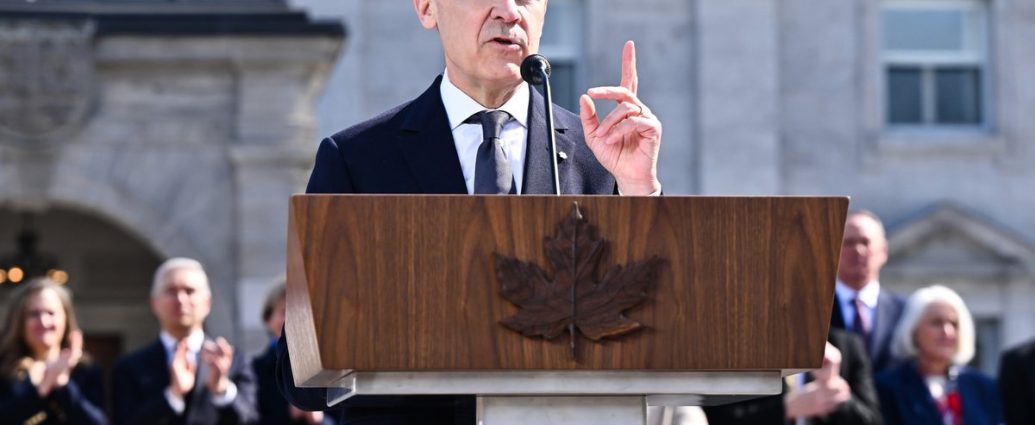
Prime Minister Mark Carney walked off that plane in Mumbai this morning, and honestly? This could be the most important trip a Canadian PM has taken to India in decades. Four days. That’s what they’ve got to fix relations that have been pretty much a disaster since June 2023.
Look, the timing isn’t random here. Ottawa and New Delhi have been in a cold war of sorts, and there’s serious money riding on whether these two sides can get their act together. We’re talking about a $2.3 million budget for this mission alone, plus a 45-person entourage of business folks, trade people, and diplomats.
Here’s What’s Actually Happening
Carney’s got a packed schedule from January 15-18, bouncing between Mumbai and New Delhi.
The PM’s office confirmed he’s meeting with Indian Prime Minister Narendra Modi, External Affairs Minister S. Jaishankar, and Commerce Minister Piyush Goyal. But they’re keeping the details pretty close to the vest.
Word from inside the Canadian delegation? They’re covering everything. Trade deals, immigration headaches, you name it.
Tuesday, Carney’s addressing the Confederation of Indian Industry in Mumbai, then sitting down with 120 Canadian and Indian business executives for what promises to be an interesting conversation. Wednesday he’s hitting up Tata Group headquarters and meeting with Reliance Industries people.
The business crowd’s paying attention, and for good reason. India’s got 1.4 billion people and an economy that’s been growing at 6.7% annually for five years straight. That’s not small potatoes.
Canada-India trade hit $8.4 billion last year. That’s up 12% from 2023, but trade officials think we could be looking at $15-20 billion within a decade if things go right. We’re sending them canola ($1.2 billion worth), lentils ($890 million), and potash ($340 million). They’re sending us pharmaceuticals ($1.8 billion), textiles ($760 million), and IT services ($1.1 billion). There’s room to grow.
The Mess We’re Trying to Clean Up
Can we talk about the elephant in the room? Relations between Canada and India have been a complete mess for the past year and a half.
September 2023 was when everything hit the fan with allegations around the killing of Hardeep Singh Nijjar, that Sikh separatist leader, in Surrey.
That whole thing turned into a diplomatic nightmare.
Canada kicked out Indian diplomat Pavan Kumar Rai in October 2023. India fired back by ordering 41 Canadian diplomatic staff to pack their bags by November 10. Trade missions worth $450 million got shelved. Visa processing went from 3 weeks to 14 weeks. Business deals got caught in the middle of all this.
And then there’s the whole Khalistan situation. Canada’s got a huge Sikh community, and they’ve been pretty vocal about independence for Khalistan. India doesn’t like the referendum events in Toronto, Vancouver, and Calgary. They see it as anti-India activity on Canadian soil. Canada says it’s freedom of expression.
Thing is, Carney’s got to deal with all this without letting it torpedo whatever economic cooperation they can salvage. It’s like walking a tightrope while juggling flaming torches.
The Money Problem
From a dollars-and-cents perspective, the stakes are huge.
India’s economy is going to be the world’s third-biggest by 2030, sitting at an estimated $7.3 trillion (no, seriously). Behind only the US and China. For Canadian companies, that’s opportunity with a capital O.
Energy’s where things get really interesting.
India imports 85% of its oil. They’re desperate to diversify suppliers, and Canadian companies know nuclear tech, renewable energy systems, the whole package. SNC-Lavalin’s already got preliminary deals worth $1.8 billion for nuclear reactor components. Canadian Solar committed $400 million for manufacturing in Gujarat state.
Tech partnerships could be massive too. Canada’s AI research combined with India’s software development? That’s a match made in heaven. Shopify’s Indian operations pulled in $280 million last year. That’s just the start.
Agriculture’s still the bread and butter though. Canadian farmers shipped over $2 billion worth of agricultural products to India in 2024. That makes India our fourth-largest agricultural market globally. We’re talking 340,000 tonnes of canola, 580,000 tonnes of lentils, 125,000 tonnes of wheat. The Canola Council figures improved relations could boost exports by 35% within three years.
Big deal.
“This visit represents a critical opportunity to reset our economic relationship with one of the world’s most dynamic markets. We’re looking at potential partnerships that could create thousands of jobs on both sides and unlock billions in new investment,” said Sarah Chen, President of the Canada-India Business Council, speaking from her Toronto office yesterday.
Immigration’s Getting Messy
Can’t ignore the immigration piece here. Over 1.6 million people of Indian origin live in Canada now. That’s one of our biggest immigrant communities, contributing about $65 billion annually to Canada’s GDP.
But it’s also become a headache.
Canada’s been dealing with fraudulent documents and sketchy education consultants. Immigration Canada found 1,247 cases of fake documentation in 2023. That’s up 340% from 2021. Meanwhile, India’s complaining about how we treat their citizens in our immigration system. Student visa approvals dropped 28% last year.
Those student visas are a real hot button. In 2024, 427,000 Indian students came to Canada, bringing $22 billion into our economy through tuition, housing, living expenses. But there’ve been quality concerns about some schools and questions about the student-to-permanent resident pipeline. Ottawa capped study permits by 35% for 2024, which hit Indian applicants hard.
Carney’s team probably wants to make legitimate immigration smoother while cracking down on fraud. It’s about keeping Canada welcoming while maintaining system integrity. Immigration Minister Marc Miller’s hinting they might announce new bilateral protocols for student verification during the visit.
What’s In It for Regular Canadians
For people going about their daily lives, this diplomatic mission actually matters more than you might think. Better Canada-India relations could mean cheaper stuff at the store, from clothes to prescription drugs, since improved trade usually leads to lower prices.
Prairie farmers have the most skin in this game right now.
The Prairies exported $1.4 billion worth of crops to India last year, supporting about 18,000 jobs across Saskatchewan, Alberta, and Manitoba. If diplomatic tensions keep going, India could slap retaliatory trade measures on us.
That would devastate farming communities. Flip side? Normalized relations could open up market opportunities worth hundreds of millions.
For Canada’s 1.6 million Indian diaspora community, this visit hits close to home (yes, really). Lots of them have family affected by visa delays and travel restrictions.
Average wait time for visitor visas from India jumped from 21 days in early 2023 to 89 days by late 2023. That’s creating real hardship for families trying to get together.
Tech sector folks in Toronto, Vancouver, and Waterloo are watching too. Canadian tech companies want into India’s massive market, while Indian firms want to expand in North America. Better relations could mean partnerships worth billions and high-paying jobs in both countries.
“From a business perspective, we need predictable, professional relations with India. The uncertainty of the past year has cost Canadian companies real opportunities and real money. We’re hoping this visit can provide the stability our exporters and investors need to plan for the future,” explained Michael Roberts, Director of International Trade at the Canadian Chamber of Commerce, during a phone interview yesterday.
What Does Winning Look Like
So what would make this trip a success? Let’s be realistic here. Four days isn’t going to solve everything. But there are concrete things that would signal progress.
Getting regular diplomatic talks back on track, for starters.
That means clear communication channels and probably follow-up visits at the ministerial level. Word is they’re working on quarterly ministerial consultations and a joint economic commission with a $50 million starting budget.
Second, some kind of framework for handling security concerns while keeping people-to-people ties intact. This doesn’t mean ignoring problems, just finding professional ways to manage disagreements. Sources are talking about a bilateral protocol for handling sensitive investigations while maintaining diplomatic norms.
Third, actual business announcements. Even a few major deals would send positive signals to the business community and create momentum for more investment. The Canadian delegation’s reportedly carrying letters of intent worth over $2 billion in potential investments across clean energy, agriculture tech, and digital services.
Optics matter too. Photos of Carney with Indian business leaders, visiting cultural sites, engaging with diaspora communities, that stuff helps reset the narrative. His scheduled Mumbai Sikh temple visit and community leader meetings are designed to show Canada’s commitment to protecting diaspora communities while maintaining bilateral cooperation.
The Road Ahead Won’t Be Easy
Let’s not kid ourselves about the challenges ahead. Trust between these two governments got damaged, and rebuilding takes time. Plus there are domestic politics on both sides that limit how flexible either side can be. Recent Nanos polling shows 34% of Canadian voters support keeping current restrictions on diplomatic engagement with India, while 41% want gradual normalization.
In Canada, there are real concerns about foreign interference and protecting diaspora communities from intimidation.
The government can’t look like it’s compromising on these principles just to get trade deals done. The Public Inquiry into Foreign Interference is still happening, with hearings through March 2024 that could reveal sensitive stuff affecting bilateral relations.
In India, there’s frustration about what they see as Canada giving platforms to anti-India activities. Modi’s government faces pressure from its base not to look weak dealing with separatist movements.
Recent polling in India shows 67% of people support maintaining a firm stance against countries that “harbor anti-national elements.”
The trick is finding ways to compartmentalize these issues so they don’t wreck cooperation in areas where both countries win. It’s about managing disagreements while building on shared interests.
Economic partnerships, climate cooperation, educational exchanges. These are all areas where progress is possible even if political tensions stick around.
The key isn’t letting perfect be the enemy of good. Canada and India both committed to net-zero emissions by 2050 and 2070 respectively, creating opportunities for clean tech collaboration worth about $8 billion over the next decade.
For Canadian businesses watching this visit, the message should be cautiously optimistic. Yeah, the relationship’s complicated. But the economic fundamentals are still solid. India’s growth trajectory and Canada’s resource wealth create natural complementarities that smart companies can work with.
What This Means Going Forward
These next few days will tell us whether both sides are serious about turning the page. If they’re, this Mumbai visit could mark the start of a new chapter in one of Canada’s most important international relationships. The stakes are too high, the opportunities too big, for both countries to let political differences derail what could be a transformative economic partnership worth tens of billions of dollars and hundreds of thousands of jobs on both sides of the Pacific.
Frequently Asked Questions
Why is Mark Carney visiting India now?
The visit aims to reset Canada-India relations after diplomatic tensions and rebuild economic partnerships between both countries.
What are the main issues between Canada and India?
Key tensions include disputes over Sikh separatist activities, diplomatic incidents, and immigration policy concerns affecting both nations.
How important is India for Canadian trade?
India is Canada’s fourth-largest agricultural market with bilateral trade worth $8.4 billion in 2024, though both sides see potential for much more.