
Two big-name Canadian leaders are making completely different pitches to India right now (at least on paper). The contrast? It’s telling you everything about where Canada-India relations stand after months of diplomatic mess.
Saskatchewan Premier Scott Moe just finished up a trade mission to India. His take was pretty blunt. Canada has “fallen behind” other countries when it comes to doing business with the world’s most populous nation.
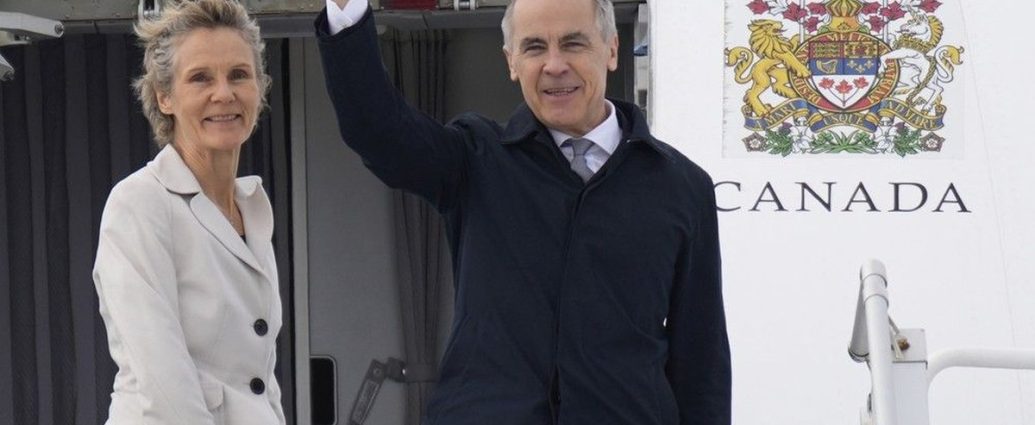
Meanwhile, Mark Carney‘s in New Delhi checking out energy partnerships. The former Bank of Canada governor who’s eyeing Liberal leadership is betting that Canada’s clean energy know-how could be the key to fixing this relationship.
These parallel missions happening at the same time? That’s not an accident. Both leaders are trying to save economic opportunities from a diplomatic relationship that’s been crashing since September 2023. Their approaches couldn’t be more different, but they’re chasing the same urgent goal: stopping Canada from becoming irrelevant in the world’s fastest-growing major economy.
Moe Doesn’t Mince Words
Moe didn’t sugar-coat anything during his India visit. The premier told reporters straight up that Canada’s lost ground to competitors like Australia and the United States in the Indian market.
“We have fallen behind other nations in our trade relationship with India,” Moe said. “That’s the reality we need to face.”
The numbers back him up. Big time. Canada-India trade hit $8.2 billion in 2023, but that’s nothing compared to what other countries are doing. Australia’s trade with India topped $27.8 billion last year – that’s a 45% jump from 2022. The U.S. Pushed past $190 billion, making it India’s biggest trading partner.
Here’s what’s really telling: Canada’s share of India’s total trade has dropped from 0.8% in 2019 to just 0.6% in 2023. Same time period? Australia’s share jumped from 1.9% to 2.4%.
Saskatchewan’s got particular reason to sweat this. The province ships massive amounts of canola, wheat, and potash to India. Back in 2022, Saskatchewan sold $2.1 billion worth of agricultural stuff to India – that’s 18% of the province’s total exports.
But diplomatic tensions have made those deals way harder to close.
Moe’s five-day trip focused on agricultural partnerships and investment opportunities. He sat down with Indian business leaders in Mumbai and New Delhi, trying to rebuild connections that got damaged during the diplomatic mess.
The premier visited three major agricultural companies, two fertilizer manufacturers, and held roundtables with over 150 Indian executives.
During his Mumbai stop, Moe signed a preliminary memorandum of understanding with Maharashtra state officials. They’re exploring canola oil processing facilities. The deal could be worth $400 million over five years if it actually moves forward.
“Saskatchewan farmers feed the world, and India has 1.4 billion people who need to eat,” Moe said at a business dinner in New Delhi. “The math is simple, but the politics have made it complicated.”
Carney’s Different Angle
While Moe was talking agriculture, Carney was pushing something else entirely. Clean energy and climate technology.
The former central banker’s betting that Canada’s expertise in renewable energy, carbon capture, and critical minerals could appeal to India’s massive infrastructure needs. India’s building like there’s no tomorrow right now and needs cleaner ways to power all that growth.
India’s energy challenge is absolutely staggering. The country plans to invest $2.4 trillion in energy infrastructure by 2030. It wants to reach 500 gigawatts of renewable energy capacity by that same date, up from 175 gigawatts today. India also aims to produce 5 million tonnes of green hydrogen annually by 2030.
That’s a lot of ambition.
Carney met with energy executives and government officials during his four-day Delhi visit. He’s pushing Canada as a reliable supplier of the lithium, nickel, and rare earth elements that India needs for its green transition.
Canada controls about 9% of global lithium reserves and 5% of nickel reserves.
There’s more to it than that.
More importantly, it offers political stability that other resource-rich countries don’t. That matters to India as it tries to reduce dependence on China for critical minerals.
During his visit, Carney toured Tata Power’s renewable energy facilities and met with Adani Group executives about potential partnerships. He also held talks with India’s Ministry of New and Renewable Energy about technology transfer agreements.
But here’s the thing. Carney’s timing is really interesting. He’s clearly using this India trip to boost his profile ahead of the Liberal leadership race. Nothing says “prime ministerial” like conducting informal diplomacy, right?
Carney’s team organized media interviews and photo ops that looked suspiciously like campaign events. He even brought along two Liberal MPs who’ve endorsed his expected leadership bid.
The Big Diplomatic Mess
Both Moe and Carney are working around a massive elephant in the room (not a typo). Canada-India relations are still a complete mess after the Hardeep Singh Nijjar thing.
Prime Minister Justin Trudeau’s accusation that India was involved in the Sikh activist’s killing on Canadian soil absolutely blew up the relationship in September 2023. India denied everything and both countries started kicking out diplomats.
The timeline of destruction was pretty swift. September 18, 2023: Trudeau made his explosive allegation in Parliament. By October 19, Canada had expelled six Indian diplomats, including the high commissioner. India responded by kicking out six Canadian diplomats and suspending visa services.
The fallout hit trade right away. India slowed visa processing for Canadians by 80%. Processing times that used to take 15 days stretched to 60 days or longer. Some business deals got put on ice. Investment projects worth an estimated $3.2 billion stalled or got cancelled entirely.
Canadian canola exports to India dropped 22% in the fourth quarter of 2023 compared to the same period in 2022. Pulses exports fell 15%.
Even tourism took a hit – Canadian visitors to India were down 31% in early 2024.
That’s exactly why Moe and Carney are out there doing damage control right now. Provincial and corporate leaders are trying to rebuild bridges that federal politics damaged.
What This Actually Means for Your Job
The deteriorating India relationship hits different parts of the Canadian economy in very real ways. And the damage is spreading way beyond the obvious agricultural exports.
In Saskatchewan alone, about 12,000 jobs depend directly on agricultural exports to India. The Canola Council of Canada estimates that every $1 billion in canola exports supports roughly 4,200 jobs across the supply chain. With India buying $800 million worth of Canadian canola annually, that’s over 3,300 jobs at risk.
It’s not just farmers though.
Canadian engineering firms have been locked out of infrastructure projects worth billions.
SNC-Lavalin lost out on three major contracts in 2023, including a $1.8 billion transportation project in Karnataka state. Indian officials cited “political sensitivities” in their rejection letters.
The tech sector’s feeling it too. Canadian IT companies employed about 45,000 Indian nationals on work visas before the diplomatic crisis. Visa delays are now forcing some of these companies to move operations to other countries.
Shopify had been expanding its Indian operations but put those plans on hold in late 2023. The company was planning to hire 2,000 engineers in Bangalore and Chennai but shifted those jobs elsewhere.
And Canadian universities? They’re losing international students. India was the largest source of international students for Canada in 2023, contributing $4.9 billion to the economy. But applications from Indian students dropped 35% in the first quarter of 2024.
The University of Toronto enrolled 8,200 Indian students in 2023 but saw applications fall by 40% for the 2024-25 academic year. That’s roughly $48 million in lost tuition revenue for one institution alone.
The Real Money on the Table
Look, the numbers matter here. India’s economy is growing at over 6% annually. The middle class is exploding. Infrastructure spending is massive.
Indian consumer spending is projected to reach $6 trillion by 2030, up from $2.1 trillion in 2023. The country’s adding 25 million people to its middle class every year. That’s like creating a new Canadian market annually.
Canadian businesses want a piece of that action. But they’re competing against countries that didn’t accuse India of political assassinations.
Australia’s been particularly aggressive in courting India. The two countries signed the Economic Cooperation and Trade Agreement in 2022, which eliminated tariffs on 85% of Australian goods. Australian agricultural exports to India have doubled since then.
The European Union is negotiating its own full trade deal with India. Early estimates suggest it could be worth $15 billion annually in new trade flows. Canada isn’t even at the negotiating table.
Saskatchewan alone could export billions more in agricultural products if relations were normal. The province has the capacity to double its canola exports to India – that would add $800 million annually to Saskatchewan’s economy.
Alberta sees huge potential for energy partnerships. The province’s oil sands companies have developed carbon capture technology that India needs for its industrial facilities.
Potential deals worth $2.3 billion have been shelved because of diplomatic tensions.
Ontario manufacturers want access to India’s growing consumer market. The province’s auto parts industry could supply India’s booming electric vehicle sector, but trade barriers remain high without a full trade agreement.
The flip side? India needs what Canada has. Food security’s a big deal for a country with 1.4 billion people. Canada’s one of the world’s most reliable agricultural exporters.
What This Means Going Forward
India imports 65% of its cooking oil, and Canadian canola’s a major source. The country also imports 40% of its pulses, with Canada supplying about 30% of that market. These aren’t luxury items India can do without.
Let that sink in.
India also needs critical minerals for its green energy push. Canada has massive deposits of lithium, cobalt, and rare earths. More importantly, Canada offers supply chain security that China doesn’t.
Why the Timing Couldn’t Be Worse
The Canada-India trade dispute’s happening at the worst possible time for the global economy. Supply chain disruptions from the pandemic and the Russia-Ukraine war have made countries way more focused on diversifying their trading relationships.
India’s actively pursuing this diversification strategy. The country’s signed trade deals with Australia and the UAE in the past two years. It’s negotiating agreements with the UK, EU, and several ASEAN countries. Canada’s conspicuously absent from this list.
The timing’s particularly bad because India’s about to become the world’s third-largest economy. Goldman Sachs projects India’s GDP will reach $7.3 trillion by 2030, surpassing Germany and Japan. Missing out on that growth trajectory could cost Canada hundreds of billions in lost trade opportunities.
Other countries are already filling the gaps Canada’s leaving behind. Brazil increased its agricultural exports to India by 34% in 2023. Argentina boosted its sales by 28%. Even smaller players like Ukraine – despite being at war – managed to increase exports to India by 15%.
The geopolitical stuff’s just as significant. As China’s relationship with the West becomes more strained, India represents the best alternative for democratic countries seeking large-scale economic partnerships. Canada’s absence from this relationship weakens its position in the broader Indo-Pacific strategy.
What’s Coming Next
The real test will be whether these business-focused trips can create momentum for broader diplomatic repair.
Indian officials seem willing to separate trade from politics, at least partially.
They’re still meeting with Canadian business leaders and premiers. That’s something. India’s Commerce Minister Piyush Goyal has publicly stated that business relationships should continue despite political disagreements.
But there are limits to this approach. Major infrastructure projects and government procurement contracts remain off-limits to Canadian companies. These represent the biggest opportunities in the Indian market.
The business community on both sides is pushing for resolution. The Canada-India Business Council has hired lobbying firms in both countries to advocate for renewed dialogue. They’re proposing a “trade first, politics later” approach.
And here’s another factor: India’s hosting the G20 again and wants to be seen as a responsible global power. Completely freezing out Canada doesn’t help that image. India’s foreign ministry has signaled willingness to engage in “quiet diplomacy” to resolve issues.
The election calendar matters too. India holds national elections in 2024, and Prime Minister Narendra Modi’s BJP party wants to showcase economic achievements. Restored trade relationships could be part of that story.
In Canada, the Liberal leadership race means foreign policy could shift depending on who wins. Carney’s India trip is basically a preview of how he might approach the relationship differently than Trudeau.
The bigger picture is that both countries need each other more than their governments want to admit. India needs reliable food and energy suppliers as it grows. Canada needs growing export markets as traditional partners face their own economic challenges.
Business leaders in both countries are betting that economic necessity will eventually override political stubbornness. The question is how much economic damage both sides will accept before reaching that conclusion.
What This Means Going Forward
Whether Trudeau and Modi can get past their mutual stubbornness is another question entirely. For now, it’s premiers and former central bankers doing the heavy lifting, trying to preserve economic relationships that took decades to build but only months to wreck.
Thing is, this can’t go on forever. Too much money’s at stake.
Frequently Asked Questions
Why has Canada fallen behind in India trade?
Diplomatic tensions after the Hardeep Singh Nijjar affair damaged business relationships, while countries like Australia and the U.S. expanded their Indian partnerships.
What is Mark Carney hoping to achieve in India?
Carney is exploring clean energy partnerships and positioning Canada as a supplier of critical minerals needed for India’s green transition.
How much trade does Canada do with India compared to other countries?
Canada-India trade was $8.2 billion in 2023, far behind Australia’s $27 billion and the U.S.’s $190 billion with India.