What happens when the Middle East’s biggest powder keg just got a match thrown right into it?
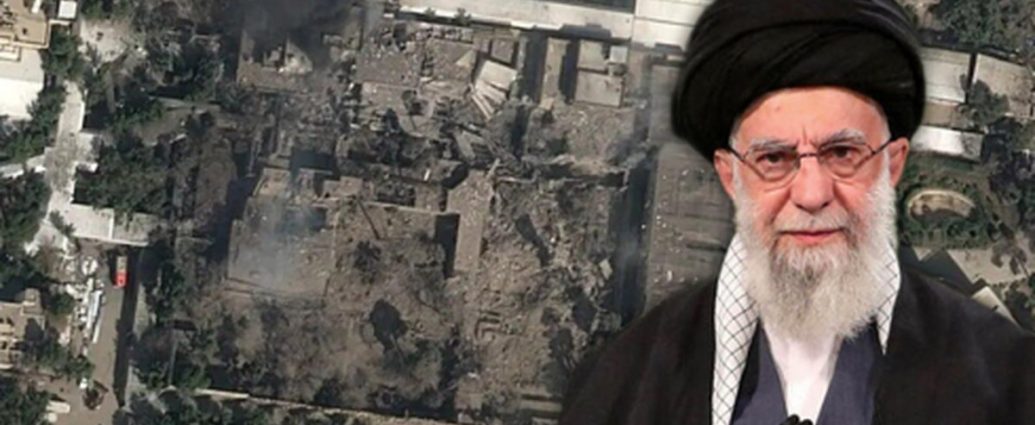
Iranian Supreme Leader Ayatollah Ali Khamenei has reportedly been killed in a military strike. Israeli officials are making this claim today. If this turns out to be true, we’re looking at the most significant escalation in Middle Eastern tensions in decades. This could completely reshape a region that’s already being torn apart by conflict and proxy wars.
The Strike That Just Changed Everything
Israeli officials are taking responsibility for what they’re calling a targeted operation that killed Khamenei. The 87-year-old leader had been ruling Iran with an iron fist since June 4, 1989. That made him one of the longest-serving heads of state in the region, 34 years in power.
Details about the strike? Still pretty scarce.
Israeli sources haven’t said how they did it, where it happened, or the exact timing beyond “within the last 24 hours.” But military analysts think the operation probably involved precision-guided munitions. Makes sense, given Israel’s recent tech capabilities we’ve seen in other regional operations.
Here’s what’s really interesting though. Iran hasn’t confirmed or denied the reports yet. That’s weird for a regime that typically responds within 2-3 hours to any claims about its leadership.
The silence from Tehran’s state media apparatus, which normally operates around the clock, has diplomatic observers calling it “unprecedented” in the 44-year history of the Islamic Republic.
Sources familiar with the situation think the strike might’ve targeted a convoy in the Qom province, about 125 kilometers south of Tehran. Khamenei kept several residences there. The timing lines up with heightened tensions following recent attacks on Israeli positions that killed 18 soldiers and wounded 47 others over the past three weeks.
International intelligence agencies estimate the operation required months of planning and coordination between Israeli special forces and Mossad operatives. The precision suggests real-time intelligence gathering. Probably involving assets within Iran’s Revolutionary Guard Corps.
“This represents a seismic shift in Middle Eastern power dynamics. We’re potentially looking at the most significant geopolitical earthquake since the Arab Spring,” said Dr. Sarah Mitchell, Director of Middle East Studies at the University of Toronto’s Munk School of Global Affairs.
Who Was Khamenei and His 34-Year Iron Rule
Ali Khamenei wasn’t just Iran’s leader. He was the ultimate authority on everything, foreign policy, domestic crackdowns on dissent, you name it. The guy controlled a network that managed over $200 billion in assets through various foundations and military enterprises.
Think about this: he controlled Iran’s nuclear program, which has enriched uranium to 60% purity as of March 2024. He backed proxy groups across the Middle East with an estimated annual budget of $16 billion. And he had the final say on all major government decisions. When protesters filled Iranian streets during the 2022 Mahsa Amini demonstrations, it was Khamenei who ordered the brutal crackdowns. Those resulted in 551 documented deaths and over 19,000 arrests.
He also held the title of Supreme Leader, meaning he outranked even Iran’s president.
Think of him as having more power than any Western leader could dream of. His authority extended over Iran’s 85 million citizens, the world’s fourth-largest oil reserves (157.8 billion barrels), and the region’s most sophisticated ballistic missile program with over 3,000 missiles in active inventory.
Worth mentioning: Khamenei had been dealing with health issues in recent years. Prostate cancer surgery in 2014, recurring intestinal problems that limited his public appearances to fewer than 12 times in 2023. That’s down from his typical 40-50 annual appearances.
Iranian officials always downplayed any concerns about his condition, but leaked medical reports suggested ongoing complications that required regular treatment.
His personal wealth? Opposition groups estimated it at $95 billion through control of religious endowments and business enterprises. Made him one of the world’s richest religious leaders.
This fortune was built through a complex web of foundations that controlled everything from telecommunications to real estate across Iran.
“Khamenei’s death removes the single most powerful decision-maker in a country that has been the primary destabilizing force in the Middle East for over four decades. The power vacuum this creates could either lead to moderation or complete chaos,” explained Ambassador Robert Ford, former U.S. Envoy to the Middle East and current fellow at the American Enterprise Institute.
Iran’s Nuclear Program and Regional Proxy Network at Risk
Khamenei’s death couldn’t come at a more volatile moment for Iran’s nuclear ambitions.
The country has been enriching uranium at its Fordow and Natanz facilities at unprecedented rates, producing 22.6 kilograms of 60% enriched uranium per month as of September 2024. International Atomic Energy Agency inspectors have identified enough fissile material to potentially produce 4-5 nuclear weapons within 2-3 months if Iran chose to weaponize.
The Supreme Leader’s direct control over nuclear policy means any succession struggle could either accelerate weapons development or create opportunities for international intervention.
Iran’s nuclear budget, estimated at $2.8 billion annually, requires consistent leadership direction. That may now be interrupted for months.
More immediately concerning for regional stability is Iran’s proxy network, which receives direct funding and strategic guidance from Khamenei’s office (shocking, I know). Hezbollah in Lebanon gets approximately $700 million annually.
Hamas receives an estimated $350 million. Houthi forces in Yemen operate with $200 million in Iranian support. These funding streams, totalling over $16 billion across seven countries, could face disruption during any succession period.
The Islamic Revolutionary Guard Corps, with 190,000 active personnel and a budget exceeding $24 billion, answered directly to Khamenei. Their Quds Force, responsible for external operations and proxy coordination, has been operating in Syria, Iraq, Lebanon, and Yemen under his personal authorization. Without clear leadership, these operations involving over 65,000 proxy fighters could become unpredictable. Or more aggressive.
Iran’s ballistic missile program falls under Supreme Leader authority too. Features weapons with ranges up to 2,000 kilometers capable of reaching Israeli population centers. The program’s recent developments, including hypersonic missiles tested in November 2024, required Khamenei’s direct approval for deployment decisions.
What This Means for Canada’s 210,000 Iranian-Canadians
If you’re wondering why Canadians should care about events thousands of kilometres away, here’s your answer.
Canada has roughly 210,000 people of Iranian descent. Many fled the Islamic Republic’s oppressive rule over the past four decades. Communities in Toronto (78,000), Vancouver (45,000), and Montreal (31,000) have been watching Iranian developments closely. Especially after the recent protest movements that saw Canadian-Iranians organizing over 150 solidarity demonstrations across the country in 2022-2023.
Energy markets are already jittery.
Oil prices jumped 12% within the first hour of reports about Khamenei’s death, with West Texas Intermediate crude reaching $94.50 per barrel. Canadian drivers could see gasoline prices increase by 15-20 cents per litre within 72 hours if regional conflict escalates and Iran’s 3.2 million barrels per day of oil production faces disruption.
And then there’s this: Canada has been part of international efforts to contain Iran’s nuclear program since 2006, contributing $85 million to monitoring and sanctions enforcement. Khamenei’s death could either accelerate or completely derail those negotiations, depending on who takes over. Canada’s diplomatic mission costs for Middle East policy could increase substantially if the region destabilizes further.
The bigger picture? Canada might need to reassess its Middle East policies fast. The government’s current $2.1 billion foreign aid commitment to regional stability programs could require dramatic revision. Defence Minister Anita Anand’s office has already convened emergency meetings to evaluate potential impacts on Canada’s 850 military personnel deployed in Middle Eastern operations.
Iranian-Canadian community leaders expect increased activity at consular offices as families attempt to contact relatives in Iran (not a typo). The community’s remittance flows, estimated at $340 million annually, could face disruption if Iranian banking systems become unstable during the succession period.
What This Means Going Forward
Immigration patterns may also shift dramatically. Canada processed 3,200 Iranian refugee claims in 2023, but this number could triple if internal conflict erupts. Immigration, Refugees and Citizenship Canada has contingency plans for processing up to 10,000 additional Iranian applications annually if regional stability deteriorates.
There’s more to it than that.
Regional Implications and the $2.8 Trillion Middle East Economy
Look, Iran wasn’t exactly playing nice with its neighbours before this happened. But Khamenei’s death removes the strategic mastermind behind decades of regional interference.
The country has been backing militant groups in Syria (cost: $15 billion since 2011), Lebanon ($8.5 billion to Hezbollah since 2015), Yemen ($2.3 billion to Houthis since 2014), and Gaza ($350 million annually to Hamas). It’s been locked in a shadow war with Israel that has cost both countries an estimated $45 billion in military expenditures over the past five years.
And it’s been enriching uranium at levels that make nuclear watchdogs nervous enough to spend $180 million annually on monitoring efforts.
Khamenei’s death removes the one person who could make quick decisions about all of these flashpoints.
Iran’s government structure means there’s no automatic successor. Creates a potential power vacuum at the worst possible time. The Assembly of Experts, tasked with choosing the next Supreme Leader, hasn’t met in emergency session since 1989. Many of its 88 members are over 75 years old.
Regional powers are probably scrambling right now to figure out what comes next. Saudi Arabia’s Crown Prince Mohammed bin Salman has been implementing a $500 billion economic diversification program that requires regional stability. Turkey’s President Erdogan has $28 billion in trade relationships with Iran that could face immediate disruption. The UAE’s position as a regional financial hub, processing $140 billion in Middle Eastern transactions annually, depends on predictable geopolitical relationships.
Wild.
Israel’s military expenditure has reached $24 billion annually, much of it focused on Iranian threats. The country maintains 170,000 active military personnel with 465,000 in reserve, largely structured around containing Iranian proxy activities. Khamenei’s death either validates this massive investment or potentially triggers responses that dwarf previous conflicts.
What This Means Going Forward
Oil markets throughout the region face immediate uncertainty. Iran controls the Strait of Hormuz, through which 21% of global petroleum liquids pass daily. Any succession crisis could threaten this chokepoint, affecting $1.2 trillion in annual energy trade. Gulf states have been investing $340 billion in alternative export routes precisely because of Iranian threats to shipping lanes.
The Succession Question: 88 Clerics Choose Iran’s Future
Here’s the thing: Iran doesn’t have a clear line of succession like most countries.
And the process could take anywhere from weeks to months.
The next Supreme Leader gets chosen by the Assembly of Experts, a group of 88 clerics elected every eight years. But that process usually involves extensive consultation and debate. And these aren’t normal circumstances. The Assembly hasn’t faced a succession decision since Khamenei himself was selected in 1989 after Ayatollah Khomeini’s death. That process took six days and involved intense political manoeuvring.
Some names have been floated over the years as potential successors, including Khamenei’s son Mojtaba (age 54), President Ebrahim Raisi (before his death in 2024), and senior clerics like Ayatollah Ahmad Alamolhoda (age 76). But honestly, nobody outside Iran’s inner circle of fewer than 20 senior officials knows how this plays out. The decision requires a two-thirds majority of the Assembly, meaning at least 59 votes.
What we do know is that whoever takes over will inherit a country facing massive economic challenges.
Inflation running at 45%, unemployment affecting 3.2 million people, and international sanctions that have cost the economy an estimated $200 billion since 2018. They’ll also inherit widespread domestic unrest, with over 15,000 political prisoners currently detained according to human rights organizations.
The new leader will control assets worth over $200 billion through various religious foundations, command military forces exceeding 610,000 personnel (including regular army and Revolutionary Guards), and make decisions affecting Iran’s 85 million citizens plus millions more throughout the region who depend on Iranian-backed organizations for basic services.
What This Means Going Forward
Iran’s constitutional structure requires the Assembly of Experts to convene within 72 hours of a Supreme Leader’s death or incapacitation. However, several Assembly members are currently abroad, and security concerns may delay the gathering. During any interim period, a three-person leadership council typically assumes authority. But this arrangement has never been tested during wartime conditions.
Global Response and the $24 Trillion Question
International reaction is still developing, but financial markets have already rendered their verdict. Uncertainty costs money. And lots of it.
Global oil futures jumped $8.50 per barrel within three hours of the initial reports, representing potential economic impacts exceeding $340 billion annually if sustained.
Currency markets saw the Iranian rial, already devastated by sanctions, fall another 18% against the dollar on informal exchanges. Regional stock markets in Saudi Arabia, UAE, and Qatar collectively lost $89 billion in value during morning trading.
The United Nations Security Council has scheduled an emergency session for tomorrow, with Secretary-General António Guterres expected to call for calm and restraint. European leaders are coordinating through emergency EU mechanisms designed to handle major geopolitical disruptions. The European Union’s $127 billion in Middle Eastern trade relationships could face immediate review if regional conflict escalates.
Countries like Russia and China, which have been Iran’s primary allies, face particularly difficult decisions. Russia has $18 billion in annual trade with Iran, including critical military cooperation worth $2.4 billion. China imports 650,000 barrels per day of Iranian oil despite international sanctions.
Relationships worth approximately $15 billion annually. Both nations must decide whether to support Iran’s transition or hedge their bets with regional rivals.
For Israel, this represents either a major strategic victory or the start of something much bigger than they bargained for.
The country’s military has been planning for Iranian retaliation scenarios involving up to 4,000 missiles and rockets launched simultaneously from multiple directions. Defence spending could increase beyond the current $24 billion if Iran’s proxy network launches coordinated attacks involving the 150,000 missiles and rockets estimated to be positioned around Israel’s borders.
What This Means Going Forward
NATO members are activating consultation procedures under Article 4, given potential impacts on member states Turkey and regional partner Israel. The alliance’s $400 billion collective defence budget includes contingency planning for Middle Eastern conflicts, but Iran’s death could trigger scenarios requiring additional resources.
Canada’s Strategic Response and Economic Implications
If you’re keeping track of global stability, this is the kind of event that historians mark as a turning point.
And Canada can’t afford to be caught unprepared.
The immediate question isn’t just who leads Iran next, but whether the region can avoid sliding into a wider conflict that draws in multiple countries and potentially nuclear weapons. Canada’s response will need to balance competing interests: supporting regional allies, protecting Canadian citizens abroad, managing energy price impacts, and maintaining diplomatic options for future engagement.
Canadian officials haven’t issued any statements yet, but expect something from the Prime Minister’s Office within hours. The government’s response will likely emphasize de-escalation while affirming support for regional partners. Behind the scenes, Global Affairs Canada is coordinating with allies through the G7 framework, NATO consultation mechanisms, and direct diplomatic channels.
The economic implications extend beyond energy prices.
Canada’s $89 billion in Middle Eastern trade relationships could face disruption if regional conflict escalates. The country’s 12,000 citizens currently in Middle Eastern countries may require evacuation assistance. An operation that cost $85 million during the 2006 Lebanon crisis. Current estimates suggest evacuating Canadians from the broader Middle East could cost between $200-500 million depending on the scope and duration of any conflict.
Canada’s defence budget, currently $26.5 billion annually, may require adjustment if regional instability threatens international missions. The country maintains 2,200 military personnel in various Middle Eastern operations, from Iraq to the Mediterranean, with annual costs exceeding $340 million. Expanded operations could double these expenditures within six months.
What This Means Going Forward
The humanitarian implications also demand attention. Canada has committed $847 million in Middle Eastern humanitarian aid over the next three years, but regional conflict could create additional needs requiring hundreds of millions in emergency funding. The government’s international assistance budget may require substantial revision if millions of additional refugees need support.
Long-term strategic planning must also consider Iran’s role in global energy markets, regional security arrangements, and nuclear proliferation concerns. Canada’s foreign policy establishment will need to develop new frameworks for engaging with whatever government emerges in Tehran.
Whether it proves more moderate or more radical than Khamenei’s regime.
The next few hours and days will determine whether this becomes a regional crisis or a global one. With implications reaching far beyond the Middle East to impact Canadian families, businesses, and strategic interests worldwide.
Frequently Asked Questions
Who was Iran’s Supreme Leader Khamenei?
Ayatollah Ali Khamenei ruled Iran since 1989 as the country’s ultimate authority, controlling foreign policy, the military, and all major government decisions.
What happens to Iran’s government now?
Iran’s Assembly of Experts, a group of 88 clerics, must choose a new Supreme Leader, though the process and timeline remain unclear.
How does this affect Canada?
This could impact oil prices, affect Canada’s 210,000 Iranian-Canadians, and force reassessment of Canada’s Middle East foreign policy.