
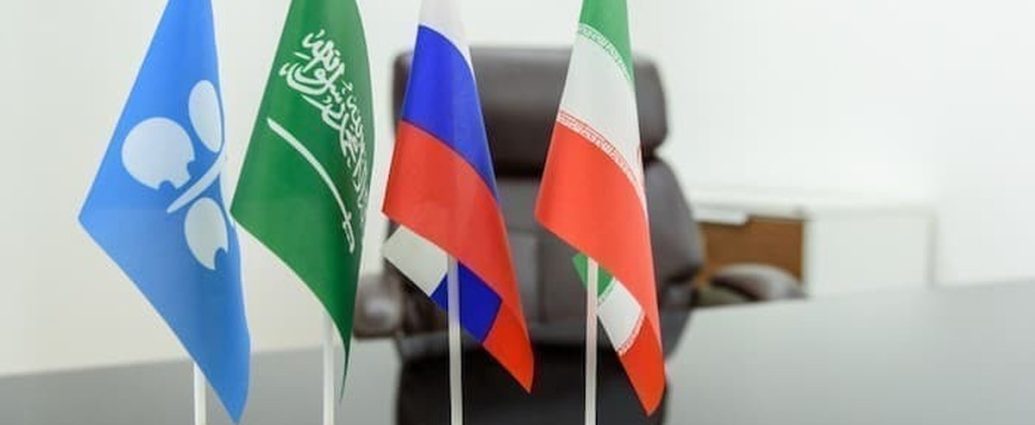
Oil markets are turning into a real mess, and OPEC+ just pulled a move that’s probably way too little, way too late. The cartel signed off on a pretty small 206,000 barrel per day production bump for April today, but let’s be real here. That’s like showing up with a garden hose when the whole neighborhood’s on fire, especially with all the supply chaos tearing through the Middle East right now.
Here’s the actual situation playing out. The Strait of Hormuz handles over 20% of the world’s crude shipments, and it’s basically turned into a traffic jam. Hundreds of ships are just sitting there, anchored on both sides, because shipping companies figured out that sailing through probably isn’t the smartest business decision. Several vessels have already gotten hit as this whole U.S.-Israeli conflict with Iran keeps getting worse.
Breaking Down the Numbers
OPEC+’s April increase covers eight main players: Saudi Arabia, Russia, the UAE, Iraq, Kuwait, Kazakhstan, Algeria, and Oman. That 206,000 bpd boost wraps up a three-month production freeze that started back in January 2024.
But it’s way smaller than those 411,000 to 548,000 bpd increases everyone was talking about in recent meetings.
Just to put this in perspective, we’re talking about the difference between what a decent-sized oil field pumps out versus what a major producer can actually deliver (not a typo). This increase?
It’s barely 0.2% of global oil production, which sits around 102 million barrels daily right now. When you’re staring down potential supply shocks from a region that controls a fifth of the world’s oil flows, 206,000 barrels feels pretty weak.
Sunday evening brought the official announcement after some intense weekend horse-trading, with the group releasing their statement following an emergency virtual meeting. Word from industry insiders suggests this cautious approach reflects real uncertainty about how much extra oil can actually make it to markets with all the transportation mess going on.
“The modest increase may do little to calm markets given the physical constraints on moving oil through the Gulf region,” said Tom Kloza, chief oil analyst at the Oil Price Information Service.
Brent crude’s already feeling the pressure. After climbing to $73 on Friday (the highest we’ve seen since July 2023), over-the-counter trading pushed it toward $80 per barrel by Sunday. That’s a 9.6% spike in just two days, and it’s happening because traders understand the real problem isn’t about pumping more oil.
It’s about whether that oil can actually get to the people who want to buy it.
How Saudi Arabia Got Ahead of This
The Saudis didn’t sit around waiting for committee votes. They’d already cranked up production by roughly 500,000 bpd over recent weeks, pushing their total output to around 10.5 million barrels daily. Basically, they prepped for the supply disruptions that are happening right now. Pretty smart, considering they’re among the few producers with real spare capacity sitting at about 2.5 million barrels per day.
The UAE also bumped up exports by an estimated 200,000 bpd, pushing production near their max levels of 3.2 million barrels daily. But here’s what nobody wants to talk about: even these production increases don’t mean much if you can’t get the oil out of the region.
Both Saudi Arabia and the UAE might struggle to export those extra barrels until Gulf shipping gets sorted out.
Beyond these two heavyweights, spare capacity is basically non-existent. Russia’s dealing with its own export headaches thanks to ongoing sanctions that cut their earnings by an estimated $43 billion in 2023. Iraq’s infrastructure is always questionable, with old pipelines and constant technical problems limiting their ability to pump beyond current levels of 4.3 million bpd. The other OPEC+ members are mostly producing at or near capacity already.
Saudi Energy Minister Prince Abdulaziz bin Salman had warned before that the kingdom would act fast if supply disruptions showed up. Those preparations are paying off now, though getting that increased production to market still runs into regional shipping problems.
Iran’s Oil Gets Squeezed
Iran pumps around 3.3 million bpd as an OPEC member, and they’re watching their export infrastructure struggle under this conflict. That’s not small change when you’re talking about global oil markets. Every barrel that can’t leave Iranian ports at Kharg Island and other terminals means one less barrel available to international buyers.
The country’s in a particularly tough spot because even if they wanted to pump more oil to make up for losses elsewhere, getting that oil to market becomes the real problem. Export terminals, pipeline infrastructure, and shipping routes are all potential targets or disruption points.
Iran’s oil revenue accounts for roughly 60% of government budget income, so these disruptions hit them directly where it hurts.
What makes this different from past Middle East tensions is how big this conflict is. Previous disruptions during the 1980s Iran-Iraq war or the 1991 Gulf War might hit specific facilities or shipping routes.
This one’s hammering multiple production areas and the main export chokepoint at the same time.
Yep.
Iranian officials have reportedly scrambled to secure backup export routes through overland pipelines, but these can only handle a tiny fraction of the country’s normal seaborne exports. The Strait of Hormuz typically sees 21 million barrels per day flow through its 21-mile-wide shipping channel. Any extended closure would be catastrophic for global energy supplies.
“With tensions high and shipping constrained, prices will depend less on quota decisions and more on whether oil can physically move through the Gulf,” said energy analyst Sarah Chen at Goldman Sachs.
What Canadian Drivers Should Expect
Canadian drivers are going to feel this at gas stations, probably within weeks. Oil price jumps don’t stay locked up on trading floors. They work through the supply chain pretty fast, especially when the increases come from real supply worries rather than just speculation.
The timing’s brutal for household budgets. With spring driving season coming up and people planning summer road trips, higher gas prices hit right when demand typically climbs by 8-10% compared to winter months.
A $7-10 per barrel increase in crude translates to roughly 15-25 cents per litre at Canadian gas stations once it works through the system over 2-3 weeks.
Canada does produce its own oil, currently about 5.2 million barrels per day, but we’re still price-takers in the global market. Alberta’s oil sands can’t just flip a switch and replace Middle Eastern crude. The infrastructure, refining capacity, and logistics don’t work that way. Canadian heavy crude typically trades at a $12-15 per barrel discount to international benchmarks anyway.
For Canadian households already dealing with inflation worries, higher energy costs create a ripple effect.
Transportation costs for goods go up, heating bills for those using oil furnaces jump, and discretionary spending gets squeezed. Statistics Canada data shows energy costs account for roughly 7.8% of the average household budget, so a 20% increase in oil prices translates to about 1.6% higher overall living costs.
The federal government’s carbon tax adds another wrinkle. At $65 per tonne in 2024, it’s adding about 14 cents per litre to gas costs. Combined with oil price increases from Middle East disruptions, Canadian drivers could see pump prices rise by 30-40 cents per litre compared to early 2024 levels.
The Energy Market Reality Check
This whole mess highlights something the energy industry’s been worried about for years: the world’s oil supply is way more fragile than most people think. The Strait of Hormuz isn’t just important. It’s absolutely critical. When it gets messed up, there aren’t many backup options.
Pipeline capacity through other routes is limited. The East-West Pipeline through Saudi Arabia can handle about 5 million barrels per day, but that’s less than a quarter of normal Hormuz traffic. Suez Canal traffic can help, but not nearly enough to offset a major Hormuz disruption.
Ship routes around Africa add 15-20 days to delivery times and bump transportation costs by $2-3 per barrel. The infrastructure just isn’t there to quickly reroute 20% of global oil flows.
OPEC+ knows this, which makes their modest production increase look even more inadequate. They’re essentially saying “we’ll add a bit more supply” while the real problem is getting existing supply to market. It’s like cranking up water production when all the pipes are busted.
Global oil inventories provide some cushion, but not much. OECD commercial stocks sit at about 2.8 billion barrels, roughly equivalent to 60 days of consumption. That sounds like a lot, but it’s actually below the five-year average and wouldn’t last long if Hormuz stayed closed for months.
Looking Back at Past Crises
Previous oil crises give us some idea of what might happen next. During the 1973 oil embargo, prices shot up four times from $3 to $12 per barrel over six months. The 1979 Iranian Revolution saw prices double from $15 to $30 per barrel. The 1990 Gulf War pushed prices from $17 to $36 per barrel before quickly dropping when Saudi Arabia increased production.
But today’s different in important ways.
Global oil demand at 102 million barrels per day is much higher than during previous crises. Spare production capacity at roughly 3 million barrels per day is tighter than in the 1990s when Saudi Arabia could quickly add 4-5 million bpd.
And financial markets are more connected, meaning oil price spikes spread faster through the global economy.
That matters.
The Strategic Petroleum Reserve, created after the 1973 crisis, could help cushion supply disruptions.
The U.S. Reserve holds about 383 million barrels, though that’s down from over 700 million barrels in 2020 after recent releases. Other International Energy Agency members hold additional emergency stocks totaling about 1.2 billion barrels.
Where Markets Go From Here
Traders aren’t buying OPEC+’s reassurances, and you can see it in how prices are moving. The $80 per barrel level matters psychologically. If Brent breaks through and stays above that mark, it signals markets expect prolonged disruptions. Options trading suggests some investors are betting on prices hitting $90-95 per barrel if this crisis stretches beyond April.
The next few weeks will tell us a lot.
If shipping through the Strait of Hormuz gets back to somewhat normal, prices could stabilize or even drop back toward $70-75 per barrel.
But if attacks on vessels continue or infrastructure gets targeted, we could see prices push toward $90 or higher. Volatility itself has become a major worry, with oil price swings of 5-8% in single trading sessions becoming common.
Energy analysts are watching inventory levels closely. U.S. Commercial crude stocks at 445 million barrels are lower than they’d like for this time of year. European storage is adequate but not overflowing, sitting at about 85% of capacity. China’s been building reserves aggressively, adding an estimated 200 million barrels to government stocks over the past two years, but they’re also importing 10.8 million barrels per day.
There isn’t a lot of cushion in the system.
Shipping insurance rates have already jumped, with war risk premiums for Gulf voyages climbing from 0.02% to 0.5% of cargo value. That adds roughly $400,000 to the cost of shipping a 2 million barrel cargo, costs that ultimately get passed to consumers.
The reality is that oil markets will depend less on OPEC+ quota decisions and more on whether ships can safely deal with the Gulf. That’s not something any cartel can control with production adjustments. Military escorts for tanker convoys, similar to those used during the 1987-1988 “Tanker War,” may become necessary if attacks on commercial vessels continue.
What This Means Going Forward
For Canadian energy companies, this could actually be positive news in the short term. Higher global prices make domestic production more profitable, potentially accelerating investment in new projects that were marginal at $70 oil.
But for everyone else filling up their gas tanks or heating their homes, the next few months are going to be expensive. The question isn’t whether energy costs will rise. It’s how much and for how long.
Frequently Asked Questions
Why did OPEC+ only increase production by 206,000 barrels per day?
The modest increase reflects limited spare capacity among most members and concerns that additional production can’t reach markets due to shipping disruptions in the Strait of Hormuz.
How will this affect Canadian gas prices?
Canadian consumers can expect gas prices to rise 15-25 cents per litre as the $7-10 per barrel crude oil increase works through the supply chain over the coming weeks.
What percentage of global oil flows through the Strait of Hormuz?
More than 20% of global crude oil transit passes through the Strait of Hormuz, making it one of the world’s most important energy chokepoints.