
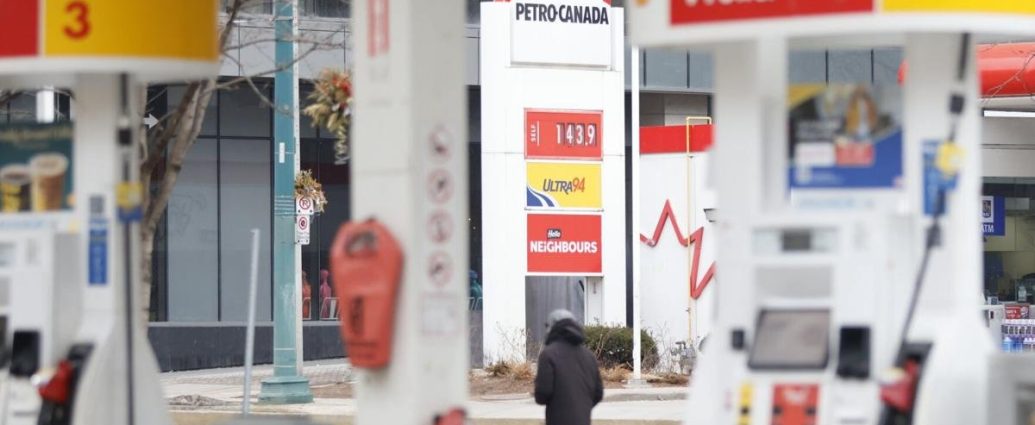
Drivers across the GTA better fill up today. Gas prices are gonna jump again this weekend as the ongoing U.S.-Iran mess sends shockwaves through global oil markets.
You’re looking at a bump of 8 to 12 cents per litre by Saturday morning. That puts regular unleaded at most stations north of $1.85 per litre, with premium grades pushing past $2.05 in downtown Toronto spots.
The spike hits as crude oil prices reach their highest levels since October 2022, climbing past $95 USD per barrel overnight Thursday. West Texas Intermediate crude futures jumped 4.2% in after-hours trading, while Brent crude settled at $96.23 before Friday’s opening bell.
Iran’s threats to close the Strait of Hormuz have traders spooked. Some analysts think oil could breach $100 per barrel if military tensions get worse over the weekend.
How the Iran Mess Hits Canadian Drivers
Here’s the thing about global oil markets.
When trouble hits the Middle East, we feel it at the pump in Mississauga and Markham within 48 to 72 hours. Just how it works.
The Strait of Hormuz carries about 21 million barrels of oil per day, roughly 20% of the world’s total supply. Iran controls the northern coast and has threatened to mine the shipping lanes if the U.S. Slaps more sanctions on its energy sector. Which, honestly, they probably will.
“We’re seeing panic buying in the futures market,” says petroleum analyst Dan McTeague, founder of Canadians for Affordable Energy. “Every time there’s saber-rattling in the Gulf, crude jumps $10 to $15 per barrel within days. This time feels different because Iran has actually fired on U.S. Naval assets.”
“Drivers should expect prices to stay elevated for weeks, not days. This isn’t a temporary blip. We’re looking at a sustained period of high energy costs that could extend well into summer driving season.”
Canadian refineries don’t import much oil directly from Iran due to longstanding sanctions. But we compete in the same global marketplace as everyone else. When supply concerns push up benchmark crude prices, Canadian consumers pay the same premium as drivers in Texas or California. That’s just reality.
The math is pretty straightforward: every $1 increase in crude oil translates to roughly 2.4 cents per litre at Canadian gas stations. With crude jumping nearly $12 since Tuesday morning, that 8 to 12 cent weekend increase actually looks conservative. Could be worse.
When Everything Started Going Sideways
The latest spike started Tuesday at 6:47 AM Eastern when Iran launched coordinated missile strikes on three U.S. Naval vessels in the Persian Gulf. Oil futures jumped $8.20 per barrel within the first hour of New York trading.
Wednesday brought more drama.
Iran’s Revolutionary Guard commander Hossein Salami threatened to “turn the Gulf into a graveyard” for American ships during a televised address in Tehran. Crude hit $92.15 on the New York Mercantile Exchange by market close.
Real encouraging stuff there.
Thursday saw the biggest single-day gain since Russia invaded Ukraine. Brent crude opened at $89.50 and climbed steadily throughout the day, peaking at $96.80 during London trading hours. That represents a 15.8% gain in just three trading sessions.
Look, gas station operators don’t wait around for official price bulletins. They adjust their street prices based on wholesale rack rates and futures market movements. When crude spikes this dramatically, retail follows within 48 hours maximum. Sometimes sooner if they’re feeling nervous.
Industry sources expect the weekend increase to hit hardest on Saturday morning as stations receive their weekly fuel deliveries. Sunday could bring another 2 to 3 cent bump if crude continues climbing during Asian trading sessions. Because why not pile on more pain?
Which GTA Areas Get Hit Worst
Downtown Toronto stations typically see the biggest jumps first, often by 5 to 7 cents ahead of suburban locations.
Limited competition and higher operating costs mean prices move faster and stay elevated longer. It’s brutal down there.
Stations along the 401 corridor from Mississauga to Pickering also tend to spike early. Business travellers and freight companies pay whatever the posted price says, giving operators less incentive to hold rates down. Captive audience, basically.
Airport-area locations near Pearson consistently rank among the GTA’s most expensive. Current prices there already exceed $1.78 per litre before this weekend’s expected increase. If you’re filling up near the airport, you’re already getting hammered.
Your best bet for cheaper gas remains the outer suburbs and big-box retailers.
Costco locations in Etobicoke, Richmond Hill, and Ajax typically stay 4 to 6 cents below nearby competitors. Stations in Whitby, Georgetown, Newmarket, and Bradford usually maintain 3 to 5 cent discounts compared to downtown rates. Worth the drive if you’ve got time.
But honestly, when crude oil jumps 15% in three days, nowhere stays cheap for long. Even discount retailers have to adjust their wholesale costs upward. That’s just economics.
What This Does to the Economy
Higher gas prices don’t just hurt individual drivers. They ripple through Canada’s entire economy in ways you can measure.
Trucking companies face diesel costs that have jumped 14 cents per litre since Tuesday. Transport Canada data shows diesel accounts for roughly 35% of shipping costs for long-haul freight. That increase gets passed directly to grocers, retailers, and eventually consumers. Guess who pays in the end?
Food prices tend to follow fuel prices upward within 2 to 3 weeks.
Statistics Canada historical data shows this pattern repeating over decades. The agency’s food price index shows a strong correlation with energy costs, particularly for fresh produce that requires refrigerated transport.
Hard to ignore.
The Bank of Canada watches energy costs closely when setting benchmark interest rates (for better or worse). Governor Tiff Macklem has repeatedly cited volatile oil prices as a key factor in monetary policy decisions. Can’t really ignore it when it’s this big.
“Energy makes up about 8.3% of the consumer price index,” notes economist Armine Yalnizyan, former senior economist with the Canadian Centre for Policy Alternatives.
“A 20% jump in gas prices adds roughly 1.6 percentage points to headline inflation. That’s significant when we’re trying to get back to the 2% target.”
“If oil stays above $90 for more than a month, we’re looking at inflationary pressure lasting into summer. The Bank of Canada might have to pause rate cuts or even consider tightening if energy costs stay elevated.”
Tourism and travel sectors also take immediate hits. Air Canada and WestJet both impose fuel surcharges when jet fuel costs exceed certain thresholds. Higher pump prices make road trips more expensive just as March Break travel season approaches. Perfect timing, right?
What This Means Going Forward
The Canadian dollar typically weakens when oil prices spike due to uncertainty, even though Canada’s a net energy exporter. Doesn’t make much sense, but markets aren’t always logical.
The loonie has dropped 1.8 cents against the U.S (for better or worse). Dollar since Tuesday, trading at $0.7342 USD Thursday afternoon.
What Families Are Looking At
The average Canadian household spends roughly $2,100 annually on gasoline. Statistics Canada’s latest household expenditure survey confirms this figure. A sustained 15-cent increase would add about $312 to that annual bill.
For families with two vehicles and longer commutes, the impact’s more severe.
A household consuming 200 litres of gas monthly would pay an extra $30 per month, or $360 annually, at current elevated prices. That’s real money for most people.
Lower-income families get hit hardest because fuel represents a larger percentage of their total spending. Statistics Canada data shows households earning under $50,000 annually spend about 4.2% of their income on gasoline, compared to 2.1% for households earning over $100,000. The rich still feel it, but it doesn’t sting as much.
The timing couldn’t be worse for family budgets. Higher heating costs this winter already strained household finances. Natural gas bills in Ontario averaged $147 monthly in January, up 23% from the same month last year. Now this.
Small businesses that rely on delivery or mobile services face particularly tough choices. Landscaping companies, home repair services, and food delivery operations often can’t immediately pass higher fuel costs to customers with existing contracts.
They’re stuck eating the difference until contracts renew.
What’s Coming Next
Military analysts expect the U.S.-Iran standoff to escalate before it calms down, meaning oil market volatility could persist for 3 to 6 weeks minimum. Maybe longer if things really go sideways.
Iran has military options beyond closing shipping lanes.
Intelligence sources suggest they could target oil infrastructure in Saudi Arabia’s Eastern Province or the UAE’s export terminals. Both scenarios would likely push crude above $100 per barrel for the first time since 2022.
And that’s when things get really expensive.
The U.S. Strategic Petroleum Reserve could provide some relief if President Biden authorizes releases. During the 2022 Russia-Ukraine crisis, Biden released 180 million barrels over six months, helping moderate price spikes. But there’s a problem.
Those reserves now sit at 363 million barrels, the lowest level since 1983. That limits Washington’s ability to flood markets with emergency supplies. They’ve got less ammunition this time around.
Worth noting: Canada produces about 5.2 million barrels of oil per day, mostly from Alberta’s oil sands operations. We export roughly 4.1 million barrels daily to the United States and import about 800,000 barrels of refined products back. Weird system, but it works most of the time.
During normal market conditions, this arrangement runs efficiently. During oil crises, it means Canadian consumers remain exposed to global price swings despite living in a net energy exporting nation. Which is pretty frustrating when you think about it.
The irony’s pretty stark. Alberta produces enough oil to meet all Canadian demand, but pipeline constraints and refinery locations mean Ontario and Quebec still import significant volumes from overseas markets. Geography and politics don’t always line up.
Smart Moves for Your Wallet
If you’re planning road trips for March Break or Easter weekend, consider booking now or postponing until summer. Gas prices could hit $2 per litre across southern Ontario if this Middle East conflict drags into April. That’s gonna hurt.
The math on travel costs is sobering.
A typical family driving from Toronto to Montreal would spend an extra $25 to $30 in fuel at current elevated prices. Longer trips to Florida or western Canada could add $100 to $150 to vacation budgets. Suddenly that flight doesn’t look so expensive.
Consider carpooling arrangements or public transit for daily commutes where possible. A 15-cent increase per litre costs the average driver an extra $8 to $12 per fill-up, depending on tank size. Those fill-ups add up fast when you’re commuting daily.
Costco and wholesale club gas stations typically offer the best deals during price spikes because their membership model allows operation on thinner profit margins. Current Costco prices average 6 to 8 cents below nearby competitors. Worth the membership fee if you drive regularly.
Gas Buddy and similar apps become more valuable during volatile periods.
Price differences between stations can vary by 10 to 15 cents per litre during supply disruptions. That’s enough to justify driving across town if you’re filling a big tank.
And here’s a trend worth watching: hybrid and electric vehicle sales always spike during sustained gas price increases.
Toyota Canada reported a 47% increase in hybrid inquiries since Tuesday.
Tesla’s Canadian division saw online orders jump 23% this week compared to the same period last month. People start doing math differently when gas costs this much.
What This Means Going Forward
Local dealerships confirm the pattern repeats every time. “Every time gas hits $1.80, our phone starts ringing about fuel-efficient models,” says Mike Chen, sales manager at a Scarborough Toyota dealership. “People who were considering SUVs suddenly want to look at Prius or Corolla Hybrid.” Funny how that works.
The bottom line remains unchanged: fill your tank today if you can manage it financially. Tomorrow’s prices won’t be prettier, and next week looks even more expensive. This isn’t getting better anytime soon.
Frequently Asked Questions
How much will gas prices increase in the GTA this weekend?
Gas prices are expected to jump 8 to 12 cents per litre by Saturday morning, putting regular unleaded above $1.85 per litre at most stations.
Why are gas prices rising due to the Iran conflict?
Iran controls the northern coast of the Strait of Hormuz, which carries 20% of the world’s oil supply, and threats to disrupt this shipping lane are driving crude oil prices above $95 per barrel.
Where can I find the cheapest gas prices in the GTA?
Outer suburb stations in areas like Whitby, Georgetown, and Newmarket typically offer prices 3 to 5 cents below downtown Toronto rates, while wholesale clubs like Costco often have the best deals during price spikes.