
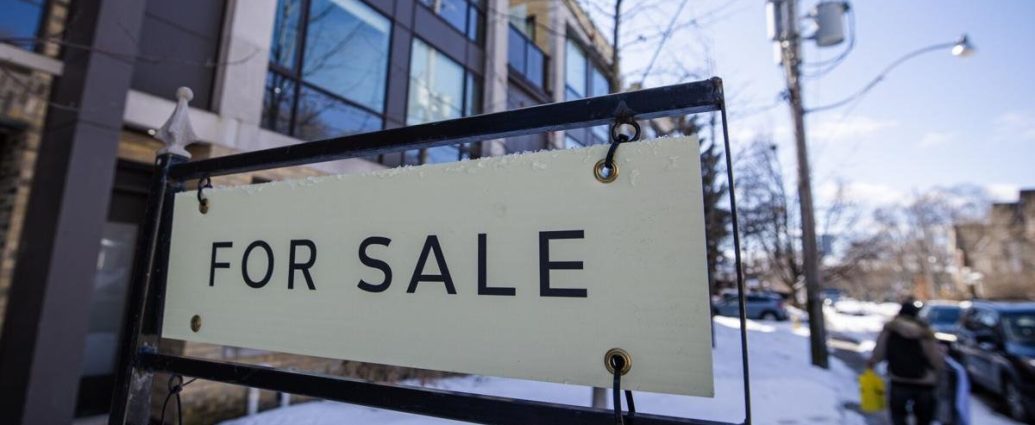
Home prices across the Toronto area dropped 7% in February compared to the same month last year. That’s another brutal month in what’s becoming an extended housing market correction that’s now wiped out over $150 billion in paper wealth across the Greater Toronto Area.
The bigger story? Sellers are throwing in the towel.
New listings cratered 18% last month. Homeowners who can’t get their asking price simply pulled their properties off the market. The Toronto Regional Real Estate Board calls it sellers “beating a hasty retreat” in what represents the steepest decline in new inventory since the 2008 financial crisis.
You can draw your own conclusions about what that says regarding market confidence.
What the Numbers Actually Tell Us
February’s price drop brings the average home price in the GTA to $1.18 million, down from $1.27 million a year earlier. We’re talking about real money here. An average loss of $90,000 per property. Hundreds of thousands of dollars wiped off home values in neighbourhoods from Mississauga to Markham.
The listing collapse is even more dramatic.
With 8,420 new listings in February compared to 10,280 in February 2023, inventory’s getting tight fast. Active listings now sit at just 12,400 properties across the entire GTA, representing a 22% drop from the same period last year.
That’s a lot of missing houses.
Sales volumes tell their own story too. Only 4,632 homes changed hands in February, down 15% from the previous year and marking the lowest February sales total since 2009. Fewer people are buying, fewer are selling, and everyone seems to be waiting for someone else to make the first move. It’s like a real estate standoff.
Days on market have stretched to an average of 26 days, up from 18 days a year ago. Properties sit longer before finding buyers willing to meet asking prices.
Remember when houses sold in three days? Those days are long gone.
What the Real Estate People Are Saying
Real estate professionals are watching these trends with growing concern about market stability. And they’re not sugarcoating it.
“We’re seeing a fundamental shift in seller psychology,” says Jennifer Walsh, president of the Toronto Regional Real Estate Board. “Homeowners who listed at peak prices in 2022 and 2023 are finally accepting that market has moved on. The question now is whether this retreat becomes a rout or finds a natural floor.”
The data backs up Walsh’s concerns. Of the properties that did list in February, 68% sold below asking price, compared to just 23% during the same month in 2022. Average sale-to-list ratios have dropped to 97.2%. Most homes are selling for less than their advertised price. Way less sometimes.
Individual real estate agents are reporting dramatic changes in their day-to-day business.
Open houses that would’ve drawn 50 visitors two years ago now see 12 to 15 potential buyers. Bidding wars, once commonplace, happened on fewer than 8% of February sales. That’s a massive shift.
“I’ve got sellers who paid $1.4 million in 2022 being told their home might fetch $1.15 million today,” explains Marcus Chen, a veteran agent with Royal LePage in Richmond Hill. “Some are choosing to renovate and wait rather than take that kind of loss. Others are reluctantly accepting the new reality and pricing accordingly.”
This seller capitulation represents a psychological turning point that housing economists have been predicting since interest rates started climbing in early 2022. It was bound to happen eventually.
Why Everything’s Falling Apart Right Now
Interest rates remain the primary culprit. Even after the Bank of Canada’s recent cuts brought the overnight rate to 4.25%, mortgage rates for new buyers still hover around 6.5% to 7% for five-year fixed terms. Compare that to the 1.5% to 2.5% rates that fueled the pandemic housing boom.
The math is brutal for affordability.
A family earning $120,000 annually could qualify for roughly $650,000 in mortgage financing today, down from $850,000 at 2021 rates. That represents a 23% reduction in purchasing power before you even consider the additional stress of higher property prices. If you’re house hunting, good luck.
Immigration flows have slowed dramatically under the federal government’s revised targets. Canada plans to welcome 395,000 new permanent residents in 2024, down from 465,000 in 2023. The GTA typically attracts about 35% of new immigrants, meaning roughly 25,000 fewer potential homebuyers this year alone. That’s a lot of missing demand.
Job market uncertainty compounds the problem. The tech sector has shed over 15,000 jobs across the GTA since January 2023. Major banks including RBC, TD, and Scotiabank have announced workforce reductions totaling 8,400 positions.
These are precisely the high-income professionals who drove much of the pandemic-era housing demand.
Consumer debt levels add another layer of concern. The average Canadian household now carries $1.84 in debt for every dollar of disposable income, the highest ratio since records began. For GTA residents, that figure jumps to $2.12, making new mortgage commitments increasingly difficult to manage.
People are stretched thin.
Where It Hurts Most (and Least)
The correction isn’t hitting all areas equally. It’s revealing which markets were most overheated during the pandemic boom.
Downtown Toronto condos are experiencing the steepest declines, with average prices down 11.2% year-over-year to $718,000. Areas like Liberty Village have seen some units sell for 15% to 20% below their 2022 peak values as investors rush to exit positions. CityPlace, King West, and the Entertainment District are posting similar losses.
Ouch.
The condo rental market downtown has also shifted dramatically. Rent for a one-bedroom unit now averages $2,450, down from $2,680 a year ago, as investor-owned units flood the rental market. At least renters are getting some relief.
Suburban detached homes are holding up better but still feeling pressure.
In Mississauga, the average detached home sold for $1.34 million in February, down from $1.47 million a year earlier. That’s a drop of $130,000. Brampton saw similar declines, with average prices falling to $1.21 million from $1.33 million. Still expensive, but less expensive than before.
The 905 belt shows stark variations. Markham detached homes averaged $1.89 million, down 6.8% from last year, while Richmond Hill dropped 5.9% to $1.76 million. Aurora and Newmarket are seeing more modest corrections of 4.2% and 3.8% respectively. These markets had less speculative froth, apparently.
Oakville and Burlington continue showing resilience, with year-over-year declines of just 2.1% and 1.8%. These markets benefit from stable employment in nearby manufacturing and logistics hubs, plus steady demand from families seeking larger properties with yard space. Some areas are still somewhat protected.
The Weird Math Problem Coming Next
Market watchers are divided on what happens next, but most agree the current dynamic can’t last indefinitely. Something’s got to give.
TRREB data shows that months of inventory has dropped to 2.7 months across the GTA. Anything below four months typically signals a seller’s market. But that traditional wisdom may not apply when both buyers and sellers are sitting on the sidelines.
The withdrawal of sellers creates an interesting mathematical problem.
If listing volumes remain 18% below normal while buyer demand stabilizes or recovers, competition for available properties could intensify rapidly. Some economists predict this could trigger a “snapback rally” in select neighbourhoods where inventory becomes critically low. It’s a possibility, anyway.
However, that scenario assumes buyers will return before sellers do. Current mortgage application data suggests otherwise. New mortgage originations dropped 31% in the first quarter of 2024 compared to the same period last year. Buyers aren’t exactly rushing back.
First-time buyer programs aren’t filling the gap either. The federal government’s First-Time Home Buyer Incentive has seen uptake fall 67% year-over-year. Even subsidized purchases remain out of reach for many households.
Worth watching.
The programs exist, but people can’t use them.
International buyer activity, once a significant market force, has virtually disappeared following the federal foreign buyer tax increase to 20% and various provincial cooling measures. Foreign buyer transactions now represent less than 1.2% of total sales, down from 4.8% in 2022.
That pipeline has dried up completely.
What This Actually Means for Regular People
For prospective buyers with secure employment and down payment savings, the current market offers the best negotiating position in over five years. Properties that might’ve sold in days with multiple offers are now sitting for weeks.
Buyers get time to conduct proper inspections and negotiate favourable terms.
Mortgage brokers report that well-qualified buyers are successfully negotiating 5% to 8% below asking prices on properties that’ve been on market for more than 30 days.
Sellers are also increasingly willing to cover closing costs, include appliances, or delay possession dates to accommodate buyer preferences. If you can afford to buy, you’ve got options.
But financing remains challenging.
Even with improved negotiating power, buyers need household incomes above $180,000 to afford the average GTA home at current interest rates. That threshold eliminates roughly 85% of potential purchasers, explaining why sales volumes remain depressed. Most people still can’t afford anything.
Current homeowners face a more complex situation. Those who purchased before 2020 with low mortgage rates locked in until 2025 or later can weather paper losses without immediate financial stress. However, homeowners facing mortgage renewals are experiencing payment shock. Some are seeing monthly costs jump $800 to $1,200.
The renewal crisis is just beginning.
Approximately 340,000 GTA homeowners will renew mortgages this year at rates 3% to 4% higher than their current terms. For a typical $600,000 mortgage, that translates to additional monthly costs of $1,500 to $2,000. That’s a lot of extra money people suddenly have to find.
Some homeowners are choosing to sell rather than absorb higher payments, adding to downward price pressure.
Others are extending amortization periods to 30 or 35 years, reducing monthly payments but significantly increasing total interest costs. There aren’t many good options.
Renters should eventually see relief, though the timeline remains uncertain.
What This Means Going Forward
Purpose-built rental construction has increased 43% year-over-year, with 28,000 new rental units in various stages of development across the GTA (yes, really). However, these units won’t hit the market until 2025 and 2026. Help is coming, but slowly.
In the meantime, rental rates for new leases continue climbing, though at a slower pace than previous years.
Average rent for a two-bedroom apartment now sits at $3,100, up just 2.8% from last year compared to double-digit increases in 2022 and 2023. Still expensive, but the pace of increases has slowed.
Where We’re Headed From Here
This correction represents more than cyclical adjustment. It’s a fundamental reset of expectations that built up during the pandemic years. Housing economists point out that GTA prices rose 67% between March 2020 and February 2022, far outpacing income growth, population increases, or construction costs. That was nuts, honestly.
The current 7% decline barely dents those gains.
More correction could be ahead if economic conditions don’t improve (shocking, I know). Bank of Canada projections show interest rates remaining above 4% through 2025, maintaining pressure on affordability. Don’t expect quick relief.
Government intervention seems unlikely to provide meaningful relief. Federal housing programs focus on increasing supply over the long term rather than immediate price support, while provincial measures target regulatory barriers rather than demand stimulation.
They’re playing the long game.
The broader economic context also suggests caution. Canada’s GDP growth has slowed to just 0.8% annually, unemployment’s rising in key sectors, and consumer spending continues to decline as households prioritize debt reduction over major purchases. Everything’s pointing in the same direction.
For the Toronto area housing market, this means the adjustment period could extend well into 2025 or beyond. It depends on when interest rates begin falling meaningfully and employment conditions stabilize. Could be a while.
Around here, nobody’s buying the idea that Toronto real estate only goes up anymore.
After two decades of mostly uninterrupted gains, both buyers and sellers are learning to handle a market where prices can fall as quickly as they once rose. That’s the new reality.
Frequently Asked Questions
How much did Toronto home prices drop in February 2026?
Toronto area home prices fell 7% in February 2026 compared to the same month in 2025.
Why are there fewer home listings in the GTA?
New listings dropped 18% as sellers pulled properties off the market rather than accept lower prices, with many waiting for market conditions to improve.
Will fewer listings lead to higher prices?
Fewer listings could create more competition among buyers for available homes, potentially stabilizing or pushing up prices if demand remains steady.