
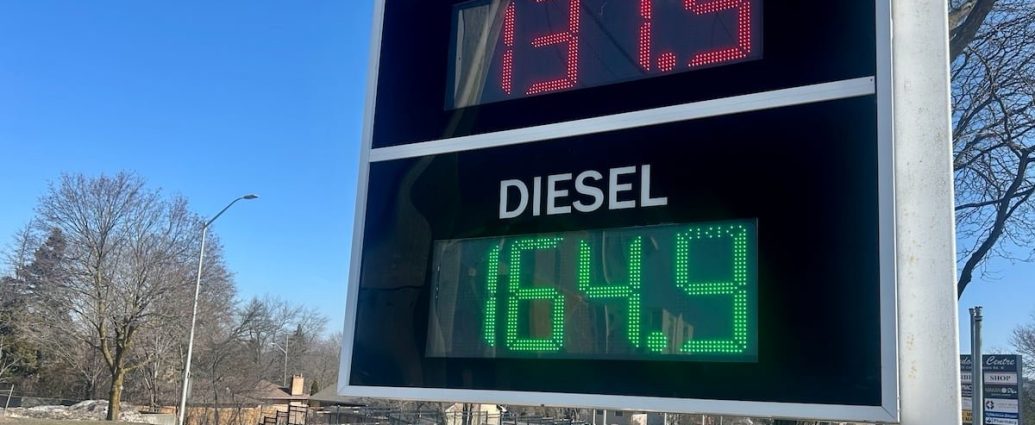
If you filled up your tank yesterday, you got lucky (sound familiar?). Gas prices are jumping up all over Canada today after Iranian military strikes sent global oil markets spinning overnight.
Drivers in Vancouver are seeing pump prices shoot up by 8 cents per litre since Tuesday morning.
Calgary’s not far behind with a 6-cent spike. Even Toronto, which usually sees slower price movements, hit drivers with a 5-cent increase at most stations by noon.
When Iran Strikes, Your Wallet Takes the Hit
The whole mess started around 3 AM local time when Iranian forces launched coordinated strikes on key infrastructure targets across the region. By the time North American markets opened, crude oil futures were already trading up 12% on the New York Mercantile Exchange.
West Texas Intermediate crude, the North American benchmark, jumped from $74 per barrel to $83 in early trading (at least on paper). That’s the biggest single-day spike since those crazy first weeks of the Russia-Ukraine conflict back in 2022.
Brent crude, which sets prices for much of the world’s oil, hit $86 per barrel by mid-morning. For context, that’s roughly 15% higher than where it closed on Monday.
The market’s basically pricing in worst-case scenarios right now. Nobody knows how far this escalation will go.
Energy analyst Eric Nuttall called it a “massive, massive opportunity” for Canadian oil producers during a morning interview. He’s not wrong. When global supply gets disrupted, Canadian crude becomes way more attractive to refiners.
Canadian Oil Companies Are Having a Great Day
Seven major Canadian oil producers saw their stock prices surge on the Toronto Stock Exchange today. Suncor Energy jumped 8.2% by mid-afternoon. Canadian Natural Resources climbed 7.4%. Imperial Oil gained 6.8%.
The oil sands suddenly look like a bargain compared to Middle Eastern supply that might not show up. Canadian production costs average around $45 per barrel for most operations.
With crude trading above $80, that’s serious profit margin territory.
Alberta Premier Danielle Smith’s office has been fielding calls from “nervous nations” looking to diversify their energy imports. The province’s energy minister spent the morning in back-to-back phone meetings with international counterparts.
Saskatchewan’s also positioned to benefit. The province’s heavy oil production becomes more economically viable when global prices spike like this. Finance officials in Regina are quietly updating their budget projections upward.
Your Gas Bill Just Got Worse
But what’s good for oil companies translates directly to higher costs for everyone else. The Canadian Automobile Association’s tracking pump prices across the country, and the numbers keep climbing.
British Columbia leads the pain parade. Vancouver hit $1.68 per litre for regular unleaded by 2 PM. Victoria followed at $1.64. Even smaller BC cities like Prince George saw prices jump to $1.59.
Alberta, despite being Canada’s oil heartland, isn’t immune. Calgary drivers are paying $1.47 per litre, up from $1.41 yesterday. Edmonton sits at $1.45.
Ontario’s seeing the increases roll out more gradually. Toronto averages $1.52 per litre as of this afternoon. Ottawa’s at $1.49. But analysts expect those numbers to climb through the week as the supply chain adjusts to higher crude costs. The Maritime provinces typically see price spikes with a delay, but Halifax is already showing early signs at $1.51 per litre.
It’s Not Just About Your Car
Higher oil prices don’t just hit drivers. They flow through the entire economy in ways most people don’t think about right away.
Trucking companies are already calculating how to pass increased fuel costs to customers.
Let that sink in.
That means higher prices for everything from groceries to Amazon deliveries. Transport Canada estimates that a 10-cent increase in diesel prices adds roughly 2-3% to shipping costs across the board.
Airlines are particularly vulnerable. Air Canada and WestJet both use fuel hedging strategies to protect against price spikes, but those contracts only cover so much volume. Expect to see “fuel surcharges” start appearing on flight bookings within days.
Home heating costs will climb too, especially in Atlantic Canada where many households still rely on heating oil. A sustained increase in crude prices typically translates to 8-12 cents per litre more for home heating oil within two weeks.
Manufacturing sectors that use petroleum-based inputs are also feeling the squeeze. Plastics producers, chemical companies, and even paint manufacturers will see their raw material costs jump.
What Politicians Are (and Aren’t) Doing
Canada’s energy minister has been in consultation with federal counterparts all morning, though no official statement has been released yet. The federal government typically avoids intervening directly in energy markets, preferring to let prices adjust naturally.
Provincial governments have more tools at their disposal.
Alberta and Saskatchewan both have the option to adjust fuel tax rates to cushion the blow for consumers, though neither province has indicated they’re considering that step yet.
Market analysts are split on where prices go from here. The optimistic view suggests that diplomatic pressure will de-escalate tensions within days, bringing crude prices back down to the $70-75 range. That would mean gas prices settling around current levels rather than climbing further. The pessimistic scenario involves sustained conflict that keeps Iranian oil offline for weeks or months. In that case, crude could push toward $90-95 per barrel, which would mean gas prices climbing another 10-15 cents per litre across Canada.
We’re one major supply disruption away from seeing $100 oil again. At that point, gas prices in Vancouver could hit $1.80 or higher.
Currency movements add another layer of complexity. The Canadian dollar typically strengthens when oil prices rise, since energy exports make up such a large chunk of the country’s trade balance.
But if the loonie gains too much against the US dollar, it could offset some of the benefits for Canadian oil producers.
What You Can Actually Do About This
For now, Canadian drivers are basically along for the ride. Gas prices respond to global oil markets that move based on geopolitics thousands of kilometres away.
The usual money-saving strategies still apply.
Apps like GasBuddy can help find the cheapest stations in your area, though price differences are smaller during rapid market moves like this one.
Timing matters too. Gas stations typically adjust their prices in the afternoon based on wholesale costs from that morning. Filling up early in the day might save a few cents per litre during volatile periods. Some provinces offer small breaks on fuel taxes for frequent drivers. Ontario’s gas tax rebate program provides modest relief for qualifying households, though the paperwork’s substantial.
The bigger question is whether this price spike lasts long enough to change consumer behaviour.
Previous oil shocks have pushed more Canadians toward fuel-efficient vehicles and public transit. Electric vehicle sales typically see a bump during sustained periods of high gas prices.
Energy economist Sarah Chen from the University of Calgary expects the current situation to boost EV adoption rates by 2-3% if gas prices stay elevated through the summer driving season.
Look, nobody likes paying more at the pump. But this morning’s events show just how connected we’re to global politics. What happens in the Middle East doesn’t stay in the Middle East anymore. It shows up at your local gas station within hours.
Frequently Asked Questions
Why are gas prices rising so quickly in Canada?
Iranian military strikes have disrupted global oil supply, causing crude prices to spike 12% overnight and driving up gas prices across Canada.
Which provinces are seeing the biggest price increases?
British Columbia is hit hardest with Vancouver reaching $1.68 per litre, followed by Alberta and Ontario with increases of 5-8 cents per litre.
How long will these high gas prices last?
Market analysts are split – prices could stabilize in days if tensions ease, or climb another 10-15 cents if the Middle East conflict continues.