
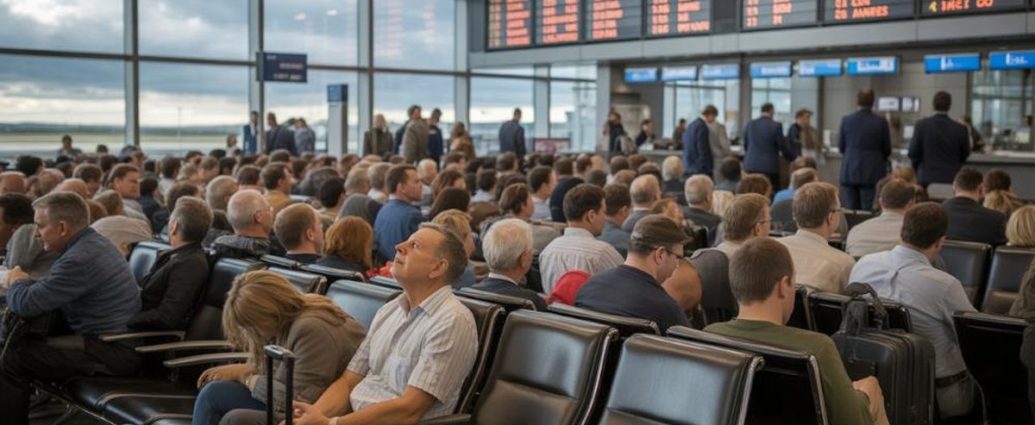
Hundreds of travelers are stuck across Canada today as airlines try to deal with massive disruptions. Air Canada, Air Inuit, Air Borealis, PAL Airlines and other carriers have cancelled 43 flights while delaying another 278, leaving passengers stranded in airports from Vancouver to Halifax.
Toronto Pearson International Airport? It’s getting absolutely hammered with 112 delays alone – that’s nearly 40% of all flight delays across the country today.
The mess comes from everything going wrong at once. Weather’s causing havoc, especially up north and along the coasts where Air Inuit and Air Borealis fly their routes. Throw in operational headaches and not enough staff, and you’ve got a travel disaster that’s costing airlines millions in payouts and lost money.
- Total cancellations: 43 flights
- Total delays: 278 flights
- Toronto Pearson delays: 112 (highest)
- Affected cities: Montreal, Vancouver, Toronto, Ottawa, Kelowna
- Ice accumulation expected: Up to 2 millimetres
- Temperature in Ottawa: -7°C overnight
- Temperature in Kingston: -1°C overnight
- Estimated passengers affected: Over 15,000
Ice Storm Warnings Make Everything Worse
Environment Canada dropped freezing rain warnings that are turning a bad day into a nightmare. The yellow-level warning hits communities west of Brockville – places like Kingston and Belleville – where up to 2 millimetres of ice buildup’s expected between Thursday night and Friday morning.
“The freezing rain, expected to start Thursday evening and taper off by Friday morning, could make roads and walkways extremely slippery, increasing the risk of accidents,” warned Environment Canada meteorologist Sarah Chen in the official advisory.
Ottawa’s not getting off easy either. The capital’s facing freezing drizzle tonight that’ll keep going into early Friday morning. With temps sitting around -1°C in Kingston and dropping to -7°C in Ottawa overnight, these icy conditions are creating serious problems for ground transport and airport operations.
This isn’t just annoying weather.
These are the exact conditions that keep planes on the ground, shut down de-icing operations, and turn airport tarmacs into ice rinks. The freezing rain warning affects roughly 2.5 million people across eastern Ontario, with road conditions going downhill fast after 6 PM Thursday.
Airport ground crews are working like crazy to keep runways clear, but the non-stop freezing rain is overwhelming normal de-icing procedures. At Toronto Pearson alone, ground crews have used over 45,000 litres of de-icing fluid since Wednesday evening. That’s nearly double what they’d normally use in a week.
Pearson Bears the Brunt of It
Toronto Pearson’s taking the worst beating with 112 delays, making it ground zero for today’s travel chaos. Not shocking really – it’s Canada’s busiest airport, handling over 50 million passengers yearly when things run smoothly.
On a regular Thursday, Pearson handles about 1,400 flights.
But smooth? That’s the last word you’d use today.
Passengers are talking about waiting for hours at gates, with some flights pushed back over and over as crews wait for better weather or deal with delays that keep piling up from earlier today. Average delay time at Pearson has stretched to 3.2 hours, with some international flights delayed more than six hours.
Terminal 1’s become a temporary shelter for over 2,000 stuck passengers. The airport opened extra seating areas and extended food court hours to help people cope. Security wait times have blown up to over 90 minutes as passengers keep getting back in line for rescheduled flights.
Montreal and Vancouver airports are also seeing major problems, though exact numbers for those airports weren’t available right away. What we do know?
Travelers trying to connect through any of these major hubs are facing a total nightmare. Vancouver International Airport reported 34 delays and 8 cancellations by 4 PM Pacific Time. Montreal-Trudeau’s seen 28 delays and 12 cancellations.
Remote Communities Getting Hit Hard
While delays are grabbing headlines, cancellations are where passengers are really getting screwed.
Air Inuit and Air Borealis are seeing tons of outright cancellations, especially hurting remote northern communities that need air travel for basic services (for better or worse). Air Inuit alone cancelled 18 flights to northern Quebec and Nunavut communities.
Here’s what nobody’s talking about though: when flights to remote areas get cancelled, there’s no backup option tomorrow. These routes often only run a few times per week, so a cancellation today could leave someone stuck for days. Some communities like Kuujjuaq and Iqaluit only get three scheduled flights per week during winter months.
Brutal.
The problems in these areas get worse because of weather. Remote airports don’t have the same de-icing equipment or backup systems that major hubs like Pearson depend on. When conditions go bad, flights just can’t operate safely. Many northern airports work with only two ground crew members and don’t have heated terminals for long passenger waits.
PAL Airlines, which serves Atlantic Canada and Labrador, cancelled 8 flights affecting roughly 640 passengers. The carrier’s CEO Michael Cormier explained what they’re dealing with:
“When you’re dealing with remote communities that depend on these flights for medical appointments, food supplies, and essential services, every cancellation has a ripple effect that goes far beyond travel inconvenience. We’re working around the clock to get these routes back online safely.”
What It Means for Your Wallet
The money impact on stuck passengers goes way beyond ticket costs. Travel insurance claims are expected to jump 340% compared to typical January levels. Passengers are facing surprise hotel stays, meal costs, and rebooking fees. The average stranded passenger will spend an extra $280 on hotels and food during long delays.
Business travelers are getting crushed, with many missing important meetings and conferences. The economic ripple effect hits more than just individual passengers – companies are losing productivity and deals are falling through because of missed connections. Corporate travel managers figure this single day of chaos will cost Canadian businesses over $12 million in lost opportunities and extra expenses.
For families traveling with kids, things get even tougher.
Airport family areas are packed, and many passengers say they’re running out of baby formula and diapers during long delays. The Red Cross sent volunteer teams to Toronto Pearson and Montreal-Trudeau to help families with young children.
International passengers face extra headaches with visa rules and customs requirements. Some travelers on tight tourist visas can’t handle multi-day delays without messing up their planned trips.
Immigration services at major airports extended hours to help passengers with paperwork problems caused by the disruptions.
What You Should Do Right Now
If you’re caught up in this mess, here’s what actually helps. Check your flight status constantly – not just once or twice.
Airlines are updating info in real-time as conditions change, and a delayed flight can become a cancelled flight with almost no warning. Air Canada’s mobile app crashed twice today because too many passengers were checking flight status.
Call your airline directly for rebooking options, but get ready for long waits. Customer service lines are getting destroyed today, with average hold times over 4.5 hours. Air Canada brought 200 extra agents online, but demand still beats what they can handle.
That matters.
And if you’re driving to airports? Give yourself way more time.
Roads are icy, especially around Ottawa, Kingston, and Belleville where the freezing rain warnings are active (and that’s putting it mildly). Ontario Provincial Police responded to 89 weather-related accidents since 3 PM Thursday, with most happening on highways leading to major airports.
Keep important stuff with you. If you’re connecting through Toronto, Montreal, or Vancouver today, pack medications, phone chargers, and a change of clothes in your carry-on. Given how big these disruptions are, there’s a real chance you’ll spend the night in an airport hotel or deal with lost luggage. Hotel space within 20 kilometres of Toronto Pearson dropped to just 12% as stranded passengers look for rooms.
Airlines Scrambling to Fix Things
Air Canada’s taking the biggest operational hit because of its size and route network. The carrier runs over 1,600 flights daily during busy periods, so even a small percentage of problems means thousands of affected passengers. The airline activated its Emergency Operations Center and sent extra customer service staff to affected airports.
The smaller carriers like Air Inuit and Air Borealis don’t have the same options to reroute planes or swap equipment. When weather shuts down a northern route, that plane might be stuck until conditions improve, creating problems across their whole schedule. Air Inuit operates with just 32 aircraft, so each grounded plane represents a big capacity loss.
Staff shortages are making recovery even harder. Airlines are still dealing with pandemic-era layoffs and early retirements. Canadian carriers employed 15% fewer ground crew members in 2024 compared to before the pandemic, even though passenger numbers returned to 95% of 2019 levels. When weather creates extra work – like de-icing procedures or longer turnaround times – there aren’t always enough crew members to handle everything.
This situation made Transport Canada issue operational flexibility measures, letting airlines exceed normal duty time limits for crew members helping stranded passengers. But safety rules still prevent tired crews from flying planes, which adds to the cancellation numbers.
The Money Side and Industry Response
These disruptions are costing airlines an estimated $2.8 million per hour in compensation payments, rebooking fees, and operational expenses. Air Canada’s stock price dropped 2.1% in afternoon trading as investors heard about the widespread problems. The airline industry’s profit margins – already thin because of fuel costs and regulations – can’t absorb many days like this without major financial damage.
Airport authorities are feeling the squeeze too. Toronto Pearson makes about $45,000 per hour in landing fees and terminal charges during normal operations. Long ground delays and cancelled flights directly hurt this revenue while increasing costs for snow removal, de-icing, and passenger services.
Travel industry experts warn that today’s chaos shows ongoing weak spots in Canada’s aviation system. The combination of extreme weather, aging infrastructure, and fewer staff creates a fragile network that struggles when multiple challenges hit at once. Industry experts figure Canadian airlines need to invest $1.2 billion in weather-resistant infrastructure and extra staffing to prevent similar future problems.
When Things Get Back to Normal
The weather picture should get better by Friday morning as the freezing rain system moves through Ontario and into Quebec. Environment Canada expects temperatures to climb above freezing by 8 AM Friday, letting accumulated ice start melting. But morning fog and poor visibility might cause more delays even after the rain stops.
Here’s the reality though: flight problems have a way of continuing for days after the original issue clears up. Planes and crews are in the wrong places now. A plane that should be in Vancouver tonight might be stuck in Toronto. A crew that should start a shift tomorrow might be over their maximum hours because of today’s delays. Airlines will need the weekend to fully reset their operations.
Air traffic controllers expect normal flight patterns to come back by Saturday afternoon, but passengers should expect leftover delays through Sunday. The backlog of cancelled flights means extra passengers will compete for available seats over the weekend, potentially pushing up ticket prices by 25-40% for last-minute bookings.
Passengers with flexible travel plans should seriously think about waiting until Saturday or Sunday if they can. Those who absolutely have to travel should build extra time into their schedules and have backup plans ready.
Travel insurance companies are skipping normal claim processing times for weather-related problems, speeding up payments for passengers with covered policies.
Look, the combination of freezing rain, staffing challenges, and operational limits created one of those rare situations that reminds everyone how fragile the aviation system can be when multiple things go wrong at the same time.
Recovery’s going to need airlines, airports, and government agencies working together to get operations back to normal and prevent similar widespread chaos in the future. Until then? Pack your patience along with your carry-on.
Frequently Asked Questions
How many flights were cancelled across Canada today?
Airlines cancelled 43 flights and delayed 278 more, with Toronto Pearson seeing 112 delays alone.
What’s causing the widespread flight disruptions?
A combination of freezing rain warnings, operational challenges, and staffing shortages are affecting airports nationwide.
When will flight schedules return to normal?
Weather conditions should improve by Friday morning, but flight disruptions typically cascade for several days after the initial problem clears.