
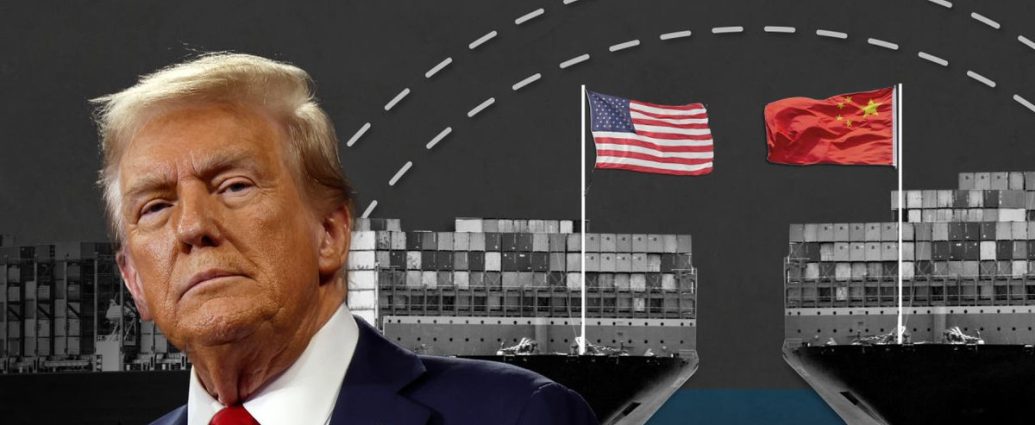
Treasury Secretary Scott Bessent dropped a bombshell Tuesday morning: Trump’s rolling out a 15% tariff on pretty much everything coming into America. We’re talking about a massive trade shake-up that kicks in this week.
This thing’s huge.
We’re looking at $2.4 trillion worth of stuff that suddenly costs 15% more to bring into the US. And here’s the kicker – Bessent says it’s temporary, maybe five months, but only if other countries start playing ball on what he’s calling “better deals.”
Markets? They’re not having it. Asian stocks tanked 2.3% right out of the gate while oil prices shot up another 4% to hit $87 a barrel. Traders are getting jumpy, and you can see it in the VIX – that fear index just jumped 18% after hours.
To put this in perspective: the current average tariff sits around 7.4%. Jumping to 15%? That’s the biggest blanket tariff we’ve seen since 1930 and the Smoot-Hawley mess. Though officials keep saying this one’s different because it won’t last forever.
Why Now? What’s Really Going On
Look, this didn’t come out of thin air. Trump’s been making noise about trade since he got back in office last month. But even the trade wonks didn’t see it happening this fast.
We’re talking about more than doubling current tariff rates across every single product category. That’s a 103% jump, if you’re keeping score. Bessent’s framing it as use – basically trying to force countries back to the negotiating table after talks stalled in December.
“We expect to see movement back to prior rates within a five-month timeframe, contingent on our trading partners demonstrating good faith in addressing longstanding trade imbalances,” Bessent said during the press briefing.
Internal documents suggest the White House wants results on intellectual property, farm access, and currency stuff within 150 days. That’s not a lot of time in trade talk terms.
The strategy’s pretty clear: squeeze hard, squeeze fast, get concessions. Whether it works depends on how China, Canada, and Mexico decide to respond over the next couple weeks.
Trade folks are pointing to 2018, when Trump’s steel and aluminum tariffs forced some countries to renegotiate. But this? This is way bigger. We’ve never seen anything quite like this in modern trade policy.
Canada’s About to Get Hit Hard
Canadian businesses better buckle up. The Canadian Chamber of Commerce is throwing around numbers like $12.8 billion in economic damage over five months. That’s real money.
Auto parts are going to take the biggest beating – we’re talking $18.3 billion in annual exports facing this 15% wall. Lumber’s next at $8.7 billion, then agriculture at $6.2 billion.
The loonie already dropped 1.8 cents overnight as currency traders started pricing in fewer Canadian exports. Haven’t seen the dollar this low since March 2020, when everything was falling apart.
But wait.
Some Canadian companies might actually benefit from this mess. If American goods suddenly cost 15% more in Canada, domestic producers get a nice price advantage they didn’t have yesterday.
Quebec’s aluminum guys have been fighting US imports for years – this could be their moment (and that’s putting it mildly). Steel producers down in Hamilton and Sydney might finally get some breathing room too.
Trudeau’s office called the tariffs “disappointing but not unexpected.” They’re promising a “measured response” by Friday. Word is they’ll try for product-specific exemptions instead of hitting back with their own tariffs.
Here’s where it gets complicated: North American supply chains are completely integrated. Your average Ford F-150 made in Dearborn has about $2,400 worth of Canadian parts in it. Slap 15% on that, and you’re adding $360 to each truck’s production cost.
Markets Are Going Crazy Right Now
Asian markets opened ugly Tuesday night as word spread. The Nikkei dropped 287 points, the Hang Seng fell 403 points in the first hour alone.
Oil’s making everything worse. Brent crude hit $89.40 as energy traders started worrying about supply chain disruptions. Remember what happened in 2018-2019 when trade wars messed up global oil flows? Yeah, we might be headed there again.
Big deal.
Currency markets are where the real drama’s happening. The US dollar jumped 1.2% against other major currencies as traders bet these tariffs will force inflation higher, making the Fed keep interest rates up.
Agricultural futures went bonkers. Wheat up 3.4%, corn gained 2.8%, and soybeans – which depend heavily on China trade – surged 4.1% on speculation about Chinese retaliation.
The strong dollar’s creating problems for emerging markets too. Brazil’s real fell 2.3%, Mexico’s peso dropped 1.9% as investors fled to US assets despite all this trade uncertainty.
Five Months Isn’t Much Time
Bessent’s five-month promise is doing a lot of work here, trying to prevent this from becoming an all-out trade war. That timeline runs through late July, which happens to end right before Congress typically reviews trade policy in August.
The administration clearly wants quick wins, not full deals that take years to hammer out. Countries need to move fast if they don’t want extended economic pain from these higher tariffs.
Thing is, five months isn’t long when you’re talking about trade negotiations. The original NAFTA took 14 months. The US-China Phase One deal? Eighteen months of back-and-forth.
Trade lawyers in DC are already getting swamped with calls from foreign governments wanting to know how to negotiate faster. The EU apparently put together a crisis team to develop proposals within 30 days.
“This administration believes in results-oriented trade policy that puts American interests first,” Bessent added during the briefing. “We’re confident our approach will deliver better outcomes for American workers and businesses within the specified timeframe.”
The bigger picture? Trump’s team is betting that threatening sustained tariffs will force concessions that wouldn’t come through normal diplomatic channels. It’s a high-stakes gamble that could either reshape global trade or trigger the worst trade conflict since the 1930s.
Companies Are Scrambling
Smart businesses saw this coming weeks ago after Trump’s inauguration speech hinted at “immediate trade action.” The writing was on the wall for anyone paying attention.
Some companies have been stockpiling inventory to beat the deadline. Walmart reportedly boosted imports by 23% in January. Amazon increased warehouse inventory levels by 15% across key distribution centers.
Canadian exporters are scrambling to lock in contracts before Thursday morning when the new rates kick in. Cross-border trade lawyers say their phones are ringing 340% more than usual since the announcement.
Companies that were already diversifying their markets are in better shape. Take Magna International – they get 67% of revenue from US operations, but they’d already started shifting some production to European markets last year.
The auto sector’s got particular challenges because of just-in-time manufacturing. Parts suppliers can’t easily stockpile inventory without messing up production schedules that have been fine-tuned over decades.
Shopify could be a winner here. As US retailers look for alternatives to traditional imports, Canada’s e-commerce giant might see more business. Their stock jumped 3.4% after hours as investors figured out the potential upside.
Politics Are Driving This Thing
This isn’t just about economics. Trump’s playing to his base with aggressive trade action that delivers on core campaign promises from 2024.
The five-month timeline lines up nicely with his broader agenda of showing results before summer political season gets going. Success stories can be highlighted at rallies while any problems get blamed on previous policies or stubborn foreign governments.
Late 2024 polling showed 67% of Trump voters favored “aggressive trade action” even if it meant higher prices short-term. The administration’s clearly betting that base will stick with them through temporary economic disruption.
Trading partners know the political game being played. They’ll need to decide whether to give in to pressure or dig in for a longer fight that could stretch past the five-month window.
China’s response will be key. President Xi faces his own domestic political pressures not to look weak against US demands. Any Chinese retaliation could quickly turn this into a broader economic conflict.
What Regular Canadians Should Expect
Canadian consumers will feel this within weeks as retailers adjust pricing for currency changes and supply chain disruptions.
Gas prices could rise 3-5 cents per liter as the weaker loonie makes imported oil more expensive. Grocery prices might jump 2-4% on items with significant US content or packaging.
But there’s a flip side. Canadian service exporters might find unexpected opportunities. The weaker dollar makes Canadian consulting, tech, and professional services more attractive to US buyers.
Tourism could get a boost too. American visitors will find better value across the border, and hotel bookings in Vancouver and Toronto are already up 8% for spring dates.
Job impacts will vary by sector. Auto parts and lumber workers might face layoffs if US orders decline. But workers in competing domestic industries might see increased demand.
The Bank of Canada will be watching for inflation from the weaker dollar. If consumer prices rise faster than expected, it could complicate monetary policy decisions coming up in March and April.
What Happens Next
The next 48 hours will tell us a lot as major trading partners announce their response plans (shocking, I know). Canada’s likely to push for exemptions on specific products where supply chains are most integrated.
Mexico faces similar challenges under USMCA. The trade deal includes dispute resolution mechanisms that could come into play if Mexico argues the tariffs violate existing commitments.
China’s response will be watched most closely given the $382 billion in annual trade at stake. Any retaliation targeting US farm exports could turn this into a full trade war affecting global supply chains.
The Federal Reserve will be monitoring inflation numbers closely. Higher import costs typically get passed to consumers within 60-90 days, potentially complicating interest rate decisions scheduled for March 18th.
If we see sustained inflation from these tariffs, it could force the Fed to keep rates higher longer than markets currently expect. That would strengthen the dollar even more, creating additional pressure on Canadian exporters beyond the direct tariff hit.
European leaders meet Friday in Brussels to coordinate their response. Early reports suggest the EU will propose sector-specific negotiations rather than broad retaliation, hoping to avoid a multi-front trade conflict.
The ultimate success of Trump’s strategy depends on whether trading partners choose to accommodate or resist. With $2.4 trillion in global trade at stake, the next five months will reshape international economic relationships for years to come.
Frequently Asked Questions
When does Trump’s 15% global tariff start?
Treasury Secretary Bessent says the tariff will begin this week, affecting imports from around the world.
How long will the 15% tariff last?
Bessent promised a return to previous tariff rates within five months, suggesting this is a temporary pressure tactic.
How will this affect Canadian businesses?
Canadian exporters to the US will face higher costs, particularly in manufacturing, auto parts, lumber, and agriculture sectors.