
A measles case has hit York Region, and health officials are flagging six potential exposure sites across the area.
York Region Public Health announced today that someone who caught measles outside Canada was in the region while contagious. The person visited Cortellucci Vaughan Hospital and rode multiple York Region Transit buses over several days in late February.
Where You Might’ve Been Exposed
Here’s where you could’ve run into this if you were at these spots:
- Cortellucci Vaughan Hospital Emergency Department
3200 Major Mackenzie Drive West, Vaughan
Saturday, February 28, 3 p.m. To 6:10 p.m. - YRT Route 16 (16th Avenue)
Richmond Hill and Markham service
Monday, February 23, 6 a.m. To 5 p.m. - YRT Route 25 (Major Mackenzie)
Richmond Hill and Markham service
Tuesday, February 24, 6 a.m. To 5 p.m. - YRT Route 16 (16th Avenue)
Richmond Hill and Markham service
Wednesday, February 25, 6 a.m. To 5 p.m. - YRT Route 16 (16th Avenue)
Richmond Hill and Markham service
Thursday, February 26, 6 a.m. To 5 p.m. - YRT Route 90B (Leslie)
Richmond Hill, Markham, and Toronto service
Friday, February 27, 5:30 a.m. To 2:30 p.m.
We’re talking about almost a full week here, from February 23 to February 28. That’s a lot of potential contact points across multiple transit routes and a busy hospital emergency department.
Route 16 shows up three times on this list. This bus runs along 16th Avenue through Richmond Hill and Markham, hitting some pretty busy areas during those 11-hour windows.
Check Your Shot Records Now
If you think you were exposed, don’t freak out. But you need to check your vaccination status right away.
You need two doses of MMR (measles, mumps, rubella) or MMRV vaccine to be fully protected. Can’t remember if you got both shots? Check with your doctor or dig up your immunization records.
Good news for the older crowd. If you were born before 1970, you probably had measles as a kid and you’re protected. Back then, most people caught it naturally before vaccines were widely available.
But here’s where things get serious.
If you’re immunocompromised or you were with a baby under 12 months at any of these sites, York Region Public Health wants to hear from you right away. Call them at 1-877-464-9675 ext. 77280. You might be eligible for preventative treatment.
The health unit also wants everyone who thinks they were exposed to fill out their follow-up survey. They’re using it to figure out who’s at highest risk and prioritize their response.
What to Watch For
Measles doesn’t show up right away. Symptoms start anywhere from seven to 21 days after you’re exposed.
The early signs look a lot like a bad cold or flu:
- High fever
- Cough
- Runny nose
- Red, watery eyes
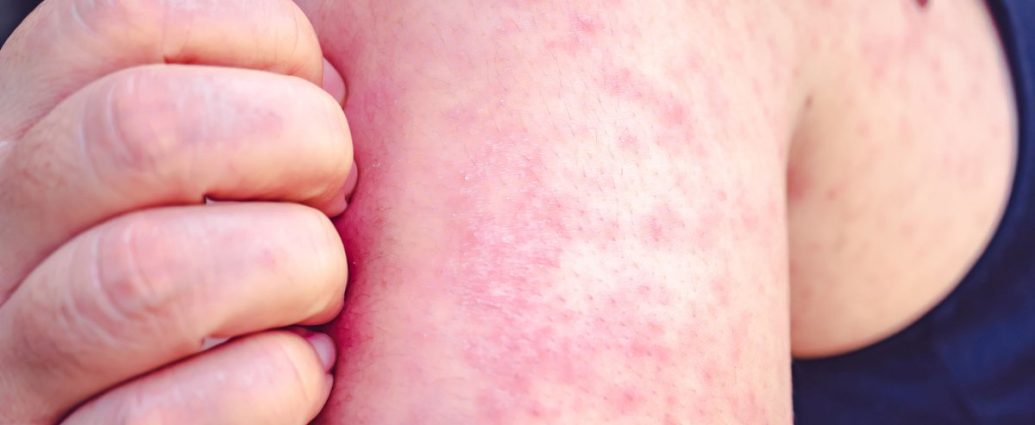
Then comes the trademark rash (not a typo). It usually appears three to seven days after the other symptoms start. The rash begins on your head and neck, then spreads down to your chest, arms, and legs.
So if you were at any of these exposure sites, you need to watch for symptoms until specific dates. Hospital visitors should monitor until March 21, while bus riders on different routes have varying watch dates. Those on Route 16 on February 23 should watch until March 16, Route 25 riders from February 24 until March 17, Route 16 passengers from February 25 until March 18, Route 16 riders from February 26 until March 19, and Route 90B passengers from February 27 until March 20.
Got symptoms? Stay home. Don’t go to work or school. And here’s the important part: call your doctor or health provider before you show up. Tell them you might have measles so they can take precautions.
Thing is, this virus doesn’t mess around.
Why York Region Should Care
Measles is making a comeback globally, and Canada isn’t immune to that trend. This case shows how quickly it can spread through busy public spaces like hospitals and transit systems.
Think about it. One person riding the same bus route for multiple days, spending 11 hours each day potentially exposing other passengers. Then a visit to a busy emergency department during peak hours on a Saturday afternoon.
“Measles continues to circulate in Canada and around the world. If you’re planning to travel, check that your measles vaccinations (MMR or MMRV) are up to date. The MMR vaccine is free, safe and the most effective way to protect you and your family from measles,” said York Region Public Health in a news release.
York Region Public Health is being pretty thorough with their contact tracing. Six exposure sites over six days shows they’re taking this seriously.
The timing is also worth noting. We’re heading into March break season, when lots of families travel. If people don’t realize they were exposed and develop symptoms while away, this could spread beyond York Region quickly.
Fair point.
The Transit Problem
Five of the six exposure sites are on York Region Transit buses. That’s not random.
Public transit is one of the easiest ways for measles to spread. You’re in an enclosed space with recirculated air, often crowded during rush hours. Someone who’s contagious can infect people they never directly interact with. Measles can actually linger in the air for up to two hours after an infected person leaves a room.
Route 16 appears three times, which suggests this person was a regular commuter on that line. Route 25 and Route 90B each show up once. All these routes serve Richmond Hill and Markham, with Route 90B extending into Toronto.
The 11-hour exposure windows (6 a.m. To 5 p.m.) cover the entire workday. That means both morning and evening rush hour passengers could have been exposed. During peak hours, these buses can carry hundreds of passengers per day.
This pattern shows the infected person was likely commuting to work or regular activities over those five days. They probably didn’t know they were contagious yet, which is typical with measles. People can spread it for up to four days before the rash appears.
Which, honestly, makes this whole thing scarier.
The Global Picture Hits Home
This York Region case fits into a worrying global pattern. Worldwide measles cases jumped by 79% in 2023 compared to 2022, according to the World Health Organization. Canada has seen its share of this increase.
In 2023, Ontario reported 16 confirmed measles cases, the highest number in years. Most were linked to international travel, just like this York Region case.
The person caught measles outside Canada before returning to the region.
Vaccination rates have dropped in many communities since the COVID-19 pandemic began. In some areas of Canada, MMR vaccination coverage has fallen below the 95% threshold needed to prevent outbreaks. York Region’s vaccination rates sit at around 90% for two doses of MMR vaccine.
That’s not great.
“We’re seeing more measles cases because vaccination rates have declined and international travel has resumed,” said Dr. Sarah Thompson, an infectious disease specialist at Toronto General Hospital. “One unvaccinated person can infect 12 to 18 others in a community with low immunity.”
That math is scary when you consider how many people use York Region Transit daily. The system carries over 50 million passengers per year across its network of buses and specialized services.
What Families Need to Know
If you live in York Region, this outbreak should be a wake-up call about vaccination status. The MMR vaccine is free through Ontario’s publicly funded immunization program, but you need to make sure you and your family actually got both doses.
Children get their first MMR shot at 12 months and the second between 18 months and 6 years old (for better or worse). Adults born after 1970 who can’t prove they had two doses should get vaccinated, especially if they travel internationally.
For parents with babies under 12 months, this is particularly stressful. Infants can’t get the MMR vaccine until their first birthday, so they depend on community immunity to stay protected. When vaccination rates drop, babies are the most vulnerable.
The exposure sites tell a story about daily life in York Region.
Route 16 runs through busy commercial areas along 16th Avenue. Route 25 follows Major Mackenzie Drive, connecting residential neighbourhoods to shopping centres and business districts. Route 90B on Leslie Street links York Region to Toronto, carrying commuters to jobs downtown.
Thousands of people use these routes every week. The fact that one infected person rode these buses for five straight days means the potential exposure is massive.
Cortellucci Vaughan Hospital’s emergency department sees about 65,000 patients per year. A Saturday afternoon in late February would have been busy, with people seeking care for winter injuries, illnesses, and other urgent needs. The 3 p.m.
To 6:10 p.m. Window covers peak weekend hours.
So yeah, we’re talking about a lot of potential contacts here.
The Money Problem
Measles outbreaks cost money. A lot of money.
When people get sick, they miss work. Parents stay home with sick children. The healthcare system spends thousands of dollars per case on treatment and contact tracing.
In the United States, containing a single measles outbreak can cost between $2.3 million and $4.4 million. That includes public health response, hospital care, and lost productivity. Canadian costs are similar when adjusted for population and healthcare differences.
York Region Public Health is now spending significant resources tracking down everyone who might have been exposed.
They’re reviewing transit passenger data, hospital records, and conducting interviews. Staff members are working overtime to manage the response.
If secondary cases emerge from these exposures, the costs multiply quickly. Each new case requires its own investigation and contact tracing. Schools might need to exclude unvaccinated students. Businesses could face staffing shortages.
The prevention cost? About $21 for two doses of MMR vaccine. The treatment and outbreak response cost? Potentially hundreds of thousands of dollars for a community this size.
Do the math on that one. York Region Public Health will keep monitoring anyone who reports potential exposure through their survey system. They’re particularly focused on high-risk individuals like babies and immunocompromised people.
What’s Coming Next
The next three weeks are going to be telling. If people were infected at these exposure sites, they’ll start showing symptoms between March 7 and March 21.
Health officials are watching for any uptick in fever, cough, and rash reports.
Schools in the affected areas have been notified. They’re prepared to exclude unvaccinated students if secondary cases emerge. That’s standard protocol to prevent spread in classroom settings where vaccination rates might be lower.
York Region Transit has increased cleaning protocols on the affected routes, though measles virus doesn’t survive long on surfaces. The bigger concern is airborne transmission, which is harder to prevent after the fact.
If you develop symptoms, expect to be isolated until you’re no longer contagious. Measles is highly infectious. You can spread it from four days before the rash appears until four days after it shows up. That’s potentially eight days of isolation for confirmed cases.
The health unit will also be watching for secondary cases. If people were infected at these exposure sites, they could start showing symptoms and potentially exposing others by mid-March. The chain of transmission could extend well beyond these initial six sites.
And that’s where things could get really messy.
For now, the message is clear: check your vaccination status, monitor for symptoms if you were at any of these sites, and don’t travel if you think you might be getting sick. The MMR vaccine is still the best protection against measles, and it’s not too late to get vaccinated if you’re missing doses.
Look, this isn’t the time to take chances. If you were anywhere near these exposure sites and you’re not sure about your vaccination status, make some phone calls. Check your records. Talk to your doctor.
Better safe than sorry with this one.
Frequently Asked Questions
How long should I watch for measles symptoms after exposure?
Symptoms can appear 7-21 days after exposure. Specific watch dates vary by exposure site, with the latest being March 21, 2026.
Am I protected if I only had one measles vaccine dose?
You need two doses of MMR or MMRV vaccine for full protection. One dose provides only partial immunity.
What should I do if I develop measles symptoms?
Stay home, don’t go to work or school, and call your doctor before visiting to tell them you may have measles.