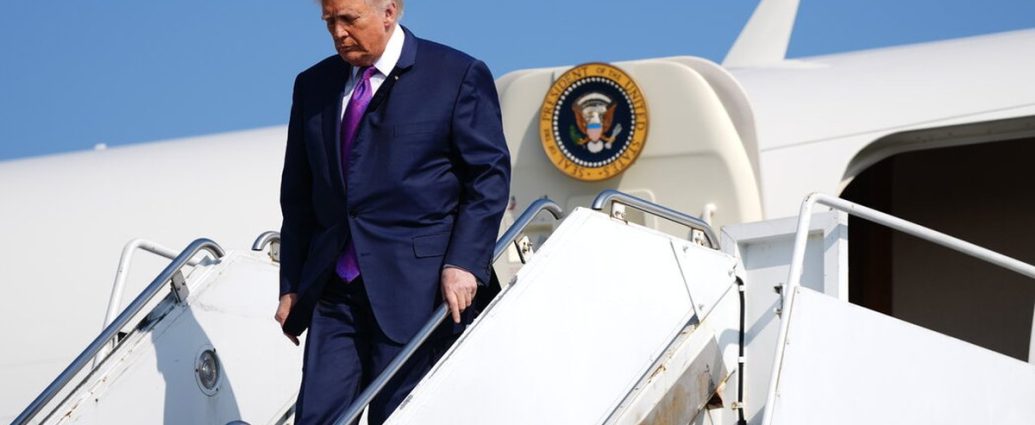
The world’s watching Geneva this Thursday as U.S. And Iranian negotiators sit down for what could be the last chance to avoid military action. But behind the scenes, President Trump’s already told advisers he’s prepared to pull the trigger on strikes against Iran if diplomacy fails.
And we’re not talking about a slap on the wrist here.
Trump’s weighing everything from hitting Revolutionary Guard headquarters to targeting Iran’s nuclear facilities outright.
With two carrier strike groups positioned within 200 nautical miles of Iranian waters and an estimated 15,000 U.S. Military personnel now in the region, the Pentagon has quietly moved $2.3 billion worth of additional military assets into position over the past three weeks. That’s a lot of firepower sitting right there.
What’s Actually on Trump’s Target List
Sources inside the administration say Trump’s leaning toward an initial targeted strike in the coming days if Geneva goes nowhere.
The idea? Show Iran’s leadership they’re out of options and need to abandon their nuclear program completely.
Look, the target list reads like a greatest hits of Iranian military infrastructure. Islamic Revolutionary Guard Corps headquarters tops the list, but Trump’s team is also eyeing nuclear sites and the country’s ballistic missile program. Defense officials estimate Iran currently operates 19 nuclear facilities across the country, with the Natanz uranium enrichment plant and Fordow facility representing the highest-value targets.
“Should those steps fail to convince Tehran to meet his demands, Trump told advisers he would leave open the possibility of a military assault later this year intended to help topple Ayatollah Ali Khamenei.”
That’s where things get really serious. We’re talking about regime change here, not just a warning shot.
Though even Trump’s own advisers aren’t sure airstrikes alone could actually topple Iran’s supreme leader. Pentagon war games conducted in January 2026 suggest a 35% probability that limited strikes would force Iran to abandon its nuclear program, while full regime change operations carry success rates below 20%.
Thing is, the Islamic Revolutionary Guard Corps, with an estimated 125,000 active personnel and a $15 billion annual budget, represents Iran’s most elite military force.
Taking out their Tehran headquarters would eliminate command and control capabilities for Iran’s proxy operations across Syria, Lebanon, and Yemen. Intelligence assessments suggest this single strike could disrupt 60% of Iran’s regional military coordination within 48 hours. But that doesn’t mean Iran just gives up and goes home.
Serious Military Hardware Right on Iran’s Doorstep
The military pieces are already in place.
Two U.S. Carrier strike groups have moved within range of Iran, putting serious firepower right on Tehran’s doorstep. The USS Gerald R. Ford and USS Dwight D. Eisenhower carrier groups now control sea lanes through which 30% of global oil supplies typically flow. If you’re wondering why gas prices jumped this week, there’s your answer.
Each carrier group carries approximately 75 aircraft, including F/A-18 Super Hornets capable of precision strikes up to 500 miles inland. Combined with B-52 bombers repositioned to Al Udeid Air Base in Qatar on February 18th, U.S. Forces can now deliver over 400 precision-guided munitions in the first wave of any potential attack. That’s enough to level pretty much whatever they want to level.
But here’s where it gets interesting. There’s apparently a new proposal floating around Geneva that could give both sides a face-saving exit. Iran would be allowed to keep a very limited nuclear enrichment program, but only for medical research and treatments. No weapons capability whatsoever.
The compromise would cap Iran’s uranium enrichment at 3.67% purity, well below the 90% threshold needed for weapons-grade material.
Current intelligence estimates suggest Iran has already stockpiled 4,800 pounds of uranium enriched to 20% purity, enough for three nuclear weapons if further processed. The medical research allowance would permit Iran to maintain just 660 pounds of low-enriched uranium specifically for cancer treatment isotopes.
It’s a narrow window, but it might be enough to step back from the brink. Swiss mediators have spent the past 72 hours shuttling between Iranian Foreign Minister Hossein Amir-Abdollahian and U.S. Secretary of State Marco Rubio, trying to find language both sides can accept. Nobody’s talking about it publicly yet, but the stakes couldn’t be higher.
Your Wallet’s About to Feel This
Financial markets are already pricing in conflict.
Hard to ignore.
Brent crude oil jumped 12% to $127 per barrel on Tuesday alone, while West Texas Intermediate reached $122 – levels not seen since the 2008 global financial crisis. Energy analysts predict full-scale military action could push oil prices above $200 per barrel within a week.
Here’s the thing about Iran – it produces approximately 3.8 million barrels of oil per day, representing 4% of global supply. But the real economic threat lies in the Strait of Hormuz, through which 21% of global petroleum liquids transit daily. Any Iranian attempt to close this chokepoint could remove 21 million barrels per day from world markets, triggering immediate supply shortages across Europe and Asia.
The Pentagon estimates military operations against Iran would cost taxpayers between $50 billion and $150 billion in the first year alone, depending on scope and duration. That’s on top of the $847 billion defense budget Congress approved for 2026.
Administration officials privately acknowledge these costs weren’t factored into Trump’s tax cut proposals, potentially adding $300 billion to federal deficits over three years. So much for fiscal responsibility.
“We’re looking at economic disruption that makes 2008 look manageable. Oil at $200 means recession is inevitable, not just possible.”
That was former Treasury Secretary Steven Mnuchin during a private briefing with House leadership on February 20th. When Mnuchin’s worried about economic chaos, you know things are bad.
What This Means for Canadians
Canadian officials haven’t commented publicly yet, but this puts Ottawa in a tough spot.
Any U.S. Military action against Iran would likely spike oil prices globally, hitting Canadian consumers at the pump. Gasoline prices in Toronto and Vancouver could reach $2.30 per litre within days of conflict beginning, up from the current $1.67 average. If you’re planning any road trips this summer, you might want to reconsider.
Canada imports roughly 15% of its oil from international markets, making the country vulnerable to Middle East supply disruptions despite domestic production capabilities. The Bank of Canada estimates every $10 increase in oil prices reduces Canadian GDP growth by 0.1 percentage points, meaning sustained conflict could push Canada into recession by late 2026.
Prime Minister Justin Trudeau faces a particularly delicate balancing act. Canada maintains diplomatic relations with Iran through its Swiss embassy intermediary, while simultaneously being a NATO ally bound to support U.S.
Security interests. Canadian military assets haven’t been requested for any potential Iran operation, but CF-18 fighters stationed in Kuwait could be drawn into regional defence operations.
The bigger worry? Regional escalation.
Iran’s got proxy forces across the Middle East, and they don’t tend to sit quietly when Tehran gets hit. Hezbollah controls southern Lebanon with an estimated 100,000 rockets and missiles pointed at Israel. Hamas maintains 15,000 fighters in Gaza despite recent conflicts. Iranian-backed militias operate across Iraq, Syria, and Yemen with a combined strength exceeding 200,000 personnel. That’s a lot of people with guns who really don’t like the United States.
What This Means Going Forward
Canadian peacekeeping forces in Lebanon, numbering 850 personnel as part of UNIFIL, could find themselves in the crossfire if Hezbollah retaliates against Israeli targets. The Department of National Defence has quietly begun contingency planning for emergency evacuation of Canadian citizens from Lebanon, Israel, and the UAE. Which should tell you how seriously Ottawa’s taking this threat.
The Nuclear Problem That Started All This
Let’s be clear about what’s driving this whole thing. Trump wants Iran to give up “every aspect” of their nuclear program. That’s a pretty maximalist position, especially since Iran’s been enriching uranium for years now. Current estimates suggest Iran sits just 4-6 weeks away from having enough weapons-grade uranium for its first nuclear device.
Iran’s nuclear infrastructure spans 19 declared facilities, including the underground Fordow plant buried 300 feet beneath a mountain.
The Natanz facility houses 8,700 centrifuges capable of enriching uranium, while the heavy-water reactor at Arak could produce plutonium for weapons if fully operational. Dismantling this network would require Iran to abandon $12 billion in infrastructure investments made over two decades.
Honestly, that’s not happening without a fight.
The medical research compromise being floated in Geneva is actually kind of clever.
Iran gets to keep some face by maintaining a nuclear program, but it’s so limited that weapons development becomes basically impossible. The proposal would allow Iran to operate just 1,000 first-generation centrifuges at Natanz, enough for medical isotope production but insufficient for weapons material.
Whether Tehran’s leadership can sell that to their hardliners is another question entirely. Iran’s parliament, dominated by conservatives who view nuclear capability as essential for national security, would need to approve any deal scaling back the program. Supreme Leader Khamenei has invested significant political capital in nuclear development since withdrawing from the 2015 Joint Plan of Action in 2018. Backing down now makes him look weak to his own people.
The Clock’s Ticking and Everyone Knows It
Thursday’s Geneva meeting isn’t just another round of talks.
Everyone involved knows this is probably the last shot at a diplomatic solution before things get kinetic. The fact that Trump’s already gaming out strike scenarios tells you how slim the odds are. If the talks collapse, we could see military action within days. Trump’s advisers say he’s been consistent about wanting to move quickly if diplomacy fails. No drawn-out ultimatums or gradual escalation. Just boom.
Pentagon sources indicate F-35 Lightning II fighters have been conducting “training exercises” over Iraqi airspace since February 15th, positioning them within 45 minutes flight time of key Iranian targets. Nobody calls them training exercises when they’re that close to actual targets.
The military buildup accelerated dramatically after Iran’s February 12th announcement that it had begun enriching uranium to 60% purity at its Fordow facility. This represents the highest enrichment level Iran has ever acknowledged, bringing them significantly closer to weapons-grade 90% material. Intelligence analysts estimate Iran could reach weapons-grade enrichment within 3-4 weeks if they commit their full centrifuge capacity to the effort.
And that’s assuming they don’t already have it.
U.S. Cyber Command has reportedly prepared digital warfare options targeting Iran’s power grid and communication networks. Similar to the 2010 Stuxnet virus that damaged Iranian centrifuges, these cyber weapons could disable Iran’s nuclear facilities without conventional military strikes. However, Iran has hardened its nuclear infrastructure against cyber attack since discovering Stuxnet, reducing the effectiveness of digital-only operations. They learned their lesson the first time.
How Trump’s Team Really Thinks About This
What’s fascinating is how Trump’s framing this internally. He’s telling advisers that Iran’s leaders need to understand they have “no choice” but to give up their nuclear ambitions. It’s classic Trump negotiation tactics, but applied to international relations with nuclear weapons in the mix.
Which is either brilliant or terrifying, depending on your perspective.
The regime change option shows just how far Trump’s willing to go if the initial strikes don’t work. Toppling Khamenei would fundamentally reshape the Middle East, assuming it’s even possible.
That’s the kind of move that defines presidencies, for better or worse.
CIA assessments suggest Khamenei’s removal could trigger civil war between Iran’s Revolutionary Guards and regular military forces, potentially fracturing the country along ethnic lines.
We’re talking about 85 million people in a country that controls some of the world’s most important oil shipping lanes. The chaos could last for decades.
Even inside Trump’s own administration, there’s skepticism about whether airstrikes alone could actually remove Iran’s government. Regime change is hard, expensive, and unpredictable. Just ask anyone who lived through Iraq or Libya. Defense Secretary Ron DeSantis has privately expressed doubts about military-only regime change, favouring targeted strikes combined with economic pressure and support for Iranian opposition groups.
But the threat itself might be the point.
Iran’s leadership knows what happened to Saddam Hussein and Muammar Gaddafi when they crossed the United States.
That historical context gives Trump’s ultimatum some serious weight. Iranian officials have watched U.S. Military capabilities demonstrated in Ukraine, where American weapons systems proved devastatingly effective against Russian forces throughout 2024 and 2025. They know what American precision-guided munitions can do to hardened targets.
What This Means Going Forward
The medical research compromise being discussed in Geneva represents a potential middle ground nobody’s talking about publicly yet. Iran keeps a tiny nuclear program for legitimate purposes, the U.S. Gets assurances about weapons development, and both sides avoid a war nobody really wants. International Atomic Energy Agency inspectors would maintain permanent presence at all Iranian facilities, with real-time monitoring of uranium stocks and centrifuge operations.
Whether Iran’s supreme leader can accept that kind of deal while maintaining credibility with his own hardliners remains the big unknown heading into Thursday’s talks. Iranian domestic politics don’t give Khamenei much room to appear weak, especially after decades of portraying nuclear capability as essential for national survival against American aggression.
By Thursday evening, we’ll know if diplomacy still has a chance or if the Middle East is about to get a lot more dangerous.
Frequently Asked Questions
When are the Geneva talks between the U.S. and Iran?
U.S. and Iranian negotiators are scheduled to meet in Geneva on Thursday for what appears to be last-ditch negotiations to avoid military conflict.
What targets is Trump considering for strikes against Iran?
Potential targets include Iran’s Islamic Revolutionary Guard Corps headquarters, nuclear sites, and the country’s ballistic missile program.
What is the medical research compromise being proposed?
A new proposal would allow Iran to maintain a very limited nuclear enrichment program solely for medical research and treatments, with no weapons capability.