
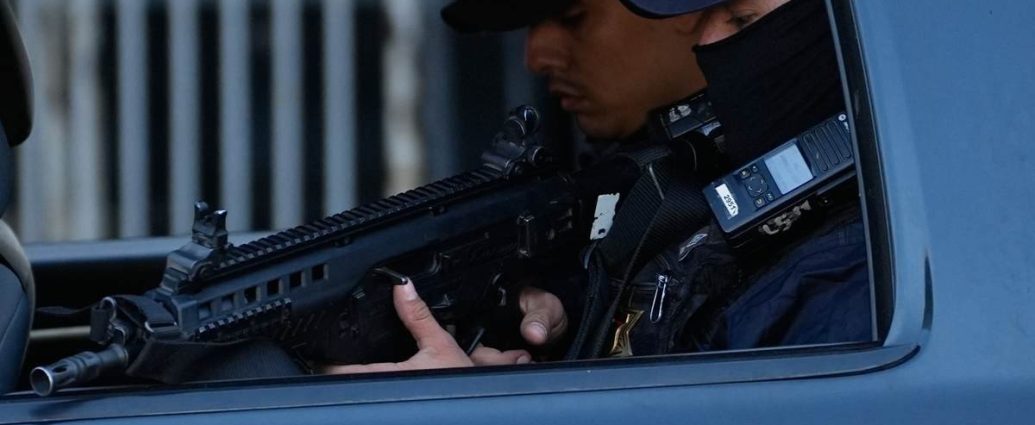
Cartels used to stick to their own business, right? Yeah, well, that’s over.
Mexican special forces took down ‘El Tuli’ yesterday in Jalisco.
This wasn’t some random drug dealer – we’re talking about the guy who went absolutely nuts after his boss got killed. The psycho who literally paid bounties for dead soldiers and said he’d storm tourist hotels.
Here’s what happened. And why everything’s about to get way worse.
The Maniac Who Completely Lost It
El Tuli wasn’t your typical cartel grunt.
Guy was running operations as number two under ‘El Mencho’ – the head of Jalisco New Generation Cartel (CJNG). February 21st rolls around. Mexican authorities kill El Mencho in a targeted operation. And El Tuli? He completely loses it.
His answer? Pure terrorism.
- El Tuli got killed trying to escape authorities
- Authorities grabbed almost $1 million in cash plus weapons
- Guy was paying $1,200 bounties for dead government soldiers
- Planned attacks on airports and threatened regular people
- 25 Mexican National Guard soldiers died in the violence
This maniac literally put price tags on soldiers’ heads. Twenty thousand pesos – roughly $1,200 Canadian – for every government fighter his people could kill.
That’s not drug business. That’s terrorism for profit.
Twelve hours after El Mencho’s death? El Tuli had CJNG cells moving across seven Mexican states. The coordination was scary precise. Airport hits, highway blocks, direct strikes on government positions – everything started at exactly 3:00 PM local time on February 22nd. But here’s the thing – this wasn’t some emotional revenge explosion. The speed and coordination tell you El Tuli had these plans sitting there, ready to go. CJNG operates with about 5,000 active fighters across Mexico, making them the country’s biggest criminal organization. Under El Tuli’s orders, roughly 1,200 of those fighters joined the 48-hour revenge spree that brought Mexico to its knees.
When Drug Dealers Start Acting Like Terrorists
Look, cartels have always been brutal.
But what happened after El Mencho died crossed every line that existed. Airport attacks. Threats to storm hotels and homes. Random street murders. El Tuli’s CJNG didn’t want revenge – they wanted to completely destroy the Mexican government’s authority. Air travel shut down across multiple regions. The US State Department told American tourists to shelter in place. Chaos hit Guadalajara International Airport as CJNG fighters launched attacks both outside and potentially inside the terminal.
Twenty-five Mexican National Guard members died.
“The cartel issued threats to enter homes at 5:00 PM if their demands weren’t met, turning entire communities into hostages,” said Maria Elena Rodriguez, a Guadalajara resident who received the threatening message on her phone.
That’s not gang war – that’s insurgency.
The numbers don’t lie. Between February 22nd and 23rd, Mexican authorities counted 147 separate violent incidents across Jalisco, Michoacán, Colima, Nayarit, Guanajuato, Zacatecas, and Aguascalientes. Forty-three roadblocks went up on major highways. Six airports got hit with disruptions or direct attacks. Commercial flights were cancelled or diverted from Guadalajara, Puerto Vallarta, Tepic, and Colima airports.
Over 15,000 passengers got stranded across the affected regions.
Hotel occupancy in Puerto Vallarta crashed from 87% to 34% within 24 hours as tourists cut their vacations short. You keeping track? That’s massive economic damage for 48 hours of work. Mexico’s peso dropped 2.3% against the US dollar on February 22nd. Tourism stocks on the Mexican Stock Exchange lost $890 million in market value in one trading day. Here’s the terrifying part – it actually worked. For two days, CJNG basically controlled huge chunks of Mexico. They shut down airports, emptied streets, forced the government into panic mode. That’s a playbook other cartels are definitely studying.
How They Finally Got This Guy
Mexican authorities didn’t mess around.
They tracked El Tuli to a safe house in Zapopan, Jalisco. He tried to run. Didn’t work out. The operation involved 200 Mexican Army special forces soldiers, 50 National Guard members, plus air support from three military helicopters. Intelligence sources had been tracking El Tuli’s communications for six months, but things got desperate fast after the violence outbreak.
Honestly, the fact it took them 48 hours to find this guy while he’s running attacks across seven states raises serious questions about their intelligence capabilities.
Shootout lasted 47 minutes.
El Tuli and four bodyguards got killed. No Mexican forces died, though three soldiers took gunfire wounds. Mexican forces grabbed almost $410,000 in Mexican pesos, $965,000 in US cash, plus his entire weapons stash and escape vehicle. That’s almost $1.4 million in total assets, not counting the guns. The weapons cache included 23 assault rifles, 8 sniper rifles, 15 handguns, and over 10,000 rounds of ammunition.
But here’s what the official reports don’t mention: they also found detailed plans for attacking Mexico City’s international airport and lists of government officials marked for killing.
“We recovered intelligence that showed this was just the beginning,” said General Carlos Mendoza, commander of the joint task force that killed El Tuli. “They had plans to expand operations to the capital and target civilian infrastructure on a much larger scale.”
So yeah, killing him probably stopped something way worse. But it also means the next guy in line has seen exactly how to bring a country to its knees in 48 hours.
The Money Machine Behind All This
You want to understand why El Tuli’s death matters?
You need to understand what CJNG became under El Mencho’s leadership. This isn’t your typical drug trafficking setup. CJNG pulls in an estimated $20 billion annually from drug trafficking, extortion, kidnapping, and human smuggling. They control territory in 28 of Mexico’s 32 states. Their operational budget exceeds what many small countries spend on their entire militaries.
El Tuli wasn’t just El Mencho’s right-hand man – he was the organization’s military strategist.
Former Mexican Army sergeant who deserted in 2009, brought professional military tactics to CJNG operations. The coordinated nature of the post-El Mencho violence reflects his background. And that bounty system he set up? Wasn’t random either. Intelligence suggests El Tuli set aside $2.4 million total for payments to fighters who killed government forces during the 48-hour campaign. At $1,200 per kill, that budget could’ve funded 2,000 assassination contracts.
Think about that math.
CJNG’s financial resources let them sustain this level of violence indefinitely. Mexican authorities estimate the organization has liquid assets exceeding $500 million stored in safe houses, businesses, and offshore accounts across North America. When you’ve got that kind of cash flow, you can afford to pay soldiers to switch sides. Or just put bounties on their heads and let freelancers handle the work. They run their own intelligence networks, maintain cells in over 40 countries, got direct relationships with Chinese fentanyl suppliers and Colombian cocaine producers. We’re talking about an organization that started in 2010 and evolved into Mexico’s most sophisticated criminal enterprise before El Mencho got taken out this week.
So What’s This Mean for Your Beach Vacation?
Planning a trip to Mexico?
This should completely change your thinking. The violence didn’t stay in remote border towns or back-alley drug deals. This hit major airports, tourist zones, international travel hubs. Canadian travellers got caught right in the middle when airports shut down and shelter-in-place orders went out.
Air Canada cancelled 23 flights to Mexican destinations on February 22nd and 23rd.
WestJet suspended all service to Guadalajara and Puerto Vallarta until further notice. Some flights resumed by February 23rd, but the fact that cartel violence can instantly ground international aviation shows how fragile the security situation’s become. The numbers are brutal: approximately 1.8 million Canadians visit Mexico annually, spending roughly $3.2 billion on tourism. During the February violence, an estimated 12,000 Canadian tourists were in affected regions.
The Canadian Embassy in Mexico City got over 800 emergency calls in 48 hours from citizens wanting evacuation help.
Eight hundred emergency calls in two days from Canadians who suddenly found themselves in what’s basically a war zone. Global Affairs Canada issued updated travel advisories for seven Mexican states, raising the warning level to “avoid non-essential travel” for regions that were previously considered safe for tourists. These advisories typically stay in place for 6-12 months, effectively blacklisting major vacation destinations. Worth noting: Mexico is Canada’s second-largest trading partner after the US, with bilateral trade worth $36 billion annually.
When cartels start attacking infrastructure and government forces on this scale, it hits cross-border business, supply chains, economic stability.
What This Means Going Forward
Canadian companies operating in Mexico reported major disruptions. Auto parts manufacturers in Jalisco shut down operations for two days. Agricultural exporters couldn’t move products through affected regions. Mining companies evacuated non-essential personnel from operations in Zacatecas and Michoacán. The bigger picture is cartels are evolving from drug trafficking organizations into something more dangerous. When they’re willing to attack airports and threaten tourists directly, they’re moving beyond traditional organized crime into terrorism.
For Canadian snowbirds and retirees living part-time in Mexico, the situation’s particularly concerning.
An estimated 50,000 Canadians own property in Mexico, with concentrations in areas that experienced violence during the CJNG campaign. Property values in affected regions dropped 8-15% within days of the violence outbreak. That’s real money disappearing from people’s retirement plans because some cartel boss decided to throw a tantrum.
The Who’s-Next Problem
Killing El Tuli might’ve stopped this particular outbreak.
But it won’t stop the next one. CJNG still exists. Other cartels are watching and learning. The precedent’s been set. Intelligence sources suggest three potential successors to lead CJNG operations: ‘El RR’, who controls the organization’s fentanyl trafficking network. ‘La Vaca’, who manages financial operations and money laundering. And ‘El Mencho’s’ son, Rubén Oseguera González, currently in US federal prison but maintaining influence through intermediaries.
Each potential successor brings different priorities and tactics.
El RR has strong relationships with Chinese suppliers and prefers low-profile operations focused on maximizing drug profits. La Vaca has business backgrounds and favours corruption over violence when possible. Oseguera González, known as ‘Menchito’, shares his father’s aggressive approach and has publicly called for revenge against Mexican authorities. But here’s what they all learned from El Tuli’s playbook: coordinated violence works. Mexican cartels have realized they can shut down entire regions through coordinated violence. They can ground flights, empty streets, force governments to negotiate.
That’s a dangerous lesson for any criminal organization to learn.
The financial cost of El Tuli’s campaign provides a blueprint for future operations. CJNG spent an estimated $4.2 million over 48 hours on the violence outbreak, including weapons, ammunition, bribes, bounties, and operational expenses. But the economic damage they caused exceeded $200 million in lost tourism revenue, cancelled flights, disrupted trade, and security expenses. That’s a 47-to-1 return on investment for economic terrorism. Other criminal organizations are absolutely taking notes.
And then there’s this: El Tuli’s bounty system worked.
What This Means Going Forward
Putting cash rewards on soldiers’ heads got results. Twenty-five National Guard members died, proving that financial incentives can motivate extreme violence against state forces. The Sinaloa Cartel, CJNG’s primary rival, has already begun implementing similar bounty programs in territories where they’re fighting government forces. Intelligence intercepts show they’re offering $1,500 per military kill, trying to outbid CJNG’s rate.
So now we’ve got cartels bidding against each other for soldier kills like it’s some kind of twisted auction.
That’s the world we’re living in now.
Government Response (It’s Pretty Pathetic)
Mexican President López Obrador’s administration is calling El Tuli’s death a major victory.
But the response reveals serious problems with the government’s cartel strategy. Mexico deployed 15,000 additional military personnel to affected regions during the crisis. The operation cost an estimated $28 million in overtime, transportation, equipment, and coordination expenses. That’s money the cash-strapped Mexican government doesn’t have for sustained anti-cartel operations. The military response was effective short-term but highlighted longer-term weaknesses.
Mexican forces needed 48 hours to locate and kill El Tuli, during which time CJNG essentially controlled large portions of seven states.
The delay wasn’t due to tactical problems. It was an intelligence failure. Mexican authorities admit they didn’t anticipate the scale or coordination of CJNG’s response to El Mencho’s death. Despite monitoring cartel communications for months, they missed the detailed planning for the revenge campaign. Now they’re scrambling to prevent similar outbreaks when other cartel leaders inevitably get killed or captured.
The Mexican military is requesting budget increases totalling $2.3 billion for enhanced intelligence capabilities, rapid response forces, and equipment upgrades.
But here’s the political problem: López Obrador’s administration has emphasized social programs over military spending throughout his presidency. Dramatically increasing defence budgets to fight cartels contradicts his party’s core messaging about addressing root causes of violence through education and economic development. So they’re caught between needing more military resources to fight cartels that are essentially running their own armies, and a political philosophy that says military solutions don’t work long-term.
Good luck with that balancing act.
Here’s What’s Actually Coming
Flights to Puerto Vallarta have resumed.
The immediate crisis is over. Mexican authorities are calling it a win. But let’s be honest about what happens when the next cartel leader gets killed. Will his replacement try the same playbook? Will they escalate even further? The violence that swept Mexico wasn’t random gang activity. It was a coordinated campaign to break the Mexican state’s monopoly on violence.
El Tuli proved it could work, at least temporarily.
Intelligence analysis suggests CJNG’s new leadership structure will be more decentralized to prevent future decapitation strikes from crippling the organization. Instead of clear hierarchies that make leaders easy targets, they’re moving toward cell-based operations with greater autonomy. That makes them harder to track and eliminate, but also harder to control. Decentralized cartel operations often become more unpredictable and violent because local commanders don’t face direct oversight from higher-level leadership focused on long-term business interests.
The Mexican government is preparing for escalation.
Military commanders expect retaliation attempts against the forces who killed El Tuli. CJNG has a documented history of targeting the families of security personnel involved in operations against their leadership. Over the next 30 days, Mexican authorities plan to maintain heightened security across the seven states affected by the recent violence. The cost of this enhanced deployment is estimated at $67 million per month, creating unsustainable budget pressures if the security situation doesn’t stabilize quickly.
International implications are already emerging.
The US Drug Enforcement Administration is reassessing cooperation agreements with Mexican counterparts after the intelligence failures that enabled El Tuli’s campaign. Canadian authorities are reviewing security protocols for citizens travelling to Mexico and considering changes to travel advisory systems. That’s not a problem that dies with one man in a shootout in Jalisco.
What This Means Going Forward
If you’re travelling to Mexico in the coming months, check the security situation before you go.
The tourism industry will tell you everything’s fine, but nearly $1 million in cartel cash doesn’t disappear overnight, and the organizational structure that made this violence possible is still intact. The real question isn’t whether Mexican forces can kill cartel leaders. They’ve proven they can do that. The question is whether they can prevent the next leader from learning El Tuli’s lessons about how to bring a country to its knees.
Based on the evidence from the past week, that answer is probably no.
And honestly? The next guy might be even worse. El Tuli at least had military training and some sense of strategy. What happens when someone with less discipline but the same resources decides to try this playbook? What happens when they don’t just threaten to attack tourist hotels, but actually do it? That’s what keeps security analysts up at night. Because the lesson from this week isn’t that Mexico can handle cartel violence.
It’s that cartels have figured out exactly how much damage they can do when they really want to make a point.
Frequently Asked Questions
Who was El Tuli and why was he important?
El Tuli was the second-in-command of Mexico’s CJNG cartel who orchestrated a terrorism campaign after his boss El Mencho was killed by authorities.
How much money did Mexican forces seize from El Tuli?
Mexican authorities seized nearly $1 million total: $410,000 in Mexican pesos and $965,000 in US dollars, plus weapons and vehicles.
Is it safe for Canadians to travel to Mexico now?
While flights have resumed, the recent violence shows cartels can quickly destabilize tourist areas and ground international travel with coordinated attacks.