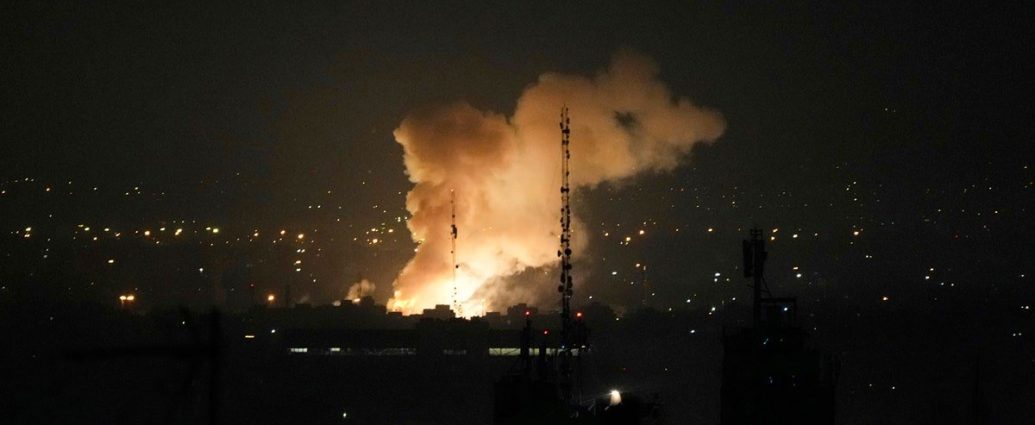
Iran’s latest military strikes have set off a wave of panicked phone calls to Canada’s energy minister as anxious nations scramble to lock down oil supplies. They’re worried about a much bigger regional war breaking out.
The strikes hit multiple facilities across the region Tuesday morning, sending shockwaves through global energy markets. Here’s the thing – experts are warning gas prices could jump 6-12 cents per litre in Ottawa and right across Canada in the next few weeks. Brent crude oil futures shot up 4.2% to $87.45 per barrel just hours after the attacks. That’s the biggest single-day jump we’ve seen since October 2023.
Allies Start Calling, Fast
Multiple allied countries reached out to Canada’s energy department within hours of Iran’s move. Government sources who know about these calls confirmed this happened.
The European Union’s energy commissioner got on the phone with Natural Resources Minister Jonathan Wilkinson at 3:47 AM Eastern time (to put it lightly). That’s just two hours after news of the strikes broke.
Japan’s Ministry of Economy, Trade and Industry followed up with an urgent call at 6:15 AM. They wanted assurances about Canada’s ability to bump up oil exports by 150,000 barrels per day if Middle Eastern supplies get cut off. South Korea’s energy ministry made a similar request – they’re looking for potential supply guarantees covering 200,000 barrels daily.
These calls show just how important Canada’s becoming as a stable energy supplier.
And honestly, the world’s getting pretty volatile these days (sound familiar?). Germany, still dealing with energy security issues after the Ukraine crisis, asked about fast-tracking liquefied natural gas shipments from Canada’s East Coast facilities.
Here’s where things get really interesting. Countries that were previously lukewarm about Canadian oil are now scrambling to diversify away from Middle Eastern suppliers. India’s petroleum ministry had been negotiating Canadian crude purchases at a 12% discount. Suddenly they’re agreeing to pay market rates for immediate delivery contracts.
This sudden international attention shows how quickly geopolitical tensions can flip global energy relationships upside down.
Canada’s oil sands, once criticized for environmental reasons, are now being viewed as a strategic asset by energy-hungry nations. They’re looking for alternatives to the 4.2 million barrels per day that typically flow from Iranian-influenced supply chains.
Your Gas Bill’s About to Go Up
Canadian drivers won’t escape this mess.
Energy analysts are projecting gasoline prices could jump 6 to 12 cents per litre across Ottawa and other major centres within 72 hours. That pushes regular unleaded to $1.67 per litre in the National Capital Region.
Toronto motorists can expect prices to hit $1.71 per litre by Friday. Vancouver drivers may see costs surge to $1.84 per litre because of higher provincial taxes and transportation costs. Calgary will likely see prices climb to $1.59 per litre, despite being closer to refineries.
Global market forces override local supply advantages.
The price increase reflects immediate market jitters rather than actual supply disruptions. Oil futures spiked $3.65 per barrel on news of the Iranian strikes. Those increases flow directly to Canadian gas stations through refined product pricing mechanisms.
Look, this isn’t just about one country’s military action. The entire global energy supply chain operates on razor-thin margins. Strategic petroleum reserves cover just 90 days of consumption for most developed nations. Any hint of instability sends prices soaring as traders price in worst-case scenarios.
Honestly, Canadian consumers have seen this movie before. Every time tensions flare in the Middle East, prices at the pump follow within 48 hours. The 2019 Saudi Aramco attacks pushed Canadian gas prices up 11 cents per litre overnight. The current situation could prove even more volatile given Iran’s broader regional influence.
Brutal.
Diesel prices face even steeper increases. Commercial fuel costs are expected to jump 8-15 cents per litre.
That translates directly to higher transportation costs for goods, potentially adding 2-3% to grocery bills within two weeks as trucking companies pass along fuel surcharges.
Alberta Smells Opportunity
Alberta Premier Danielle Smith didn’t waste any time capitalizing on this crisis. She’s arguing the Iranian conflict proves Canada needs new pipeline capacity to coastal ports.
Smith called an emergency cabinet meeting Tuesday afternoon to discuss accelerating the proposed Trans Mountain Pipeline expansion and reviving discussions about additional export infrastructure.
“This situation perfectly demonstrates why we need to get our resources to global markets. We’re sitting on 170 billion barrels of proven reserves while our allies are scrambling for energy security,”
Smith said during an emergency press conference at the Alberta Legislature.
The premier announced that three international energy companies had contacted the province within 12 hours of the Iranian strikes. They’re inquiring about long-term supply contracts worth $2.8 billion annually. Two Asian refineries specifically requested access to 300,000 barrels per day of Alberta heavy crude, but it’s contingent on improved pipeline access to Pacific Coast terminals.
Smith expects foreign investment to pour into pipeline projects as international buyers seek alternatives to Middle Eastern oil. The premier’s been pushing for expanded pipeline capacity for years. But global events may finally provide the political momentum needed to overcome environmental opposition and regulatory delays.
The Alberta oil sands represent one of the world’s largest petroleum reserves outside the Middle East. Current production capacity sits at 3.2 million barrels per day. But without adequate pipeline infrastructure, much of that oil remains landlocked. Or it depends on expensive rail transport that adds $12-15 per barrel to shipping costs.
Thing is, Asian economies are showing particular interest in Alberta crude as a hedge against Middle Eastern supply disruptions. China’s Sinopec has quietly increased Canadian oil purchases by 340% since 2022. Japanese refiners have boosted their Canadian crude intake to 180,000 barrels per day.
What This Could Mean for Canada’s Energy Future
This crisis positions Canada as a potential energy superpower at a time when traditional suppliers face increasing instability.
Iranian strikes represent just the latest example of how quickly global energy dynamics can shift. We’ve seen similar disruptions in Libya, Venezuela, and Nigeria over the past five years.
Canada’s proven oil reserves of 170 billion barrels rank third globally, behind only Saudi Arabia and Venezuela. Add in natural gas reserves equivalent to 1,200 trillion cubic feet, and Canada possesses enough energy resources to supply current global demand for over 50 years.
The bigger picture shows Canada sitting on massive energy reserves while much of the world depends on volatile regions for oil and gas supplies. The Middle East and North Africa control 65% of global oil exports, but political instability has reduced their combined output by 2.1 million barrels per day since 2019.
Foreign governments calling Canada’s energy minister aren’t just making courtesy calls. They’re exploring concrete supply agreements and investment opportunities that could reshape Canada’s energy sector. The Netherlands has proposed a $4.7 billion investment in Canadian LNG infrastructure. Japan’s considering equity stakes in Alberta oil sands projects.
Federal Natural Resources Minister Jonathan Wilkinson confirmed receiving calls from 11 countries since Tuesday morning. Seven nations requested formal consultations about expanding energy trade relationships. The conversations mark a dramatic shift from just three years ago, when international pressure focused on reducing Canadian fossil fuel production.
“We’re witnessing a fundamental realignment of global energy partnerships. Countries that once lectured us about emissions are now asking about our production capacity and export timelines,”
A senior government official said, speaking on condition of anonymity.
How Markets Are Reacting
Global oil markets reacted instantly to news of the Iranian action.
Wild.
Crude prices jumped 4.2% to $87.45 per barrel in early trading. Canadian energy stocks followed suit, posting their biggest single-day gains in 14 months as investors anticipated increased demand for North American production.
Suncor Energy shares surged 7.8% to $52.34. Canadian Natural Resources climbed 6.9% to $74.21. Cenovus Energy gained 8.1% as analysts upgraded their price targets, citing improved long-term demand prospects for Canadian heavy crude.
Energy companies with significant Canadian operations saw their share prices surge as investors bet on increased demand for North American oil. Imperial Oil jumped 5.7%. Enbridge gained 4.2% on expectations of higher pipeline utilization rates.
But wait.
The current price spike may be just the beginning if tensions keep escalating. Energy analysts warn sustained conflict could push global oil prices well above $100 per barrel. That’s a level we haven’t seen since the early stages of the Ukraine conflict in March 2022.
For Canadian producers, higher prices mean increased profitability and renewed interest in previously uneconomical projects.
The oil sands become profitable at $45 per barrel, but optimal returns require prices above $70. Current levels near $87 per barrel generate substantial cash flows that companies can reinvest in expansion projects.
The Toronto Stock Exchange energy index has gained 23% since the Iranian strikes. That’s added $47 billion in market capitalization to Canadian energy companies. This wealth creation extends beyond shareholders to pension funds, which hold approximately $89 billion in Canadian energy assets.
What This Means for Regular Canadians
Canadian consumers face immediate pain at gas pumps. But the broader economic implications could prove positive for many communities dependent on energy sector employment. Higher energy prices boost government revenues, create jobs, and attract foreign investment to Canadian energy projects across multiple provinces.
The challenge lies in balancing short-term consumer costs against long-term economic opportunities.
A family driving 20,000 kilometres annually will spend an additional $180-340 per year on gasoline if current price increases hold.
But energy sector growth typically generates 3.2 jobs for every direct position. That creates employment opportunities in manufacturing, construction, and professional services.
Alberta stands to benefit most directly. The provincial government will collect an additional $2.8 billion in royalty revenues for every $10 increase in oil prices. That money funds healthcare, education, and infrastructure projects across the province. Newfoundland and Labrador expects offshore oil revenues to increase by $890 million annually at current price levels.
Saskatchewan’s heavy oil sector employs 34,000 people directly, with total employment including indirect jobs reaching 127,000. Higher prices make previously marginal projects economical again, potentially adding 8,500 positions over the next 18 months if sustained demand materializes.
If you’re wondering why this matters beyond pump prices, consider the multiplier effects. Energy sector growth ripples through the entire economy, supporting everything from steel production to financial services.
Every $1 billion in energy sector investment typically generates $1.60 in additional economic activity across other industries.
The Iranian crisis also highlights Canada’s strategic importance to allied nations seeking energy security. That diplomatic use could prove valuable in trade negotiations and international relations. It potentially opens markets for Canadian agricultural products, minerals, and manufactured goods.
Energy independence takes on new meaning when traditional suppliers become unreliable.
What This Means Going Forward
Canada’s vast resources position the country as a potential solution to allies’ energy security concerns. But only if the infrastructure exists to deliver those resources to global markets efficiently and economically.
For Canadian workers, the situation creates opportunities in pipeline construction, refinery operations, and transportation services. The building trades expect pipeline projects could generate 28,000 construction jobs over three years. Average wages would be $89,000 annually including benefits and overtime pay.
And here’s something to think about. This whole situation shows just how connected global energy markets really are.
One military action halfway around the world, and suddenly Canadian families are paying more at the pump while Canadian energy companies see their stock prices soar. It’s a reminder that right now, everything’s connected – sometimes in ways we don’t expect.
Frequently Asked Questions
How much will gas prices increase in Canada?
Energy analysts predict gas prices could rise 6-12 cents per litre across Ottawa and other Canadian cities in response to Iranian strikes.
Why are foreign countries calling Canada’s energy minister?
Nervous nations are seeking alternative oil supplies from stable producers like Canada following Iran’s military actions that threaten Middle Eastern energy security.
How do Iranian strikes affect Canadian oil prices?
Iranian military actions create global supply concerns that drive up oil futures prices, which directly translate to higher gasoline costs at Canadian pumps within days.