
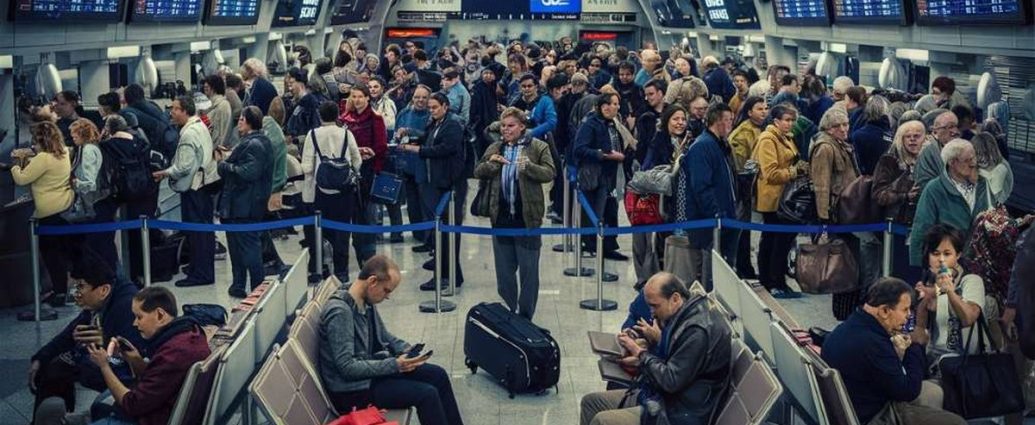
Another one of those days when traveling in Canada feels like rolling dice.
Airports right across the country are dealing with serious chaos today – we’re talking 467 flight disruptions that have left thousands of people camping out in terminals from Toronto all the way to Vancouver.
The breakdown? 404 delays and 63 cancellations that’ve basically turned major airports into really expensive waiting rooms with overpriced sandwiches.
Breaking Down This Disaster
These numbers are pretty wild when you look at them. Air Canada, Air Inuit, Emirates, Air Borealis and a whole bunch of other airlines have somehow managed to create what’s probably the worst single day we’ve seen in months. What’s behind it all? Nasty weather combined with Middle East conflicts that’ve messed up flight paths across multiple regions.
And here’s where things get really rough for anyone trying to get somewhere today.
Toronto Pearson – you know, the place that’s already a nightmare on good days – got hit the worst. They’re dealing with 196 delays and 17 cancellations right now. That’s basically one out of every four flights getting screwed up somehow. Stuck there?
You’ve got my sympathy.
Vancouver International isn’t faring much better.
They’ve got 100 delays and 4 cancellations creating serious bottlenecks. Being so close to Asia and the US means those extended layovers are affecting connections all over the Pacific.
Great news if you’re trying to catch something to Seoul or Los Angeles.
Eastern Canada Takes a Beating
Ottawa’s got 27 delays and 6 cancellations, mostly hitting domestic routes but some international ones too. Montreal isn’t escaping either – 76 delays and 8 cancellations are wreaking havoc on European and US routes.
The smaller northern airports? They’re getting hammered as well. Kuujjuaq, Kangirsuk, CFB Goose Bay, Nain, and Makkovik have reported 22 cancellations between them across regional flights. Sure, smaller numbers, but in communities that depend on planes for everything from medical emergencies to getting groceries, even a few cancelled flights can be a really big deal.
Air Canada Jazz – they operate under the Air Canada Express name – has been particularly slammed with dozens of regional route cancellations affecting smaller communities across Ontario and Quebec. These flights are often the main connection between remote areas and big cities. When they get cancelled, passengers don’t really have other options for getting around.
Aviation Folks Aren’t Happy About This
People who know the industry aren’t mincing words about today’s mess. The combination of problems has created what some are calling a perfect storm of everything going wrong at once.
“We’re seeing multiple disruptive forces hitting at the same time, and our industry just wasn’t built to handle all this stuff simultaneously. Weather systems, geopolitical tensions affecting airspace, crew scheduling problems – when it all hits at once, the system breaks down fast,” said Sarah Chen, who’s been working as an aviation operations consultant with major Canadian carriers for over 15 years.
The timing couldn’t be worse either. Airlines were already dealing with staffing shortages and operational problems left over from pandemic cutbacks.
Lots of carriers have been running with reduced crew reserves and tighter scheduling to keep costs down. That means there’s less wiggle room when things go sideways.
“What we’re seeing today shows what happens when an industry operates on razor-thin margins for too long. There’s no buffer left, so when multiple problems hit at the same time, everything cascades out of control. Passengers end up paying the price for years of cost-cutting that put profits ahead of keeping operations running smoothly,” explained Michael Torres, a former Air Canada operations manager who now works as an independent aviation analyst.
How Everything Went Wrong
So what caused this massive mess? It’s really a perfect storm of stuff airlines hate dealing with. Weather problems are the obvious issue, but there’s also the ongoing Middle East conflict that’s seriously messing with air traffic patterns across multiple regions.
The Middle East situation has forced airlines to reroute flights away from conflict zones. That’s adding anywhere from 30 minutes to 3 hours to flight times depending on the route. Emirates flights to Toronto, for example, are taking longer paths that avoid certain airspace, creating scheduling conflicts that mess up the entire day’s operations. This has added about $2.3 million per day in extra fuel costs across affected international carriers.
When you’ve got political tensions forcing planes to take longer routes and avoid certain airspace, plus Mother Nature deciding to be difficult, you get exactly what we’re seeing today.
Aircraft delays make the problem worse because when one flight gets delayed, it creates a domino effect that spreads through the entire schedule.
Air Canada’s been hit particularly hard, which makes sense since they’re the country’s biggest carrier with over 400 daily departures from major hubs. Their Montreal hub alone handles 150 daily flights, so when weather delays hit that facility, the impact spreads across their entire Eastern Canada network within hours.
It’s not just the big players though. Air Inuit serves 14 communities across Nunavik with just 8 aircraft, and they’ve had 6 flights cancelled today. For communities like Puviaq and Akulivik, this could mean waiting 3-4 days for the next flight, since these routes only operate 2-3 times per week.
The Money Side Adds Up Quick
Today’s disruptions go way beyond just frustrated passengers. Airlines are looking at compensation costs that could easily hit $1.2 million just for today’s delays and cancellations, based on Canadian passenger rights rules.
Under Canada’s Air Passenger Protection Regulations, passengers can claim between $125 and $1,000 for delays over three hours, depending on how far they’re flying and how long the delay lasts. With thousands of affected passengers, even conservative estimates put airline costs in the seven-figure range.
Hotels near major airports are seeing an unexpected windfall as stranded passengers scramble for rooms. Toronto Pearson-area hotels say occupancy jumped from 70% to 95% within four hours this afternoon, with room rates spiking by an average of $80 per night because of demand.
The effects hit the broader economy too.
Business travelers missing meetings, cargo delays affecting supply chains, tourism impact as international visitors get their first taste of Canada stuck in airport terminals. The Greater Toronto Airport Authority estimates that each major disruption day costs the regional economy about $12 million in lost productivity and delayed business.
- Total delays: 404
- Total cancellations: 63
- Toronto Pearson: 196 delays, 17 cancellations
- Vancouver: 100 delays, 4 cancellations
- Montreal: 76 delays, 8 cancellations
- Ottawa: 27 delays, 6 cancellations
- Northern airports: 22 cancellations
What This Means If You’re Traveling
If you’re one of the thousands dealing with this mess, here’s the reality. Airlines are legally required to compensate passengers for delays and cancellations in certain situations, but the rules get murky when weather and “extraordinary circumstances” are involved.
For delays over three hours that aren’t weather-related, you might be entitled to compensation from $125 to $1,000 depending on how long the delay is and how far you’re flying. But good luck proving weather wasn’t a factor when half the country’s dealing with some form of bad weather.
The Canadian Transportation Agency processed over 8,400 passenger complaints about flight disruptions in the past 12 months, with average resolution times stretching to 18 months for complex cases. Today’s disruptions will probably add another 2,000-3,000 complaints to that backlog.
For frequent business travelers, today’s chaos shows the hidden costs of Canada’s airline situation. Air Canada controls roughly 60% of the domestic market and WestJet handles another 25%, so passengers don’t have many alternatives when major disruptions hit. Unlike European markets where dozens of carriers compete on popular routes, Canadians often find themselves with no real backup options.
The smart move right now? Get on your airline’s app and start checking your flight status constantly. Don’t wait for gate announcements because by the time they’re telling you about delays at the airport, you’re already behind.
Most airlines will rebook you automatically if your flight gets cancelled, but calling customer service or using the app can sometimes get you better options.
Travel insurance companies are getting ready for a wave of claims. Policies that cover trip interruption typically pay out $100-200 per day for hotel and meal expenses when flights are cancelled, but many passengers don’t realize they need to keep detailed receipts and that coverage often maxes out at $500-1,000 per incident.
The Big Picture Problem
These massive disruptions show just how fragile our air transportation system really is. When you’ve got a hub-and-spoke system where everything goes through major airports like Pearson and Vancouver, a problem at one hub creates effects across the entire network.
Canada’s aviation setup faces unique challenges that most other countries don’t deal with. The distances are huge, which means alternative ground transportation often isn’t realistic. When flights between Toronto and Vancouver get cancelled, passengers can’t just hop on a train like they could between London and Paris.
Airlines will tell you they’re working around the clock to get things back on track, and they probably are. But once you get this far behind, it takes days to fully recover. Planes are in the wrong cities, crews are out of position, and passengers are backed up in a line that goes for miles.
Industry data shows that major disruption events like today’s typically take 72-96 hours to fully sort out.
Airlines need time to move aircraft around, reset crew schedules, and work through the passenger backlog. Travelers should expect continued delays and cancellations through the weekend.
For travelers, this reminds us why travel insurance exists and why booking the first flight of the day (when possible) often gives you better odds of actually getting where you’re going on time.
Morning flights haven’t had all day to pile up delays.
Climate Change Makes It All Worse
Today’s weather-related disruptions are part of a concerning trend that’s making air travel more and more unpredictable. Climate scientists have documented a 40% increase in severe weather events affecting major Canadian airports over the past decade, with Toronto Pearson seeing 23% more weather-related delays compared to five years ago.
The insurance industry has noticed too. Aviation weather-related claims have gone up by $340 million annually across North American carriers since 2019, forcing airlines to build weather contingencies into ticket prices. Passengers are basically paying an invisible tax for climate change every time they fly.
Transport Canada’s been quietly working on new weather prediction systems that could give airlines 6-8 hours more warning about potential disruptions, but the technology won’t be fully ready until late 2025. Until then, passengers can expect more days like today as extreme weather becomes normal.
What Comes Next
The aviation industry likes to talk about being resilient and efficient, but days like today expose the problems with a system that’s been optimized for profit margins rather than reliability. When everything’s running smoothly, those thin margins and tight schedules work great.
When they don’t, you get 467 disruptions in one day.
Climate change means we’ll probably see more frequent weather-related disruptions. Political tensions aren’t going anywhere. And passenger numbers keep growing while airport infrastructure struggles to keep up.
The federal government’s been discussing new passenger rights legislation that would increase compensation requirements and reduce exemptions for “extraordinary circumstances,” but airline industry lobbying has slowed things down. Consumer groups estimate that stronger passenger protections could reduce disruption-related costs for travelers by $200 million annually.
Some airlines are starting to invest in better prediction technology and operational flexibility, but these improvements take years to put in place and billions in investment.
Air Canada’s new operations center, scheduled to open in 2025, promises to reduce delay cascades by 30% through better real-time decision making.
Airlines are working to get passengers to their destinations, but if you’re traveling in the next few days, expect some lingering effects as the system tries to reset itself. Weekend flights are typically better at handling disruptions since there’s more time between departures to make up for delays, but Monday morning could see another wave of problems as crews and aircraft work to get back on schedule.
At least most airports have free WiFi now while you wait.
Frequently Asked Questions
How many flights were affected in Canada today?
A total of 467 flights were disrupted, including 404 delays and 63 cancellations across major Canadian airports.
Which airports were hit hardest by the disruptions?
Toronto Pearson saw the most disruptions with 196 delays and 17 cancellations, followed by Vancouver with 100 delays and 4 cancellations.
What caused the massive flight disruptions?
The disruptions were primarily caused by bad weather conditions and ongoing Middle East conflicts affecting air traffic patterns across multiple regions.