
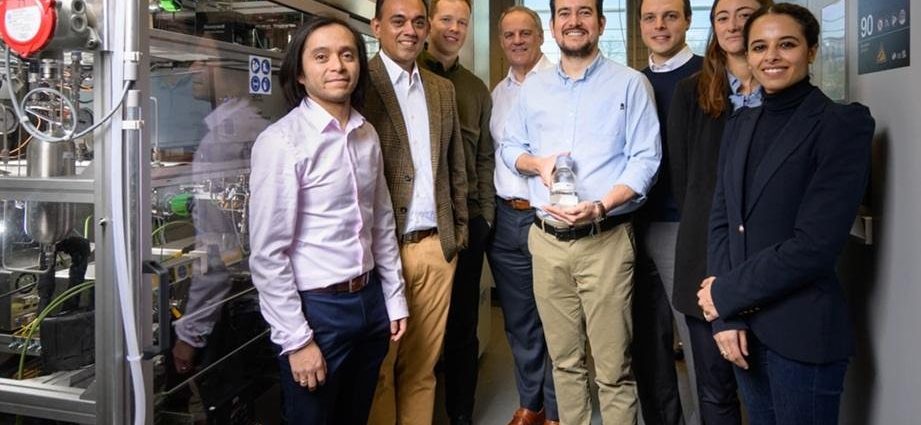
What if airlines could slash their carbon footprint without grounding a single plane? That’s exactly what Montreal-based Metafuels is betting on after closing a hefty $24 million funding round this week.
The Canadian startup is making waves in the aviation industry with their approach to sustainable aviation fuel (SAF). Here’s the thing: traditional jet fuel is a massive climate problem, but switching to electric or hydrogen planes isn’t happening overnight for long-haul flights.
Metafuels thinks they’ve cracked the code with synthetic fuel that burns cleaner and costs less to produce than current alternatives.
The Tech Behind the Fuel
So what makes Metafuels different from other SAF companies? Their process converts captured CO2 and renewable hydrogen into jet fuel that’s chemically identical to the petroleum stuff planes burn today.
The beauty is that airlines don’t need to modify engines or infrastructure. You literally just pour it in the tank. Can you imagine how much easier that makes adoption compared to completely redesigning aircraft? Related: Canadian employers scramble to keep workers happy in 2026
But the real kicker? They claim their synthetic fuel will be price-competitive with fossil jet fuel once they scale up production. That’s huge because cost has been the biggest barrier to widespread SAF adoption.
Following the Money
The $24 million Series A round was led by some serious players in the clean tech space. While the company hasn’t disclosed every investor, this kind of funding suggests major confidence in their technology.
Honestly, it makes sense when you look at the market opportunity. The aviation industry is under intense pressure to decarbonize, and governments worldwide are implementing SAF mandates. The EU wants 6% SAF blending by 2030, while Canada has similar targets. Related: India’s AI Impact Startup Book Launch at Summit 2026
Airlines are desperate for clean fuel options that actually work at scale without breaking the bank.
Metafuels plans to use the fresh capital to build their first commercial-scale production facility and expand their team. They’re also working on partnerships with airlines and fuel distributors to secure offtake agreements.
Why This Matters for Canada
As someone who flies regularly, I’ll be real: I feel guilty about the emissions every time I book a flight. But completely avoiding air travel isn’t realistic for most people, especially in a country as big as Canada.
Having a Canadian company potentially solve this problem feels pretty exciting. We’re talking about technology that could make flying genuinely sustainable while keeping it accessible.
The timing couldn’t be better either. Air Canada and other carriers are actively seeking SAF suppliers to meet their net-zero commitments. WestJet has been testing SAF blends on select routes already.
The Bigger Picture
Aviation accounts for about 2.5% of global CO2 emissions, but that number’s growing fast as more people fly. Traditional biofuels made from crops or waste have supply limitations and high costs.
Synthetic fuels like what Metafuels is developing could theoretically scale without those constraints. You need CO2 (which we have too much of) and renewable electricity to make hydrogen. Both inputs are getting cheaper every year.
The challenge has always been making the process efficient and cost-effective. That’s where Metafuels’ proprietary technology comes in, though they’re keeping the exact details under wraps for competitive reasons.
What’s Next?
Metafuels expects to have their demonstration plant operational by late 2026, with commercial production starting in 2028. They’re targeting initial production capacity of 10 million litres per year, which sounds like a lot but is actually just a drop in the bucket for aviation fuel demand.
Still, you have to start somewhere.
And if their technology proves out, scaling up from there becomes much easier with established partnerships and proven operations.
The company’s also exploring applications beyond aviation. Their synthetic fuel could potentially work for shipping and other hard-to-electrify transport sectors.
What really gets me excited is seeing Canadian cleantech companies attracting this level of investment. We’ve got the talent, the resources, and increasingly the capital to build solutions the world desperately needs. Won’t this be something if it works out?
“We’re not just building a fuel company,” CEO Nicolas Flanders said in a statement. “We’re creating the infrastructure for truly sustainable aviation at a global scale.”