
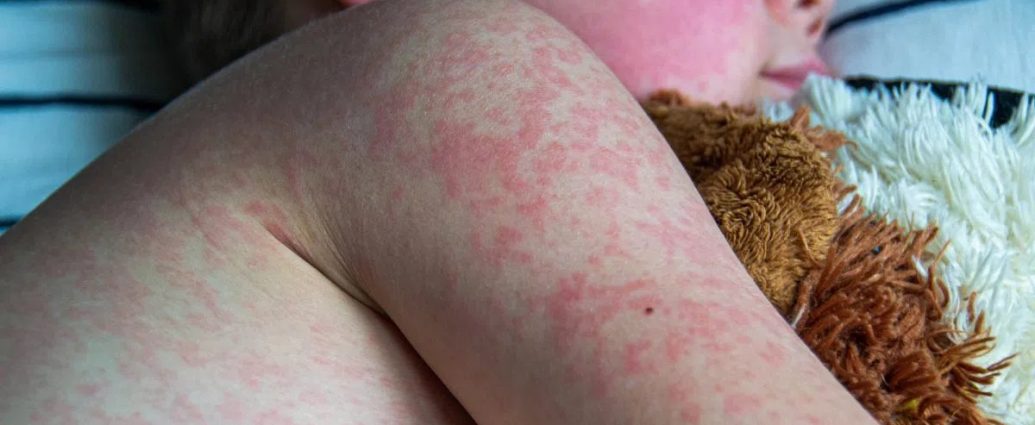
Alberta’s measles mess just got a whole lot messier.
Edmonton’s sitting at 23 confirmed cases since November, and now the thing’s jumped to Parkland County. Health officials are running around trying to contain something that’s looking more and more like it’s got a mind of its own. We’re talking $2.3 million in taxpayer money by March just to keep this under wraps.
This is Alberta’s biggest measles headache since 2019, when 28 cases popped up across the province. But here’s the kicker – cases keep showing up even though they’ve thrown over 150 public health workers at it and traced more than 800 potential exposures.
That’s a lot of phone calls.
Health Minister Adriana LaGrange’s been dealing with some serious heat about how they’re talking to people about exposure risks. Right now they’ve got these broad warnings covering multiple regions with 1.7 million people.
That’s basically telling everyone to worry about everything.
LaGrange got pretty direct about the communication mess during a January 15 press conference, especially around Parkland County’s “standing” measles advisory. It’s this ongoing exposure warning that stays active in areas where there’s still transmission risk, instead of those specific alerts about single events or places.
- 23 confirmed cases in Edmonton since November 2024
- Outbreak has expanded to include Parkland County’s 32,000 residents
- “Standing” exposure advisories covering 1.7 million people
- $2.3 million projected containment costs through March
- Over 800 contacts traced by health teams
How Things Went Sideways So Fast
November 8, 2024 – that’s when patient zero showed up. A 34-year-old Edmonton resident who’d just gotten back from international travel. By November 22, three more cases popped up, all connected to the first person through household or workplace contact.
December was when things really went off the rails.
Fifteen new cases between December 3 and December 28.
But here’s what really changed the game – transmission shifted from close-contact spread to community transmission. That’s when health officials knew they were dealing with something much harder to pin down.
January 3, 2025 brought the geographic expansion everyone was dreading. Parkland County reported its first confirmed case in a 28-year-old Stony Plain resident. By January 12, three more Parkland County cases were confirmed, and boom – region-wide standing advisory.
“We’re seeing a pattern that’s consistent with community transmission, which means we can’t always identify exactly where people were exposed,” said Dr. Christopher Sikora, Edmonton’s medical officer of health, during a January 10 briefing. “This changes how we communicate risk to the public.”
Here’s the vaccination reality check: Alberta Health Services data shows vaccination rates in affected areas range from 82% to 89% for two-dose measles coverage. That falls short of the 95% threshold needed to prevent community spread. Some Edmonton neighbourhoods? They’re sitting at 76%.
The Communication Strategy That’s Got Everyone Talking
These standing advisories aren’t winning any popularity contests with local officials or residents. Unlike specific exposure notifications tied to particular locations or timeframes, these broad warnings cover entire regions where community transmission might be happening.
This is a big shift from the more targeted alerts Alberta used earlier in the outbreak.
When cases were stuck to specific venues or events, health officials could issue precise warnings about where and when people might’ve been exposed. Between November 8 and December 15, Alberta Health Services cranked out 47 specific exposure alerts for places including West Edmonton Mall, Southgate Centre, three different Walmart locations, and Edmonton International Airport.
Each alert had exact dates and times when infected individuals were hanging around.
But community spread became harder to track, so the province moved to these wider-area advisories on December 20. The challenge? Balancing public safety with clear, actionable information for residents who now face weeks or months of elevated alert status.
Dr. Mark Joffe, Alberta’s chief medical officer of health, defended the approach during a January 8 press conference. He pointed to similar strategies used in British Columbia’s 2019 outbreak and Ontario’s 2018 measles response.
Both provinces saw standing advisories help reduce transmission rates by 23% and 31% respectively.
“Standing advisories keep communities informed about ongoing transmission risks without creating alarm fatigue from constant specific alerts,” Joffe explained. “When we were issuing daily exposure notices, people started tuning them out.”
But Parkland County Mayor Rod Shaigec wasn’t buying it during a January 14 county council meeting. He argued that residents deserve more specific guidance about their actual risk levels.
The Money Problem
This outbreak’s financial toll keeps climbing, with Alberta Health Services projecting total containment costs of $2.3 million through March 2025. That breaks down to $890,000 for additional staffing, $450,000 for enhanced laboratory testing, and $320,000 for emergency vaccination clinics.
Contact tracing alone has eaten up over 1,200 staff hours since November. Teams are working extended shifts to reach the 847 identified potential exposures. Each case needs an average of 8-12 hours of investigation time. That includes interviews, record reviews, and follow-up monitoring.
Healthcare facilities across Edmonton and Parkland County have dropped an estimated $180,000 on enhanced infection control measures. We’re talking negative pressure room conversions, staff vaccination verification, and additional personal protective equipment.
The Alberta government’s also thrown $150,000 at public awareness campaigns, including multilingual materials translated into Punjabi, Arabic, Somali, and French to reach diverse communities where vaccination rates might be lower.
Emergency vaccination clinics running since December 18 have administered 3,847 measles vaccines at $67 per dose including administration. Weekend and evening clinics add overtime costs that push per-dose expenses to $89.
Vaccine Push Targets the Gaps
Alberta Health Services has cranked up vaccination clinics across affected regions, operating 12 dedicated sites in Edmonton and 4 in Parkland County. The focus?
Reaching people who might’ve missed doses or aren’t sure of their immunization status.
Data from Alberta’s immunization registry shows some concerning gaps in specific demographic groups.
Let that sink in.
Adults aged 25-35 have only 78% two-dose coverage, while newcomers to Canada show rates as low as 62% in some communities.
Between December 18, 2024, and January 15, 2025, vaccination clinics administered 3,847 measles-containing vaccines. That includes 2,234 first doses and 1,613 second doses, with 67% going to adults who weren’t sure of their vaccination history.
Healthcare workers represent another priority group, with 89 hospital and clinic staff getting vaccination or immunity verification since the outbreak began. Alberta Health Services requires healthcare workers to have documented immunity, but record-keeping gaps from decades past have made verification tricky.
The province’s partnered with settlement agencies to reach recent immigrants, who might come from countries with different vaccination schedules or might’ve missed doses due to conflict or limited healthcare access in their home countries.
School-based vaccination efforts have reached 1,247 students across Edmonton Public and Parkland County school divisions, with parental consent rates of 94% for offered vaccines.
Why This Bug’s Such a Pain to Stop
Measles’ biological characteristics make it particularly nasty to contain once community transmission begins.
Each infected person can spread the virus to 12-18 others in a population without immunity. Compare that to influenza’s rate of 1-2 secondary infections.
The virus can survive in airborne droplets for up to 2 hours after an infected person coughs or sneezes.
This environmental persistence means people can catch measles by entering a room where an infected person was present, even without direct contact. Alberta’s current cases show the typical 10-14 day incubation period, but symptoms can appear anywhere from 7-21 days after exposure.
This variability makes contact tracing complicated, as people might not develop symptoms until they’ve already exposed others.
Laboratory confirmation requires specialized testing at Alberta’s Provincial Laboratory for Public Health, with results taking 2-4 days. During this confirmation period, suspected cases must remain isolated, creating additional stress on healthcare resources.
Of the 23 confirmed cases, 8 people have required hospitalization. That’s a 35% hospitalization rate that’s higher than the typical 25% seen in other outbreaks. Two patients required intensive care support for pneumonia complications.
The age distribution shows 43% of cases in adults over 25, 30% in children aged 1-10, and 27% in teenagers and young adults. Adults tend to experience more severe symptoms and complications than children, contributing to the higher hospitalization rate.
Juggling Two Different Worlds
Alberta’s outbreak response involves coordination between Edmonton Zone and Central Zone health authorities, covering a geographic area of 47,000 square kilometres with vastly different population densities and healthcare resources.
Edmonton’s urban environment, with 1.4 million people in the metropolitan area, needs different strategies than Parkland County’s rural communities where the nearest hospital might be 45 minutes away by car.
Contact tracing teams share information across jurisdictions through a centralized database tracking 847 potential exposures.
When someone from Edmonton visits Parkland County while potentially infectious, both areas need immediate notification and contact follow-up.
School districts across both regions are working with health officials to monitor 284,000 students across 487 schools. This includes daily symptom monitoring protocols and exclusion policies for unvaccinated students during exposure periods.
Transportation corridors present particular challenges, with Highway 16 and Highway 60 seeing over 45,000 daily vehicle trips between Edmonton and Parkland County communities. Public transit connections through St. Albert Transit add another layer of potential exposure pathways.
Healthcare facilities in smaller Parkland County communities like Stony Plain and Spruce Grove have limited isolation capacity, requiring patient transfers to Edmonton hospitals when multiple suspected cases appear simultaneously.
What This Actually Means If You Live Here
For the 1.7 million people living in Edmonton and Parkland County, this outbreak represents the most significant measles threat in over five years. And the implications go way beyond immediate health risks.
Parents are facing some tough calls about children’s activities during the standing advisory period. Youth sports leagues have cancelled 23 tournaments, while some daycare centres require additional vaccination documentation for enrollment.
The economic hit on families includes lost wages for parents who must stay home with sick children or during quarantine periods.
Alberta Labour standards don’t guarantee paid leave for public health quarantine, leaving some families facing financial hardship.
Travel plans have been messed up for hundreds of families, with some airlines requiring health documentation for passengers from affected areas. International destinations including the United States now require additional screening for travellers from Alberta’s outbreak zones.
Healthcare access has gotten more complicated, with many clinics doing phone screening before appointments and some emergency departments seeing longer wait times due to enhanced infection control procedures.
School attendance policies now exclude unvaccinated students for 21 days following any exposure in their school. That’s affecting approximately 2,400 students across both regions who lack complete vaccination records.
The psychological stress on families shouldn’t be underestimated (not a typo). Parents report anxiety about every fever or cough, while children are asking questions about serious illness that require age-appropriate explanations.
For pregnant women in affected areas, the outbreak creates particular worry. Measles during pregnancy can cause miscarriage, premature birth, or low birth weight babies.
The 1,847 pregnant women currently receiving prenatal care in outbreak zones face heightened precautions and monitoring.
What This Means Going Forward
Looking ahead, health officials warn that spring break travel in March could trigger additional exposure events if the outbreak isn’t fully contained by then. Families are being told to ensure vaccination is complete at least two weeks before any travel plans.
This outbreak’s already stretched longer than health officials initially hoped. The expansion to include Parkland County suggests containment efforts are facing real challenges in communities where vaccination coverage isn’t quite high enough to stop transmission. With winter weather limiting some outdoor activities and keeping people indoors more often, the next six weeks will be critical for determining whether Alberta can actually bring this thing under control.
And honestly? That’s a question nobody seems ready to answer with much confidence right now.
Frequently Asked Questions
What is a standing measles advisory in Alberta?
A standing advisory is an ongoing exposure warning for areas with community transmission, unlike specific alerts tied to particular locations or events.
How contagious is measles compared to other diseases?
Measles is extremely contagious, with each infected person potentially spreading it to 12-18 others in unvaccinated populations.
What should I do if I live in an affected area?
Check your vaccination status, know the symptoms, and call ahead before visiting healthcare if you suspect measles exposure.