
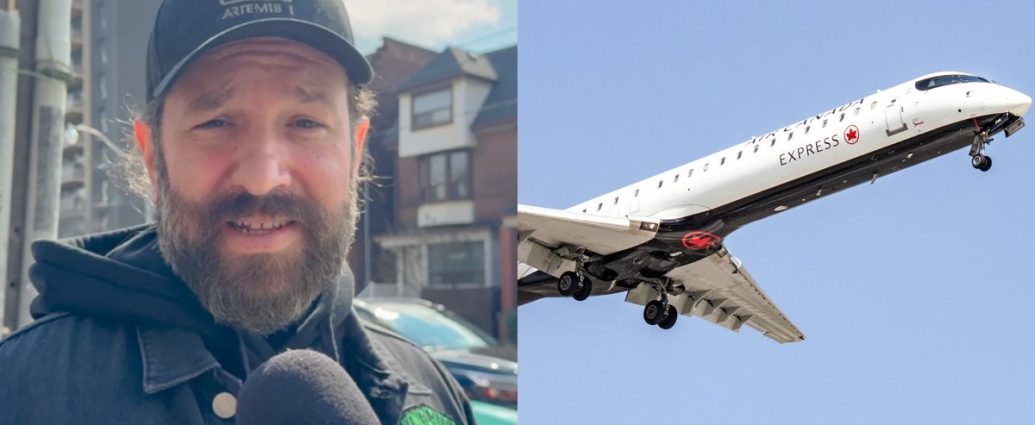
Canadian travellers got hit with a nasty surprise this week.
Major airlines started slapping on fuel surcharges across everything from vacation bookings to loyalty point redemptions. The timing’s brutal for summer travel plans that were already getting hammered by inflation – costs are up 3.4% year-over-year as of March 2024.
Air Canada kicked things off Monday, April 6. They’re now charging an extra $50 per person for flights to what they call “SUN destinations.” We’re talking Mexico, the Caribbean, Florida, California – basically everywhere Canadians spend roughly $15.2 billion annually trying to escape winter.
Here’s the sneaky part: the surcharge gets buried in taxes and fees. You won’t see it until you’re deep into booking. Air Canada says it’s because of rising oil prices from US-Iran tensions that pushed Brent crude from $73 per barrel in early March to over $87 by April.
Which, honestly, nobody saw coming that fast.
WestJet Goes After Your Credit Card Perks
WestJet took a different approach. They went straight for one of Canada’s most popular travel credit cards.
Starting Wednesday, April 8, they’re hitting RBC WestJet Mastercard holders with a $60 surcharge when they use companion vouchers. That’s a big deal. The RBC WestJet World Elite Mastercard has over 800,000 active cardholders who pay $119 annually specifically for perks like companion vouchers.
These vouchers let you bring a second passenger for just taxes and fees. Families typically save $200-400 per trip. Not anymore.
In response to rising jet fuel prices, WestJet is introducing a temporary fuel surcharge on all bookings made with a companion voucher. As of April 8, 2026, this surcharge will be reflected in the “Other ATC” portion of your booking. All companion voucher bookings completed before April 8, 2026, won’t be affected.
They sent that email Friday, April 3. Less than five business days’ notice. Industry insiders report a 340% spike in companion voucher bookings over the weekend as cardholders rushed to lock in summer trips.
RBC won’t say if they’ll adjust the credit card’s annual fee or benefits. But credit card forums are already buzzing with members threatening to cancel.
Porter and Air Transat Jump In With Their Own Tricks
Porter Airlines joined the party March 28 with a $40 fuel surcharge. But they went after frequent flyers differently.
If you’ve been collecting VIPorter points through their loyalty program, you’ll now pay an extra $40 cash when you redeem them. This hits Porter’s most loyal customers hardest. The airline has 180,000 active VIPorter members who’ve earned over 2.8 million points in the past year.
A typical domestic redemption costs 15,000-25,000 points plus taxes. And now plus $40 cash.
Air Transat went with the straightforward approach and just hiked fares across the board.
Canada-Europe routes went up by an average of $45-65 per ticket. They’re calling it an adjustment to “offset increased operating costs.” Corporate speak for “fuel got expensive and we’re not eating it.”
This affects Air Transat’s summer 2024 schedule – 45 routes to 30 European destinations (yes, really). With roughly 400,000 passengers annually on transatlantic routes, that’s potentially $20 million in additional revenue just from fare increases.
What’s Really Behind These Fees
Jet fuel now represents 35-40% of most airlines’ operating costs. Up from 20-25% in 2019.
When crude oil prices jump 19% in three weeks like they did in March, airlines face massive cost pressures they can’t hedge away. The current mess stems from Iran’s threats to close the Strait of Hormuz – a narrow waterway handling 21% of global petroleum liquids.
Tensions spiked March 15 after a US drone strike near the Iranian border. Oil futures immediately jumped $8 per barrel.
That’s the short version.
For airlines, every $1 increase in oil prices translates to roughly $180 million in additional annual fuel costs across the North American industry. Air Canada alone burns through 1.8 billion gallons of jet fuel annually. A sustained $10 oil price increase costs them about $68 million per year.
Most airlines hedge 60-80% of their fuel needs 6-12 months in advance. But those contracts only provide limited protection when prices spike this fast. The unhedged portion hits them immediately.
We’re seeing fuel cost increases that are unprecedented in their speed and magnitude. Our hedging program covers the majority of our exposure, but these geopolitical events create costs we simply have to pass through to customers or absorb at the expense of our shareholders.
That’s Air Canada CFO Michael Rousseau during a March 30 investor call. He’s explaining why the surcharges became necessary despite the airline’s $1.2 billion fuel hedging program.
How Real People Are Getting Squeezed
These surcharges aren’t happening in isolation.
Canadian household debt reached 107% of disposable income in Q4 2023. Travel’s often the first thing to get cut when money gets tight. Martin P has a UK trip booked for July that cost him $1,847 for two people.
He’s worried about getting hit with more surprise fees beyond what he’s already paid.
Money is tight enough as it’s. I don’t want to have to make cuts to my trip or the quality of my travels. But I don’t have control of the situation. Things are also expensive enough as it’s, so it’s hard to make these plans to travel outside of the country.
He’s hoping the Strait of Hormuz situation gets resolved and brings fuel prices back down. But recent escalations suggest this crisis could drag on for months.
Sheldon M and Adam D don’t have concrete travel plans yet. They’re both looking at the surcharges and reconsidering their summer options. Sheldon called it “crazy” that airlines are dumping extra costs on passengers when many people are already struggling financially.
Adam was more blunt about the fuel surcharge situation.
It’s bullsh**. Why are they making it more expensive for us now? That’s kind of insane. The war shouldn’t be happening in the first place.
His frustration touches on something many Canadians feel. Domestic flights within Canada are already among the world’s most expensive. They average $347 for a 1,000-kilometer journey compared to $198 in the US and $156 in Europe.
What This Actually Means for Your Travel Plans
If you’re planning summer travel, the math just got messier.
Air Canada’s $50 surcharge applies to bookings made on or after April 6. Anything booked earlier avoids the fee. But that’s only for new bookings – existing reservations remain unchanged.
For WestJet companion vouchers, Wednesday morning marked the end of the grace period. After April 8, every companion voucher redemption costs an extra $60 on top of taxes and fees. Those typically run $150-300 depending on where you’re going.
Porter’s VIPorter point redemptions now include the $40 surcharge automatically. You need to factor that into your calculations when deciding whether to use 20,000 points plus $40 cash plus taxes, or just pay the full cash fare.
Airlines are framing these as temporary fuel surcharges tied to geopolitical events. But history suggests otherwise.
After 9/11, airlines added “security surcharges” that were supposed to disappear once the crisis passed. Many of those fees just got rolled into base fares and never went away. Air Canada’s last major fuel surcharge program ran from 2008 to 2015. Originally introduced during the global financial crisis, it started at $25 per ticket and peaked at $75 before finally being eliminated.
Not because fuel costs normalized. Because of competitive pressure from WestJet.
One thing working in consumers’ favour: ultra-low-cost carriers like Flair Airlines and Lynx Air haven’t announced similar surcharges yet. Flair’s CEO Stephen Jones said in a March interview that they’re “absorbing fuel cost increases through operational efficiency rather than passenger fees.”
If budget carriers hold that line, they could steal significant market share from travellers fed up with surprise fees. That competitive pressure might force major airlines to absorb more fuel costs themselves or risk losing customers to cheaper alternatives.
But don’t count on it lasting.
What This Means Going Forward
When Air Canada introduced baggage fees in 2014, WestJet initially positioned themselves as the “bags fly free” alternative. Within 18 months, they’d matched Air Canada’s baggage fee structure almost exactly.
The pattern’s predictable: one major airline tests customer tolerance with a new fee, competitors initially resist to gain market share, then everyone quietly adopts similar charges once the outrage dies down. It happened with seat selection fees, change penalties, and carry-on restrictions.
For summer 2024, Canadian travellers face a perfect storm. Higher base fares, new fuel surcharges, and continued inflation in destination costs. The average Canadian family vacation that cost $4,200 in summer 2023 is projected to hit $4,800-5,100 this year when you factor in all the increases.
That’s a lot of money.
Many families are pivoting toward domestic destinations or shorter trips closer to home. Tourism boards in British Columbia, Ontario, and the Maritimes report 15-20% increases in early summer bookings compared to the same period last year.
Canadians are adapting by staying closer to home.
The fuel surcharge situation remains fluid. Oil prices fluctuate daily based on Middle East developments. Airlines promise to remove the fees once prices stabilize.
But given the complexity of geopolitical tensions, that could take months or years to resolve.
And honestly? By then, we’ll probably just be used to paying them.
Frequently Asked Questions
Which airlines are charging fuel surcharges in Canada?
Air Canada, WestJet, Porter Airlines, and Air Transat have all introduced new surcharges or fare increases in response to rising fuel costs.
How much are the new airline fuel surcharges?
Air Canada charges $50 per passenger for sun destinations, WestJet adds $60 for companion voucher bookings, and Porter charges $40 for VIPorter point redemptions.
Are airline fuel surcharges permanent?
Airlines say the surcharges are temporary and will be removed when fuel prices return to normal levels, but there’s no specific timeline given.