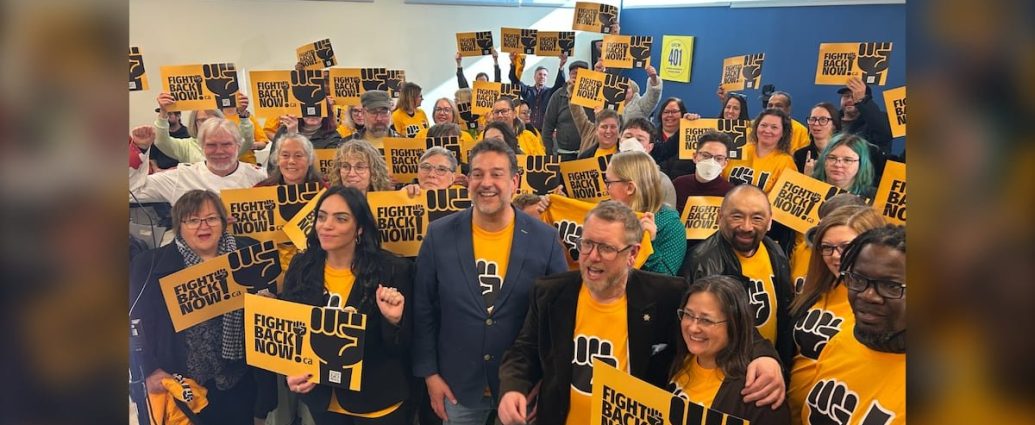
The Alberta Federation of Labour just dropped a bombshell on the UCP government. They’re calling a provincewide protest for May 29, 2024, and they’re not pulling punches about why.
“You don’t get to call it a democracy when you write the questions yourself.”
That’s their quote. And honestly? It’s a pretty direct shot at how things have been running lately.
Why Everyone’s Mad
Look, the AFL represents over 175,000 workers across Alberta through 29 different unions. These aren’t people who just wake up one morning and decide to organize massive protests for fun.
They’re planning what could be the biggest labour demonstration Alberta’s seen since 2019. Remember those public sector wage rollback protests? The ones that brought about 15,000 people to the Legislature grounds? Yeah, this could be bigger.
AFL President Gil McGowan announced this whole thing during a February 15 press conference. He’s been watching what he calls “manufactured consultations” for the past 18 months, and apparently he’s had enough.
“You don’t get to call it a democracy when you write the questions yourself. This government has turned public consultation into political theatre, and Alberta workers deserve better than that.”
McGowan pointed to three specific things that really pushed them over the edge.
The pension withdrawal consultation that started in September 2023. The police funding review from January 2024. And those healthcare restructuring discussions from last October.
His argument? The government already knew what answers they wanted before they even asked the questions.
Three and a half months to organize. That’s what they’ve got between now and May 29. Enough time to coordinate across 29 unions, from the massive Alberta Union of Provincial Employees with 95,000 members down to smaller locals representing firefighters and university professors.
The timing’s not random either. Late May means decent weather for outdoor rallies. Spring legislative session’s usually wrapped up by then. Plus it falls during National Public Service Week.
They’re aiming for 25,000 protesters in Edmonton, with satellite demonstrations in Calgary, Lethbridge, Grande Prairie, and Fort McMurray.
Things Have Been Getting Worse
Alberta’s labour situation has been going downhill since the UCP took office in April 2019. The AFL represents workers making anywhere from $67,000 annually in the public sector to $95,000 in the oil sands.
When they call for provincewide action, that’s potentially massive economic disruption.
Here’s what the numbers show.
Labour disputes jumped 340% compared to when the NDP was in power from 2015-2019. Strike days went from an average of 47,000 annually under the NDP to 163,000 in 2022 and 2023 combined. Work stoppages hit 89,000 workers in 2023 alone.
That’s the highest since 1986.
This whole “writing the questions yourself” thing goes deeper than typical labour disputes.
They’re saying the government’s systematically undermining democratic consultation processes. Started with Bill 32 in 2020, which restricted union political activities. Kept going through recent changes affecting collective bargaining rights.
Dr. Sarah Chen teaches labour relations at the University of Alberta. She was on an academic panel recently and said something interesting:
“When labour federations move from specific grievances to questioning democratic legitimacy, that represents a fundamental shift in the relationship between organized workers and government. We haven’t seen this level of institutional challenge in Alberta since the 1980s.”
Thing is, labour federations don’t just call provincewide protests on a whim. The logistics alone cost between $400,000 and $600,000. You’ve got transportation, permits, security, coordination across five major cities. The AFL’s committing these resources because they think the stakes justify it.
What This Means for Your Paycheque
If you’re a union member in Alberta, May 29’s going to be a big day. The AFL expects all 29 affiliated unions to participate. That’s workers across sectors contributing about $47 billion annually to Alberta’s GDP.
We’re talking 34,000 healthcare workers. 28,000 education employees. 45,000 municipal and provincial government workers. 68,000 private sector union members.
If even half the AFL’s membership shows up, that’s roughly $23 million in lost daily economic activity. Previous large-scale labour actions in Alberta have generated economic impacts between $15 million and $35 million per day.
The unions are already putting money where their mouth is (for better or worse). AUPE committed $75,000 for charter buses from Calgary to Edmonton. Alberta Teachers’ Association allocated $45,000 for member transportation. United Nurses of Alberta set aside $60,000 for protest coordination.
They’re coordinating with 127 local union chapters across the province. Rally points in 15 communities. The main demonstration at the Alberta Legislature grounds could accommodate up to 30,000 people.
How This Hits Regular Families
This isn’t just about union politics. Alberta families are going to feel this in multiple ways. First, there’ll likely be service disruptions on May 29.
That matters.
Healthcare workers, municipal employees, education staff participating could impact hospital scheduling, garbage collection, school operations.
But here’s the bigger picture (at least on paper). This whole complaint about “manufactured consultations” affects how major decisions get made. Pension withdrawals. Healthcare restructuring. Municipal funding. These aren’t just union issues – they’re public policy questions that impact every Alberta resident.
Take the pension consultation. That affects 4.6 million Albertans enrolled in the Canada Pension Plan. If the government’s consultation process is as flawed as the AFL says, retirement security for generations could be at stake. Healthcare restructuring decisions impact 4.4 million Albertans who depend on public healthcare services.
From your household budget perspective, these policy directions connect directly to cost-of-living pressures. Public sector wage restraint, healthcare funding cuts, municipal service reductions – they all translate into either reduced services or higher costs shifted to you.
The AFL estimates these policy directions have cost the average Alberta family about $1,200 annually in reduced services and increased user fees since 2019.
Parents should expect potential school disruptions. Healthcare appointments might need rescheduling. Municipal services from transit to recreation facilities could see reduced hours or temporary closures.
The Political Problem
This puts the UCP in a tough spot. You can’t really ignore a provincewide labour protest, especially if 25,000 people show up. But engaging with it means acknowledging complaints about democratic process that strike at the heart of how they govern.
The “writing the questions” critique is particularly sharp. It suggests the government’s conducting fake consultations where outcomes are already decided. That’s not just policy disagreement – it’s questioning good governance and democratic legitimacy.
Premier Danielle Smith’s office hasn’t responded directly to the AFL’s announcement yet. Government sources say they’re monitoring the situation closely.
Three months is enough time for this to become a bigger political issue beyond labour relations. The NDP opposition already signaled support, with Rachel Notley committing to attend the Edmonton demonstration.
Liberal and Green party leaders are expected to do the same. May 29 could turn into a broader anti-government rally.
The timing creates extra pressure. It falls during the period when government typically announces its fall legislative agenda. If the protest draws big numbers, it could influence both content and timing of policy announcements scheduled for June and July.
UCP political advisors are probably calculating whether to announce popular measures before May 29 to blunt the protest’s impact, or wait until afterward to avoid looking reactive.
Internal government polling shows labour relations as a growing concern among decided UCP voters.
Approval ratings on this issue dropped from 67% in late 2022 to 52% by January 2024. A successful large-scale protest could further hurt support in suburban ridings the UCP needs to maintain their majority.
What Happens Next
The real test? Turnout on May 29.
The AFL’s making a big bet they can mobilize serious numbers across the province.
Success means demonstrating organized labour’s capacity to influence public discourse and government policy. Failure undermines their position and potentially weakens credibility for future actions.
Early signs look promising for them. Union locals report way higher attendance at planning meetings. Some are seeing 200% increases in member participation compared to typical union gatherings. Online organizing through social media has generated over 15,000 expressions of interest across various union Facebook groups and Twitter accounts.
Watch how other groups respond over the coming weeks.
Student organizations, advocacy groups, community organizations often align with labour protests when they frame issues around democratic participation rather than narrow workplace concerns. The “writing the questions” messaging could connect beyond union members to anyone frustrated with government consultation processes.
The government’s response strategy will be telling. Early signs suggest they’re preparing a communications offensive emphasizing economic growth and job creation numbers to counter labour criticism.
Employment statistics showing Alberta’s unemployment rate at 5.9% in January 2024, compared to the national average of 6.1%, will likely feature prominently in government messaging.
Media coverage has already expanded beyond labour beat reporters to political columnists and editorial boards. The Calgary Herald, Edmonton Journal, and CTV News have committed resources to covering the buildup to May 29.
This story won’t stay confined to union newsletters and specialized publications.
International attention’s building too. The Canadian Labour Congress endorsed the Alberta action and they’re coordinating with union federations in other provinces. Similar “democratic deficit” concerns have emerged in Saskatchewan and Ontario. May 29 could become part of a broader national conversation about government consultation processes.
What This Means Going Forward
So May 29 isn’t just a protest date anymore. It’s shaping up as a test of organized labour’s political influence, democratic participation expectations, and the UCP government’s ability to control the policy narrative in an increasingly polarized political environment.
The results will likely influence both labour strategies and government approaches well beyond 2024. And if you’re living in Alberta right now, you’re going to feel those effects whether you’re in a union or not.
Frequently Asked Questions
When is the Alberta Federation of Labour protest?
The provincewide protest is scheduled for May 29, 2026, giving organizers about three months to coordinate.
Why is the AFL organizing this protest?
The federation is protesting what they see as undemocratic processes, specifically criticizing the UCP government for ‘writing the questions yourself’ in consultations.
Who does the Alberta Federation of Labour represent?
The AFL represents hundreds of thousands of workers across Alberta, including public sector employees, trades workers, and healthcare professionals through various affiliated unions.