
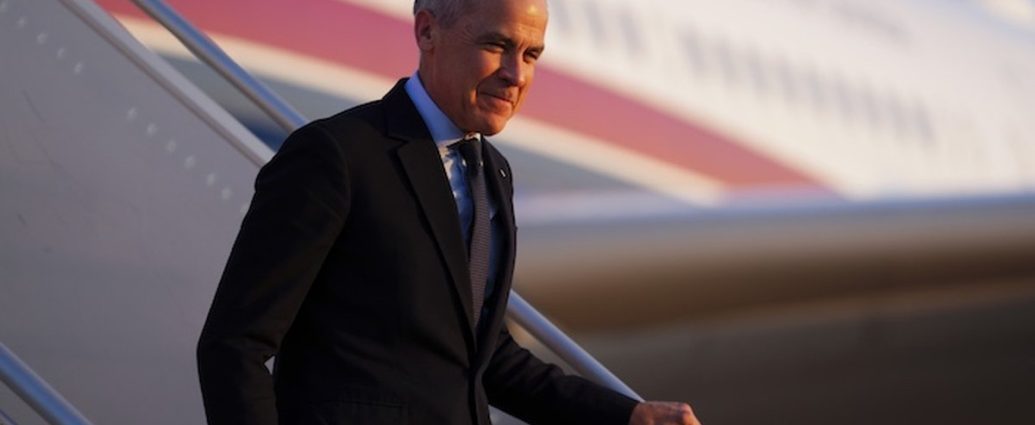
Prime Minister Mark Carney’s on a plane to Asia right now, starting what might be the biggest trade mission we’ve seen in years. Where’s he going? India, Australia, and Japan.
The timing? Pretty obvious.
Trump’s tariffs are beating up Canadian steel, aluminum, and car parts.
So Carney’s making a big bet that Canada’s future doesn’t have to revolve around the US. Look at the numbers. Americans buy 75% of what we sell abroad – that’s about $592 billion in 2023. Carney wants to slice that dependency in half over the next ten years. He’s shooting for $400 billion in sales to everyone else by 2034.
This is the most aggressive push to find new customers since Brian Mulroney inked NAFTA back in 1994. And honestly? The stakes couldn’t be bigger. Trump’s targeted tariffs have already hammered Canadian steel companies for $2.3 billion since 2018. Aluminum sales dropped 18% in just two years.
Fixing the India Mess
Carney touches down in New Delhi Thursday to sit with Prime Minister Narendra Modi. Two years ago, this meeting would’ve been impossible.
Remember what Justin Trudeau did? September 2023, he gets up in Parliament and basically accuses India of killing Sikh separatist Hardeep Singh Nijjar right here in Surrey, BC. Indian officials had no heads up. None.
The blowback hit fast and hard. India shut down visa services for Canadians on September 21, 2023. Thousands of people got stuck. Trade between our countries was $8.2 billion in 2022 – it crashed 35% the next year.
Indian students who dump $4.9 billion into Canadian universities every year? They started looking somewhere else. Applications fell 47% for 2024.
But here’s what really hurt. India’s racing toward a $5 trillion economy by 2030.
That’ll make them the world’s third biggest. While Canada got frozen out, companies from Australia, Germany, and Japan were signing billion-dollar deals.
So Carney’s been working overtime to fix this disaster.
He invited Modi to the G7 summit in Kananaskis last year. They had this carefully planned 45-minute chat. Modi showing up despite everything? That meant India was ready to separate business from politics.
Foreign Minister Anita Anand flew to India in November 2024.
Met with Modi and counterpart S. Jaishankar at some New Delhi hotel that cost Canadian taxpayers $127,000 for security and rooms. Parliament wasn’t thrilled about the expense, but it worked.
“We’re diversifying our trade and attracting massive new investment to create new opportunities for our workers and businesses,” Carney said Monday.
Here’s the interesting part. Anand told reporters Monday she “repeatedly raised issues related to domestic rule of law concerns” and transnational repression during her India trip. Translation? Canada’s still pushing back on the Nijjar killing, just doing it quietly now instead of making public accusations.
What This Means Going Forward
Both countries agreed to restart trade talks that got suspended in June 2023. That’s massive. Canadian farmers are practically drooling over India’s 1.4 billion customers. Canola oil exports alone could hit $2.8 billion a year if we can get tariffs down from 35% to 15%.
That’s what Agriculture Canada’s projecting anyway.
Canadian tech companies see even bigger potential. India’s digital economy should reach $1 trillion by 2030. Shopify, Constellation Software – they’ve been locked out of major deals for two years. That’s finally changing.
Australia Gets the Full Treatment
From India, Carney heads to Canberra to meet Prime Minister Anthony Albanese. But here’s the bigger story – he’s speaking to Australia’s parliament on January 29th.
When’s the last time a Canadian PM did that? Paul Martin in March 2005. Nearly 20 years ago. Martin talked about softwood lumber and Arctic stuff. Carney’s thinking way bigger.
Australia makes sense as a trading partner. We’ve got similar legal systems, similar governments, similar ways of doing business. And they’re not slapping tariffs on our stuff every few months like the Americans are.
The trade numbers back this up (which, honestly, nobody saw coming). Canada and Australia did $6.4 billion in business last year, but experts figure it should be double that.
Australian mining companies need our equipment. Our pension funds want in on their infrastructure projects.
Critical minerals? That’s where the real money is.
Australia controls 55% of the world’s lithium. We dominate nickel and cobalt. Both countries are scrambling to build electric car battery chains that don’t depend on China. A joint Canada-Australia minerals deal could be worth $15 billion a year by 2030.
Both countries also remember what happened when China got mad. Australia called for COVID investigations in 2020. Beijing hammered them with trade restrictions. Wine exports to China fell 96% – that cost Australian producers $1.2 billion. Barley, coal, beef all got hit too.
“In a more uncertain world, Canada is focused on what we can control,” Carney said Monday, clearly talking about American tariffs and Chinese payback.
Australia figured out how to recover from Chinese economic warfare. They found new markets in India, Japan, South Korea for wine and farm products. It worked. Australia’s total trade actually went up 12% in 2023 despite losing most of their China business.
Japan’s the Steady Partner
The trip wraps up in Tokyo with meetings with Prime Minister Sanae Takaichi. She became Japan’s first female PM in October 2024. Japan’s been our most reliable Asian trading partner for decades.
No drama, no diplomatic explosions. Just steady business worth $31.2 billion every year.
Takaichi knows business. She spent 15 years in Japan’s trade ministry before politics. Her government’s pushing a $47 billion green tech investment plan that creates openings for Canadian companies.
Japan desperately needs our energy. They import 99% of their oil, 97% of their natural gas.
Canadian LNG sales to Japan could triple from the current $2.1 billion annually if new BC terminals get approved (at least on paper). Takaichi’s government already committed to purchase agreements worth $8.7 billion over 15 years.
Go figure.
Carney’s office says they’ll discuss energy, AI, defence, critical minerals, maritime security, food security. That’s code for: “let’s talk about everything except depending on the Americans.”
The defence angle’s particularly interesting. Japan’s spending 2% of GDP on defence for the first time since World War II.
That’s a $68 billion annual market. Canadian aerospace companies like CAE and Bombardier are positioned to win major training and logistics contracts. Japan also wants our cybersecurity expertise as threats from North Korea and China get worse.
It’s All About Trump
Look, this whole Asia tour exists because of one guy: Donald Trump.
Trump’s tariffs are crushing key Canadian sectors with surgical precision.
Steel imports from Canada face 25% tariffs – that’s $847 extra per ton. Aluminum gets hit with 10%, making our producers uncompetitive in car supply chains. Auto parts face anywhere from 2.5% to 25% depending on classification.
The damage is real and measurable. Canadian steel exports to the US dropped from $7.2 billion in 2017 to $4.8 billion in 2023. Stelco laid off 1,200 workers. Algoma Steel closed its Hamilton plant, killing 2,400 jobs. These aren’t just statistics – they’re entire communities getting gutted.
Earlier this year, Carney made a gutsy move.
He dropped Canadian tariffs on Chinese electric vehicles from 100% to 25% in exchange for China removing payback tariffs on our agriculture. The deal saved Canadian farmers about $340 million a year on canola, wheat, and pork exports.
It was a direct break from US trade policy, which keeps 100% tariffs on Chinese EVs. American officials weren’t happy that Canada was undermining Western unity on China policy.
Then came his Davos speech at the World Economic Forum in January 2024. Carney called on countries to reject economic “coercion” by “great powers.” He mentioned “weaponized trade policy” three times in 12 minutes.
Everyone knew he meant Trump, but the message clicked with European and Asian leaders facing similar American pressure.
Worth watching.
The US Supreme Court killed Trump’s universal 10% tariff on Friday, but that doesn’t fix everything. The sector-specific tariffs on steel, aluminum, and cars are still there. Those are the ones actually hurting Canadian workers and costing real jobs.
USMCA’s Coming Up for Review
Here’s the bigger picture everyone’s watching. Canada, the US, and Mexico have to decide by July 1, 2026, whether to extend the USMCA trade deal for another 16 years. The review clause kicks in automatically – all three countries either recommit or start over.
Both Canada and Mexico want to keep the deal. It’s created $1.8 trillion in trade between the three countries since July 2020.
That supports 12 million American jobs, 2.1 million Canadian jobs, and 3.4 million Mexican jobs.
But Trump’s team isn’t sold on three-way deals. They’re floating separate bilateral agreements instead of the current USMCA structure. Trump’s trade guy Robert Lighthizer said in December: “Bilateral deals give us more use to address specific imbalances with each partner.”
That would hand Washington enormous power to squeeze concessions from Ottawa and Mexico City separately. Canada’s $429 billion in annual US trade would get negotiated independently of Mexico’s $807 billion. No chance for smaller partners to coordinate positions.
The auto sector faces the biggest risk.
USMCA requires 75% North American content for duty-free treatment. Separate bilateral deals could push that percentage higher for Canada while giving Mexico different terms. That would fragment integrated supply chains that took decades to build.
Nobody’s pretending Canada has real alternatives if USMCA collapses. The US will always be our biggest customer just because of geography.
But having stronger ties with India, Australia, and Japan gives Canadian negotiators more options. Even modest diversification changes how negotiations work.
What This Means for Your Business
If you’re running a Canadian company, Carney’s Asia tour matters more than the usual political theater. The potential numbers are big enough to change business strategies.
New trade deals with India could unlock massive markets for Canadian agriculture. India imports $21 billion worth of farm products annually, but Canada gets less than 2% of that market because of high tariffs and regulatory barriers. A real trade agreement could boost Canadian ag exports to India from $780 million to $2.4 billion within five years.
Tech opportunities in India are even bigger. The country needs $1.2 trillion in digital infrastructure investment by 2030.
Canadian companies like CGI, which already runs 22 offices across India, are positioned to win major contracts in government digitization, banking tech, and smart city development.
Australia offers opportunities in mining, energy, financial services. Canadian pension funds manage $2.1 trillion in assets but have almost no exposure to Australian infrastructure. That’s changing fast. CPP Investments put $4.7 billion into Australian renewable energy projects in 2023, getting 11.2% returns compared to 6.8% on North American investments.
Japan’s always wanted Canadian commodities and increasingly likes our technology. Softwood lumber exports to Japan hit $1.9 billion in 2023, making them our second-biggest forestry market after the US.
But the real growth potential’s in clean tech and advanced manufacturing.
The problem? Building these relationships takes years while Trump’s tariffs are hurting Canadian companies today. Stelco reported $127 million in tariff losses just last quarter. Auto parts manufacturers in Ontario are cutting shifts and postponing investments.
Carney’s betting he can convince Asian partners to speed things up.
The Chinese EV tariff deal showed he’s willing to move fast when chances come up. That cut through bureaucratic delays that usually take 18 months to resolve.
What This Means Going Forward
For Canadian workers, diversification could mean new opportunities in unexpected areas. India’s growing middle class wants Canadian education, creating demand for online learning platforms and professional training services. Australia’s mining boom needs Canadian expertise in cold-weather operations and environmental cleanup. Japan’s aging population creates opportunities in healthcare tech and pharmaceuticals.
The Reality Check
Let’s be honest – Canada’s geography hasn’t changed. We share the world’s longest undefended border with the US at 8,891 kilometers. Our supply chains got integrated after 30 years of NAFTA. Toronto’s closer to Detroit than Delhi. Vancouver ships to Seattle way faster than Sydney.
Diversification makes sense economically, but it’s not happening overnight. Those 75% US export numbers aren’t dropping to 37.5% by 2034 without massive disruption and infrastructure investment. Moving a container from Toronto to Mumbai takes 21 days and costs $3,400. The same container reaches New York in 18 hours for $340.
Transportation costs alone make complete US alternatives impossible for most Canadian businesses. But even modest diversification creates negotiating power. If 10% of Canadian exports shift to Asian markets, that’s still $59 billion in trade that doesn’t depend on American goodwill.
Having options matters though.
Psychologically and economically.
If Trump keeps using trade policy as a weapon, Canada needs somewhere else to sell stuff. India’s 1.4 billion people, Australia’s resource appetite, and Japan’s tech sophistication offer that alternative, even if they can’t replace American markets entirely.
Carney’s also sending a message at home. After years of Trudeau’s diplomatic disasters – the India assassination accusations, the awkward Chinese balloon thing – Canada has a PM willing to travel, make deals, and fix relationships before they explode rather than after.
The results won’t show up in export stats for months. Trade deals take 2-3 years to negotiate and another 2-3 years to fully implement. But if you’re watching Canadian dollar movements or commodity prices, this trip matters. Markets reward countries with options, and Canada desperately needs more of those.
Currency traders are already paying attention. The Canadian dollar strengthened 1.2% against the US dollar since Carney announced the Asia trip.
What This Means Going Forward
That reflects increased confidence in Canada’s economic flexibility. Resource stocks posted gains as investors anticipate new export opportunities beyond traditional American markets.
Frequently Asked Questions
Why is Carney visiting India after diplomatic tensions?
Canada is working to reset relations after the 2023 Sikh separatist killing accusations damaged trade ties between the countries.
What percentage of Canadian exports currently go to the US?
The United States takes about 75% of Canadian exports, which Carney wants to reduce through trade diversification.
When must Canada decide on extending the USMCA trade deal?
Canada, the US, and Mexico must decide this summer whether to extend the USMCA agreement for another term.