
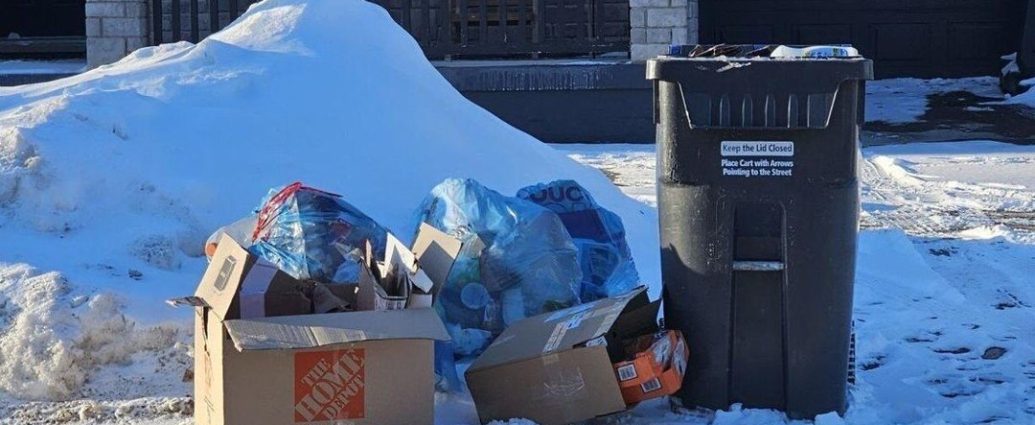
Here’s the thing about good intentions: sometimes they backfire spectacularly. Ontario’s shiny new recycling program was supposed to make life easier and boost our environmental game. But in Peel Region, it’s doing the exact opposite.
Residents are throwing out more stuff than ever before. Wild, right?
The problem started when the province rolled out its new Extended Producer Responsibility program earlier this year. The idea sounded brilliant on paper: make companies responsible for their packaging waste instead of leaving municipalities to deal with the mess.
When Simple Becomes Complicated
But here’s where it gets messy. The new rules changed what goes where, and honestly, nobody seems to know what they’re doing anymore.
“I used to recycle my yogurt containers religiously,” says Mississauga resident Maria Santos, standing next to her overflowing garbage bin. “Now I don’t know if they go in the blue box, the green bin, or straight to landfill. So I just throw them out.” Related: Healthy Planet Opening Massive New Toronto Store This Year
Sound familiar? You’re not alone.
The confusion is causing a 23% increase in residential waste pickup requests across Peel Region compared to last year.
That’s a staggering number when you think about it. We’re literally creating more garbage while trying to be more environmentally friendly.
The Confusion Factor
The reality is that different municipalities now have different rules under the new system. What’s recyclable in Mississauga might not be recyclable in Brampton. What goes in the green bin in Caledon could be garbage in Toronto. Related: Ontario Line Construction Won’t Finish Until Early 2030s
Can you imagine trying to keep track of all that?
Local waste management companies are feeling the strain too. “We’re seeing contamination rates spike because people are guessing,” explains David Chen, operations manager for a Peel-area waste collection service. “When in doubt, they’re just putting everything in the garbage.”
What really gets me is that this was supposed to be the solution to our recycling problems. Instead, it’s created a whole new set of headaches.
The Communication Gap
Part of the problem is communication. Or rather, the lack of it.
The province launched the program with minimal public education. No door-to-door campaigns. No clear guides sent to every household. Just a website buried in government bureaucracy that most people won’t ever find.
“I work two jobs and have three kids,” says Brampton mom Jessica Williams. “I don’t have time to research recycling rules online. I need someone to just tell me what goes where.”
Honestly, she’s got a point.
Small Businesses Struggling Too
It’s not just residents who are confused. Small businesses across Peel are grappling with the changes too.
Tony’s Pizza in Streetsville used to have a simple system: cardboard in one bin, food waste in another, everything else in the garbage. Now owner Tony Ricci says he’s spending money on extra garbage pickup because he’s not sure what the new rules allow.
“My customers ask me where to put their pizza boxes and I honestly don’t know anymore,” Ricci admits. “The rules keep changing and nobody explains them clearly.”
These are real people trying to do the right thing, but the system is failing them.
The Cost of Confusion
All this confusion isn’t just bad for the environment. It’s hitting people’s wallets too.
Garbage collection fees are going up across Peel as waste volumes increase. Some residents are paying 15-20% more for pickup services compared to last year.
Meanwhile, recycling contamination rates are through the roof. When recyclables are mixed with garbage or sorted incorrectly, entire truckloads end up in landfills anyway.
What Needs to Happen Next
Look, I’m not saying the Extended Producer Responsibility program is all bad. The concept makes sense: companies should be responsible for their packaging waste.
But the rollout has been a disaster, at least here in Peel.
What we need is clear, consistent communication. Door-to-door education programs. Simple guides that don’t require a university degree to understand. Maybe even an app that tells you exactly what goes where based on your postal code.
Some municipalities are starting to step up. Mississauga launched a pilot program last month with waste sorting ambassadors visiting neighbourhoods to explain the new rules face-to-face.
“We realized people learn better when you show them, not just tell them,” says city councillor Patricia Moore. “The response has been overwhelmingly positive.”
The Bigger Picture
Call me optimistic, but I think we can fix this. The environmental goals behind the program are solid. We just need to get the execution right.
Other provinces are watching Ontario’s rollout closely. BC and Quebec are planning similar programs. They have a chance to learn from our mistakes and do better.
But right now, in Peel Region, we’re in a bit of a mess. Good intentions aren’t enough if nobody understands how to follow through.
The province needs to admit this rollout needed more planning and invest in proper public education. Because right now, we’re creating more problems than we’re solving.
And honestly? Our planet can’t afford that kind of backwards progress.