
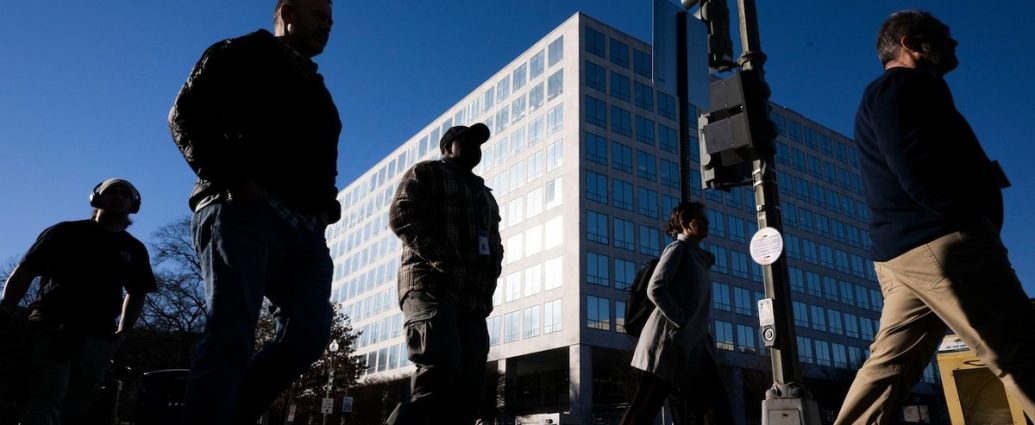
Remember when everyone was scrambling to figure out remote work back in 2020? Well, here we’re in 2026, and the federal government has managed to create the opposite problem: too many workers, not enough desks.
The federal government quietly admitted today that there might not be enough workstations for all employees as the new four-day-per-week return-to-office mandate kicks into high gear. That’s right – after years of remote work arrangements, Ottawa is telling public servants to come back to the office four days a week, but they might not actually have a place to sit.
The mandate, which affects approximately 315,000 federal employees across the country, represents one of the largest workplace reorganizations in Canadian government history. The policy requires employees to be physically present in federal offices from Monday through Thursday, with only Fridays available for remote work.
The Math Doesn’t Add Up
Here’s where it gets interesting from a logistics standpoint. During the pandemic, many federal departments adopted what’s called “hoteling” – shared workspace arrangements where employees don’t have assigned desks. The idea was simple: if people are working from home part of the time, you don’t need a 1:1 ratio of workers to workstations.
But now that the government wants everyone back four days a week instead of the hybrid arrangements many departments had settled into, that math suddenly doesn’t work anymore.
It’s like planning a dinner party for 20 people when you only have 12 chairs.
Internal government documents obtained through access to information requests reveal that Public Services and Procurement Canada estimates a workspace shortage affecting up to 40% of federal employees in major centres like Ottawa, Toronto, and Vancouver. The documents show that many departments currently operate with workspace ratios of 0.7 desks per employee, a configuration that worked when offices were at 30-50% capacity but fails completely at 80% capacity.
The Professional Institute of the Public Service of Canada (PIPSC) has filed an unfair labour practice complaint over the return-to-office order, arguing that the government didn’t properly consult with unions before implementing the new policy. They’re essentially saying: “You can’t just snap your fingers and expect this to work.”
Look, PIPSC represents over 60,000 federal employees, making it one of the largest public service unions in the country. Their complaint, filed with the Federal Public Sector Labour Relations and Employment Board on January 15, 2026, could delay implementation of the return-to-office mandate by several months.
The Financial Cost of Poor Planning
The workspace shortage is forcing departments to pursue expensive quick fixes. Treasury Board Secretariat internal estimates suggest that addressing the capacity shortfall could cost taxpayers between $2.8 billion and $4.1 billion over the next three years.
This includes $1.2 billion in emergency lease agreements for temporary office space, $950 million for accelerated renovations of existing federal buildings, and $650 million for new IT infrastructure to support increased office occupancy. The remainder covers everything from additional security systems to expanded cafeteria capacity.
Public Services and Procurement Canada has already signed emergency contracts worth $347 million for temporary office space in Ottawa alone. These short-term leases, some at premium rates due to their urgent nature, will house approximately 12,000 federal employees who would otherwise have no workspace.
“We’re essentially paying twice for the same thing – once for the permanent offices we don’t have enough of, and again for temporary space that costs 60% more per square foot,” said Jennifer Morrison, a senior analyst with the Parliamentary Budget Office.
The irony isn’t lost on fiscal watchdogs. During the pandemic, the federal government saved an estimated $890 million annually on office-related expenses including utilities, maintenance, and space rental costs. Now they’re not only losing those savings but spending billions more to force everyone back into insufficient office space.
More Than Just Missing Desks
The space crunch is just one piece of a bigger puzzle that’s causing headaches across the federal public service. Union representatives are warning that the return-to-office mandate will disproportionately affect women, who are more likely to have caregiving responsibilities that made hybrid work arrangements particularly valuable.
Statistics Canada data from 2025 shows that 67% of federal employees who used hybrid work arrangements were women, and 73% of those had children under 12 at home. The new mandate effectively eliminates the flexibility that allowed these employees to balance career advancement with family responsibilities.
“This feels like we’re going back to the 1950s,” said Maria Santos, PIPSC’s national president, highlighting concerns about the policy’s impact on work-life balance. “We’ve proven over four years that productivity didn’t suffer with remote work. In many cases, it improved. Now we’re being forced back into an office model that doesn’t even have space for us.”
The timing is particularly awkward. Just as many private sector companies are embracing permanent hybrid or remote work models (looking at you, tech companies), the federal government is pulling in the opposite direction.
It’s like everyone else is upgrading to smartphones while Ottawa is bringing back the landline.
Government productivity data, quietly released in December 2025, showed that departments with higher rates of remote work actually scored better on key performance indicators. Employment and Social Development Canada, which maintained a 60% remote workforce, completed 94% of employment insurance claims within service standards compared to 78% in 2019. Meanwhile, departments that pushed for earlier returns to office showed declining performance metrics.
The Technical Logistics Nightmare
From a purely operational standpoint, this creates some fascinating challenges. Federal departments now have to figure out desk booking systems, ensure adequate IT infrastructure for increased office capacity, and manage everything from parking to cafeteria capacity.
Some buildings that were designed for pre-pandemic occupancy levels are now dealing with HVAC systems that were reconfigured for lower occupancy, security systems that need updating for higher traffic, and network infrastructure that might not handle the increased load.
The Lester B. Pearson Building in Ottawa, which houses Global Affairs Canada, provides a perfect example of the technical challenges.
Originally designed for 4,200 employees, it was reconfigured during the pandemic to support 2,800 workers with expanded remote access capabilities. Now it needs to accommodate 4,800 employees due to departmental growth, but the building’s elevator capacity, network infrastructure, and parking garage can’t handle the increase.
IT infrastructure presents particular headaches. Shared Services Canada reports that 23% of federal buildings don’t have sufficient network capacity to support full occupancy with modern work requirements. The department estimates it needs $890 million in network upgrades to handle the increased load of video conferencing, cloud applications, and digital collaboration tools that became standard during remote work.
It’s basically a massive scaling problem.
Imagine trying to double the capacity of your home Wi-Fi network overnight – except instead of your Netflix buffering, it’s thousands of government workers trying to do their jobs.
Parking represents another logistical nightmare. Federal buildings in downtown Ottawa have 18,500 parking spaces for approximately 78,000 employees who now need to commute four days per week. The math simply doesn’t work, and surrounding commercial parking lots are already raising rates in anticipation of increased demand.
What Other Unions Are Saying
PIPSC isn’t the only union pushing back. Several federal public service unions have filed similar complaints, creating a legal tangle that could take months to resolve. The complaints generally centre around two issues: lack of consultation and practical implementation problems.
The Public Service Alliance of Canada (PSAC), representing 120,000 federal workers, filed their own complaint on January 18, 2026. Their submission includes internal government emails showing that senior officials were warned about workspace shortages as early as September 2025 but chose to proceed with the mandate anyway.
The Union of Canadian Correctional Officers has taken a different approach, arguing that their members who worked throughout the pandemic without remote options should receive priority access to any available office space. Their president, James Thompson, called the workspace shortage “a slap in the face to essential workers who never left their posts.”
The unions argue that major workplace changes like this require proper negotiation and planning, not just a top-down mandate. From their perspective, it’s like your boss announcing you’re moving offices next week without asking if you have a truck or boxes to pack with.
Meanwhile, some departments are scrambling to find creative solutions. Hot-desking policies, staggered schedules, and even temporary workspace rentals are all on the table. But these are band-aid fixes for what appears to be a fundamental planning oversight.
The Canada Revenue Agency has implemented a complex desk-booking system that opens reservations at 6 AM each day for the following week. The system crashes regularly due to high demand, and employees report spending 20-30 minutes daily just trying to secure a workspace. Some have started using automated booking scripts, creating an arms race for desk access.
The Broader Economic Impact
This whole situation highlights a broader tension in the post-pandemic workplace. While productivity data from the remote work years showed that many government functions worked just fine (or better) from home, there’s clearly a push from leadership to return to more traditional office arrangements.
The economic ripple effects extend beyond government spending. Downtown Ottawa businesses that struggled during the pandemic were counting on increased foot traffic from returning federal workers. However, the chaotic implementation and employee frustration might not deliver the economic boost they expected.
Commercial real estate data shows that federal lease renewals increased average rental rates by 34% in downtown Ottawa and 28% in Toronto’s government district. Property management companies are capitalizing on the government’s urgent need for space, leading to lease agreements that taxpayers will be paying for years to come.
The disconnect is real. Employees who’ve proven they can do their jobs effectively from home are being told they need to be in the office four days a week, but then they show up and there’s nowhere to sit.
It’s like being invited to a party that’s already over capacity.
Some departments are reportedly considering split teams or rotating schedules to manage the capacity issues, but that creates its own problems for collaboration and team cohesion. Health Canada has implemented a system where teams alternate weeks in the office, but managers report that project coordination has become significantly more complex.
What This Means for Canadian Taxpayers
The financial implications of this poorly planned return-to-office mandate will be felt by Canadian taxpayers for years to come. The Parliamentary Budget Office estimates that the total cost of addressing workspace shortages, including emergency leases, building modifications, and IT upgrades, will average $127 per Canadian household over the next three years.
This comes at a time when the federal government is already facing budget pressures and calls for fiscal restraint. The money being spent on emergency office solutions could have funded 1,400 new affordable housing units or provided full-year child care subsidies for 23,000 families.
More concerning is the precedent this sets for government planning and consultation.
If the federal government can’t successfully manage its own workforce transition, it raises questions about its ability to handle larger policy implementations affecting all Canadians.
The productivity losses during this transition period are also significant. Conservative estimates suggest that the combination of time spent booking desks, commuting to offices without guaranteed workspace, and general disruption from the policy change will reduce government productivity by 8-12% during the first six months of implementation.
What This Means for Federal Employees
If you’re a federal worker, the short-term reality is probably going to be messy. Expect desk-booking systems, potentially longer commutes as people compete for limited parking, and the general chaos that comes with major organizational changes implemented quickly.
The legal challenges from unions might provide some breathing room, but don’t count on immediate relief. Labour relations processes move slowly, and in the meantime, departments are expected to make the new policy work somehow.
Early reports from employees who’ve started the transition paint a frustrating picture. Sarah Chen, a policy analyst with Environment Canada, describes arriving at her Ottawa office at 7:30 AM only to find all available desks already taken. “I ended up working from a cafeteria table for six hours before someone left and I could get a proper workspace,” she said.
For managers, this creates a particularly tricky situation. How do you enforce a four-day office presence when you literally don’t have space for everyone? It’s a classic case of policy meeting reality and finding out reality doesn’t budge.
Some creative employees are forming unofficial desk-sharing agreements, but these informal arrangements create their own complications around security, confidentiality, and equipment access. IT security protocols weren’t designed for multiple users sharing workstations throughout the day.
The practical advice? If you’re a federal employee affected by this, start figuring out your desk-booking system now, have backup plans for when your usual workspace isn’t available, and maybe invest in a good laptop bag because hot-desking is probably going to be your new reality.
Employee satisfaction surveys conducted by the Public Service Employee Survey in late 2025 showed job satisfaction at federal departments averaged 7.2 out of 10. Internal government polling from January 2026 shows that number has dropped to 5.1 out of 10 among employees affected by the return-to-office mandate.
What This Means Going Forward
The talent retention implications are already becoming apparent. Statistics Canada reports that federal government departures increased by 43% in the final quarter of 2025, with exit interviews citing the return-to-office mandate as a primary factor in 67% of cases. These departures represent institutional knowledge and expertise that took years to develop.
Looking ahead, this feels like one of those policies that’s going to require significant adjustments once the practical realities become impossible to ignore. The question isn’t whether changes will be made, but how long it takes for common sense to prevail over bureaucratic stubbornness.
And honestly, the thing is that while the government struggles with this self-created crisis, productivity continues to decline and costs continue to climb. What was supposed to be a return to normal operations has instead created the most disruptive period in federal public service operations since the 2020 pandemic shutdown.
Sometimes the cure really is worse than the disease.
Frequently Asked Questions
How many days per week do federal workers have to return to office?
Federal employees are required to return to the office four days per week under the new mandate.
Why aren’t there enough workstations for all federal workers?
Many departments adopted shared workspace arrangements during the pandemic, reducing the total number of available desks below what’s needed for a four-day return.
Can unions stop the return-to-office mandate?
Several unions have filed unfair labour practice complaints, but these legal processes take time and don’t immediately halt the policy implementation.